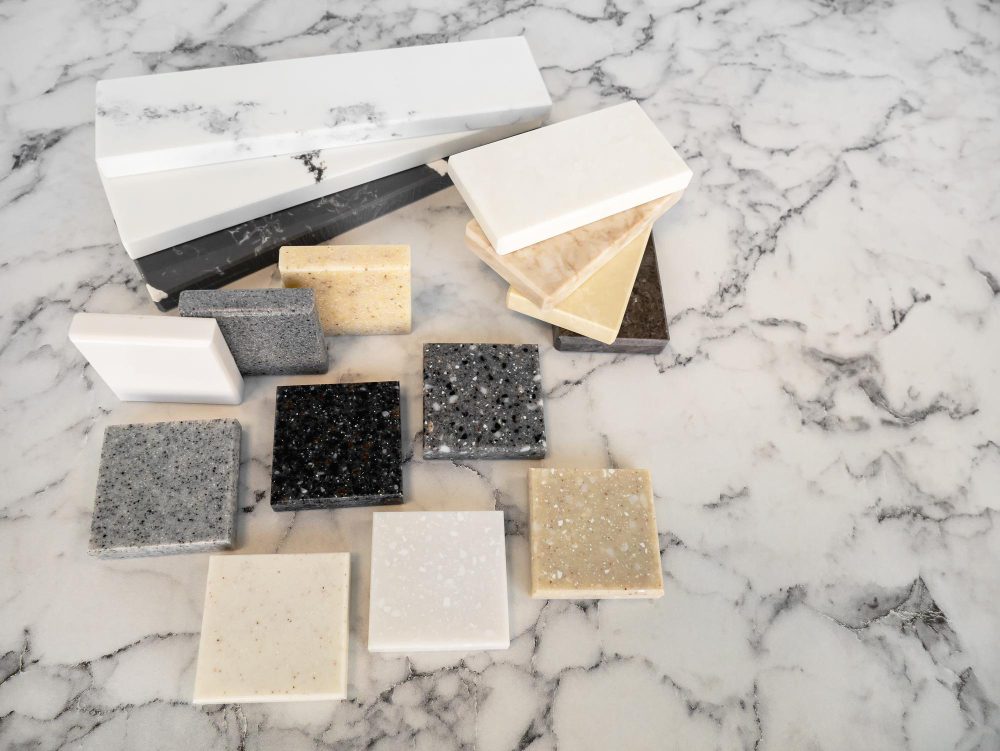
In a busy kitchen, the countertop gets hit with everything. Hot pans, sharp tools, spills, and constant wiping are part of daily life. That is why the best stone for kitchen countertops is not always the ones that look the fanciest. The best choice is the stone that fits cooking habits and the time available for upkeep. If you’re thinking “what stone is best for kitchen countertops,” this list breaks down 11 best countertop stones.
The Best Stone Countertops for Kitchen: A Quick Comparison
| Stone | Durability | Stain Risk | Etch Risk | Heat | Maintenance | Best for |
| Granite | High | Low–Med | Low | High | Seal sometimes | Busy kitchens, all-around use |
| Quartzite (natural) | High | Low–Med | Low–Med | High | Seal sometimes | “Marble look” with toughness |
| Marble | Med | Med–High | High | Med | More care | Classic look, baking zones |
| Soapstone | Med–High | Low | Low | High | Optional oiling | Heat-friendly, soft matte look |
| Dolomite | Med | Med | Med–High | Med | Seal + gentle care | Marble-like style with slightly more strength |
| Limestone | Low–Med | High | High | Low–Med | High upkeep | Low-use kitchens, soft warm tones |
| Travertine | Low–Med | High | High | Low–Med | High upkeep | Rustic look, light-use areas |
| Slate | Med | Low–Med | Low | High | Seal sometimes | Dark tones, practical homes |
| Onyx | Low | Med–High | High | Low–Med | High upkeep | Statement bars, feature tops |
| Sandstone | Low–Med | High | Med | Med | Seal often | Texture lovers, careful households |
| Quartz (engineered) | High | Low | Low | Med | Low upkeep | Busy homes that want easy cleaning |
1. Granite
Best for: Granite is one of the best choices for busy homes because it is tough, handles daily wear well, and resists heat. Many homeowners choose granite because it works well for cooking, meal prep, and everyday life.
Considerations: Granite is still a natural stone, so some slabs are more porous than others and can stain if sealing is ignored.
Maintenance tips: Clean with mild soap and water or a stone-safe cleaner. Test the seal once or twice a year with a small water drop. If water darkens the stone instead of beading, it is time to reseal.
2. Quartzite (Natural)
Best for: Natural quartzite is popular because it can look like marble but performs more like a hard, durable stone. It is often a strong option for kitchens that cook a lot and want a lighter, brighter look.
Considerations: Not every slab sold as “quartzite” behaves the same. Some slabs can contain minerals that react to acids and may etch, so slab selection matters.
Maintenance tips: Plan on sealing. Many guides suggest resealing on a schedule like every 1–3 years, depending on use and the sealer. Use mild soap and wipe spills sooner rather than later.
3. Marble
Best for: Marble is a favorite for a classic, high-end look. Many bakers like marble because it stays cool and looks beautiful around baking stations.
Considerations: Marble etches easily from acids like lemon juice, vinegar, and many common cleaners. Etching is a finish change, not a “dirt stain,” so it does not scrub away like a spill.
Maintenance tips: Use a pH-neutral stone cleaner and wipe acidic spills fast. If etches build up, honing and polishing are common restoration options that can bring back a smoother finish.
4. Soapstone
Best for: Soapstone is known for strong heat tolerance and a smooth, soft feel. It does not need sealing in the same way many other stones do, and it can be a good fit for busy homes that like a matte, cozy look.
Considerations: Soapstone can scratch or dent more easily than granite, but it also hides wear well over time with a natural “lived-in” look.
Maintenance tips: Clean with mild soap and water. Some owners apply mineral oil to deepen color and even out the look, but oiling is optional and depends on the style preferred.
5. Dolomite
Best for: Dolomite is often chosen by homeowners who want a marble-like look with a bit more strength for daily use. It can be a nice middle ground for style-focused kitchens.
Considerations: Dolomite can still etch and can still stain if spills sit too long. It is not “marble-proof,” so expectations should be realistic.
Maintenance tips: Use gentle cleaners and reseal as needed. Avoid acidic cleaners and wipe up citrus, wine, and sauces quickly.
6. Limestone
Best for: Limestone has a warm, soft, natural look that works well in calm, low-use kitchens. It can make a space feel relaxed and timeless.
Considerations: Limestone is usually more porous and more likely to etch and stain, especially in busy kitchens with frequent cooking.
Maintenance tips: Sealing helps, but it does not make limestone “worry-free.” Use coasters, wipe spills fast, and avoid acidic cleaners.
7. Travertine
Best for: Travertine gives a rustic, old-world look. It can be a great design choice for homes that want texture and natural variation.
Considerations: Travertine often has natural pits and voids, and it can stain easily. For busy kitchens, it needs careful habits.
Maintenance tips: Sealing is important, and quick wipe-ups matter. Many homeowners use travertine more successfully in lower-traffic kitchens or as a secondary surface.
8. Slate
Best for: Slate can be a practical choice with a darker, earthy look. It often hides crumbs and smudges better than bright stones.
Considerations: Some slate has a cleft, textured surface that can be harder to keep perfectly clean.
Maintenance tips: Use mild soap and water. Sealing can help with stain resistance and easier cleanup, depending on the slate finish and how the kitchen is used.
9. Onyx
Best for: Onyx is dramatic and can be backlit for a showpiece look. It is often used for bars, islands, and feature areas.
Considerations: Onyx is softer and more likely to scratch and etch. It is usually not the best pick for a high-traffic family kitchen work zone.
Maintenance tips: Treat onyx like a “special surface.” Use coasters, avoid acids, and clean gently.
10. Sandstone
Best for: Sandstone can offer a natural, textured look that stands out. Some homeowners love it for its earthy feel.
Considerations: Sandstone is porous and can absorb liquids, which increases stain risk. Some sources note costs can run high depending on the slab and rarity.
Maintenance tips: Sealing is a must for most sandstone counters. Wipe spills quickly and avoid harsh cleaners.
11. Quartz (Engineered Stone)
Best for: Engineered quartz is one of the easiest choices for busy homes because it is non-porous, resists stains well, and is simple to clean. It is often listed among the best stone countertops for kitchens, even though it is engineered, not a natural slab.
Considerations: Quartz can be damaged by high heat because of the resins used in the material. Hot pans should not go directly on the surface.
Maintenance tips: Use mild soap and water or a gentle cleaner. Use trivets for hot cookware and avoid harsh chemicals and abrasive pads.
ALSO READ: Non Slip Bathroom Floor Tiles: What to Buy in 2026
Restore and Protect Your Stone Countertops
Choosing the right stone is important, but proper care is what keeps it looking its best. If a countertop has stains, dull spots, etching, or scratches, professional restoration can improve the finish and help prevent future damage. Old Stone Restoration & Installation Corp provides cleaning, sealing, refinishing and stone restoration services in Long Island & nearby areas that make natural stone countertops look better and stay easier to maintain in busy homes. Call us at (631) 821-5619 to get started.
FAQs
What is the best stone for kitchen countertops?
The best stone for kitchen countertops depends on how the kitchen is used and how much maintenance is acceptable. For busy homes, granite, natural quartzite, and engineered quartz are popular because they handle daily wear well and clean easily. Softer stones like marble can still work, but they require more care and realistic expectations.
What is the most durable stone for kitchen countertops?
For many busy homes, granite and natural quartzite are top picks because they handle daily wear well and are very heat-resistant. Quartz is also very durable in daily use, but it needs heat protection because of its resin content.
Which stone is the lowest maintenance?
Engineered quartz is usually the lowest maintenance because it is non-porous and does not require routine sealing like many natural stones.
Do granite and quartzite need to be sealed?
Often, yes. Many stone care guides recommend sealing on a schedule based on use, with a common range like every 1–3 years, and using a simple water test to see if sealing is needed.
How do etch marks get removed from marble countertops?
Etching happens when acids react with the surface, leaving a dull spot. Marble can often be restored with honing and polishing, which refines the surface finish and reduces the look of etches.