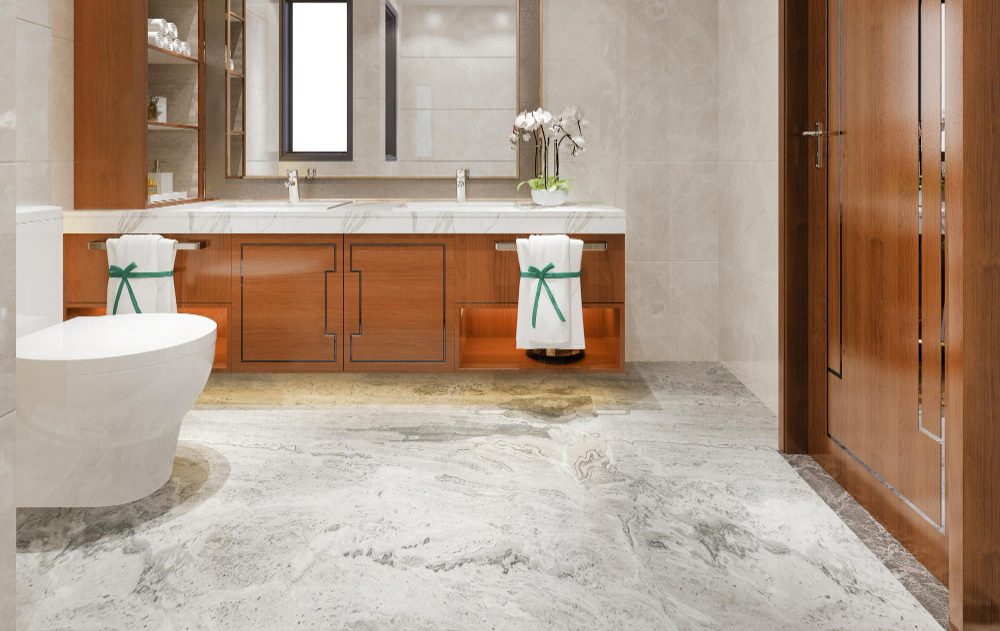
Bathroom floors deal with more water, foot traffic, and wear than almost any other space in the home. Choosing the wrong stone can lead to slippery surfaces, stains, and constant maintenance. This guide breaks down the best options for stone flooring for bathrooms in 2026, realistic cost ranges, and what to know about maintenance. We’ll also discuss bathroom stone floor pros and cons. For homeowners, this is a helpful checklist for choosing the best stone for bathroom floor in Long Island, NY.
Why Choosing the Best Stone for Bathroom Floors Matters
Here’s why stone choice for bathroom matters:
- Water exposure: Splashing and humidity happen every day. Some stones absorb more water and stain easier.
- Slipping risk: Smooth stones can become slippery when wet, especially in socks.
- Maintenance: Some stones need regular sealing and careful cleaning.
- Long-term durability: The best stone flooring for bathrooms should resist chips, stains, and wear over time.
If the bathroom is used by kids, guests, or older adults, slip resistant stone bathroom floor options become even more important.
What Makes a Stone Suitable for Bathroom Floors?
Not every natural stone works well in a wet room. When evaluating natural stone for bathroom floor use, focus on these points:
Water resistance
Some stones absorb water more easily than others. Lower-porosity materials generally handle bathroom conditions better.
Slip resistance
A stone that looks beautiful can still be unsafe if it’s too smooth when wet. Honed, textured, tumbled, or brushed finishes usually provide better traction than polished finishes.
Porosity
Porous stones can absorb water, soap, and oils. That can lead to dark spots, stains, or etching depending on the material.
Maintenance level
Some stones just need a wipe. Others require sealing, pH-neutral cleaners, and quick cleanup after spills.
Sealing requirements
Many stones need a protective sealer. A good sealer helps reduce water absorption and staining, but it does not make stone waterproof.
10 Best Stones for Bathroom Floors in 2026
Each option below includes a simple traction guideline and upkeep level so it’s easier to choose waterproof stone flooring bathroom style surfaces (or the closest practical option).
1. Porcelain Stone Tile
Porcelain is not a natural stone, but it’s one of the best “stone-look” options for bathrooms.
Pros
- Very low absorption, excellent for wet spaces
- Easy to clean
- Many stone looks (marble, slate, terrazzo)
Cons
- Grout still needs cleaning
- Can feel cold without radiant heat
Best use cases
- Busy family bathrooms, rentals, and remodels with low upkeep goals
Maintenance level: Low
Slip resistance rating: Good when choosing matte or textured finishes
Typical cost (material): $3–$12/sq ft
2. Honed Marble
Honed marble has a soft, matte finish that is often less slippery than polished marble.
Pros
- High-end, classic look
- Honed finish hides small scratches better than polished
- Works well in timeless bathroom designs
Cons
- Can etch from acidic products
- Requires sealing and gentle cleaning
- Not ideal for people who want “zero maintenance”
Best use cases
- Primary bathrooms where appearance matters and cleaning habits are consistent
Maintenance level: Medium to High
Slip resistance rating: Medium (better than polished)
Typical cost (material): $8–$25/sq ft
3. Slate Stone
Slate is a strong choice for bathrooms because it naturally has texture.
Pros
- Naturally slip resistant
- Handles wet conditions well when sealed
- Great for modern and rustic styles
Cons
- Color variation can be strong
- Some slate can flake if low quality
- Sealing recommended
Best use cases
- Shower floors, wet areas, family bathrooms
Maintenance level: Medium
Slip resistance rating: High
Typical cost (material): $5–$15/sq ft
4. Travertine (Filled & Honed)
Travertine is a type of limestone with natural holes. “Filled and honed” is the bathroom-friendly version.
Pros
- Warm, natural look
- Comfortable underfoot
- Good traction when honed
Cons
- Needs sealing
- Can stain if left unsealed
- Softer than granite and quartzite
Best use cases
- Spa-style bathrooms, larger floors with a warm tone
Maintenance level: Medium
Slip resistance rating: Medium to High (honed)
Typical cost (material): $6–$18/sq ft
5. Limestone
Limestone gives a clean, soft look that works in many bathroom styles.
Pros
- Natural, calming appearance
- Softer look than granite
- Often available in light tones
Cons
- More porous than many stones
- Needs sealing and careful cleaning
- Can scratch easier than harder stones
Best use cases
- Guest baths with lighter use, powder rooms with stone continuity
Maintenance level: Medium to High
Slip resistance rating: Medium (choose honed or textured)
Typical cost (material): $6–$30/sq ft
6. Granite
Granite is one of the best options for durability and low fuss when sealed correctly.
Pros
- Hard and scratch resistant
- Resists staining better than many stones
- Good long-term durability
Cons
- Some patterns can look busy
- Polished granite may be slippery when wet
Best use cases
- High-traffic bathrooms, long-term homes
Maintenance level: Low to Medium
Slip resistance rating: Medium (better in honed/leathered)
Typical cost (material): $6–$18/sq ft
7. Quartzite
Quartzite is a natural stone known for strength and a clean, upscale look.
Pros
- Very durable
- Often resists scratching well
- Great for luxury bathrooms
Cons
- Can be expensive
- Needs sealing
- Some slabs are mislabeled, so source matters
Best use cases
- Primary bathrooms where durability and look both matter
Maintenance level: Medium
Slip resistance rating: Medium (choose honed or textured)
Typical cost (material): $8–$25/sq ft
8. Terrazzo
Terrazzo is a classic material that has become popular again in modern designs.
Pros
- Long lifespan
- Unique, customizable appearance
- Works well with radiant heat
Cons
- Needs sealing
- Can be slippery if highly polished
- Repairs should be done properly to avoid patchy spots
Best use cases
- Modern bathrooms, design-forward remodels
Maintenance level: Medium
Slip resistance rating: Medium (better in matte finish)
Typical cost (material): $10–$25/sq ft
9. Pebble Stone Flooring
Pebble floors are common in showers and spa-style bathrooms.
Pros
- Strong grip underfoot
- Great drainage in shower floors
- Natural spa look
Cons
- More grout lines, so cleaning takes longer
- Uneven surface may feel uncomfortable to some
- Needs sealing
Best use cases
- Shower floors, wet zones, accent areas
Maintenance level: Medium to High
Slip resistance rating: High
Typical cost (material): $7–$20/sq ft
10. Engineered Stone Tiles
Engineered stone tiles use stone particles and binders to create a consistent look.
Pros
- More uniform appearance
- Can be easier to maintain than porous natural stone
- Often budget-friendly compared to premium natural slabs
Cons
- Quality varies by manufacturer
- Not all products are suitable for wet floors
- Always confirm installation requirements
Best use cases
- Bathrooms where a consistent stone look is the priority
Maintenance level: Low to Medium
Slip resistance rating: Medium (choose textured finish)
Typical cost (material): $5–$18/sq ft
ALSO READ:
Best Stone for Small vs Large Bathrooms
Small bathroom recommendations
- Porcelain stone tile (easy upkeep, makes spaces feel clean)
- Honed marble (luxury look, especially in smaller areas)
- Terrazzo (adds style without busy veining)
Large bathroom recommendations
- Slate (traction and durability across more surface area)
- Travertine (warm tone, spa feel)
- Granite or quartzite (strong long-term performance)
Best Low-Maintenance Stone for Bathroom Floors
For most homes, the easiest options are:
- Porcelain stone tile (lowest maintenance)
- Granite (durable with simple sealing)
- Engineered stone tile (when rated for wet floors)
These are often the best choices when searching for low maintenance stone for bathroom floor solutions.
Stones to Avoid for Bathroom Floors
Some materials can work, but they often lead to frustration if the goal is easy upkeep.
- Highly polished marble: looks beautiful but can etch and become slippery
- Soft untreated limestone: stains and scratches easily
- Unsealed stone of any kind: absorbs water and stains quickly
Stone Bathroom Floor Maintenance Tips
Good maintenance keeps the stone floor for bathrooms looking clean and prevents damage.
Sealing frequency
- Many stones need periodic sealing. Frequency depends on the stone type, finish, and daily use.
Cleaning dos
- Use a pH-neutral cleaner
- Wipe standing water near tubs and showers
- Clean grout lines consistently
Cleaning don’ts
- Avoid harsh acids and abrasive cleaners on natural stone
- Avoid bleach-heavy routines unless confirmed safe for your material
Professional restoration benefits
If stone floors look dull, stained, or etched, restoration can often bring them back without replacing the floor. For homeowners, professional stone restoration can be a cost-effective way to refresh marble, granite, terrazzo, and more. If you need expert stone restoration services in Long Island, NY, Old Stone Restoration & Installation Corp can help.
Final Thoughts: Which Stone Is Best for Your Bathroom in 2026?
The best stone for bathroom floor use depends on priorities. For most homes, porcelain stone tile is the easiest. For natural stone lovers, slate, granite, and honed travertine offer a strong balance of looks and durability. Marble and limestone can still work, but they need more careful maintenance.
If the goal is safety, choose a textured or honed finish and prioritize slip resistance. If the goal is low upkeep, focus on low-porosity materials and simple cleaning routines.
FAQs
What is the best stone flooring for bathroom floors in 2026?
Porcelain stone tile is a top choice for most bathrooms because it resists water and is easy to maintain. For natural stone, slate and granite are strong options when sealed properly.
Is natural stone waterproof for bathrooms?
Most natural stones are not fully waterproof. Sealing helps reduce absorption and staining, but good ventilation and regular cleaning still matter.
What is the most slip resistant stone bathroom floor option?
Slate and pebble stone flooring are often chosen for traction. Matte or textured porcelain can also be very slip resistant.
How often should stone bathroom floors be sealed?
It depends on the stone and usage. High-traffic bathrooms may need sealing more often than guest baths.
What is the easiest stone bathroom floor to maintain?
Porcelain stone tile is typically the lowest-maintenance option because it is highly water resistant and does not require the same sealing routine as many natural stones.