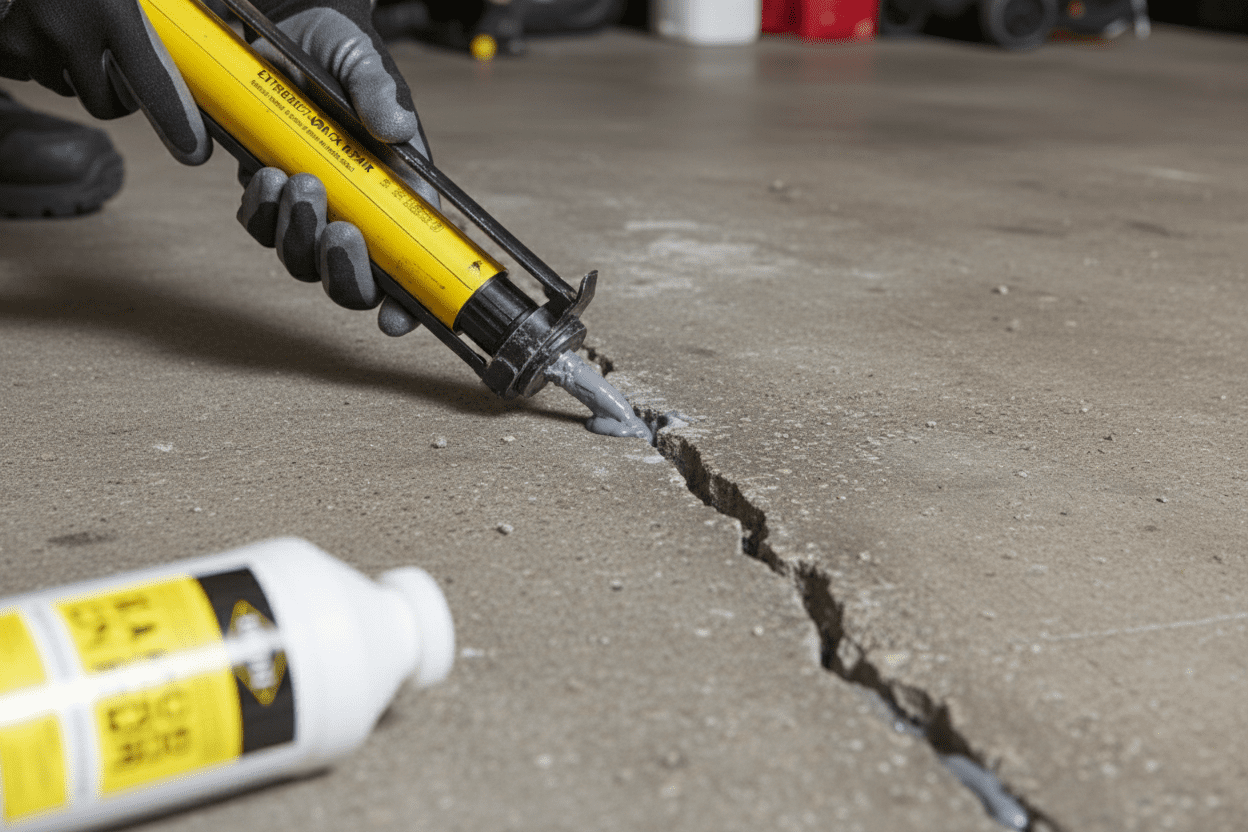
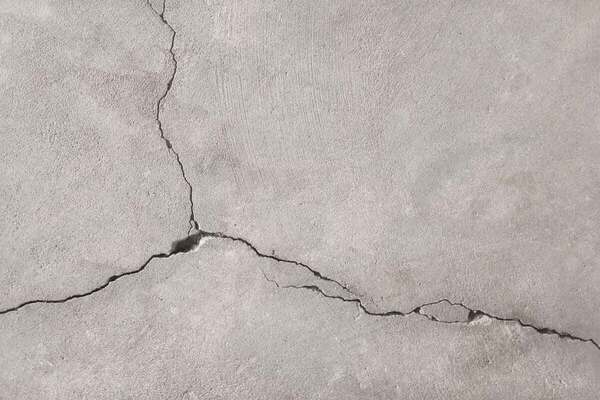
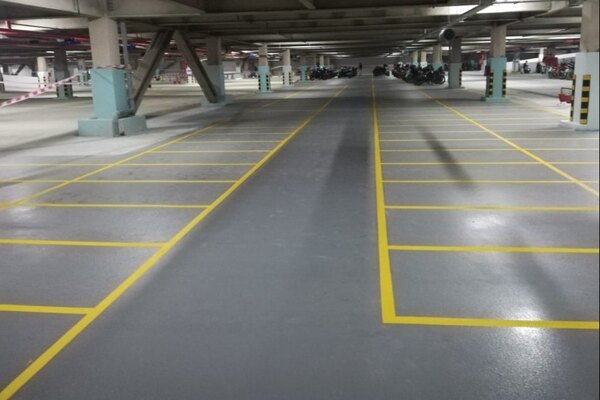
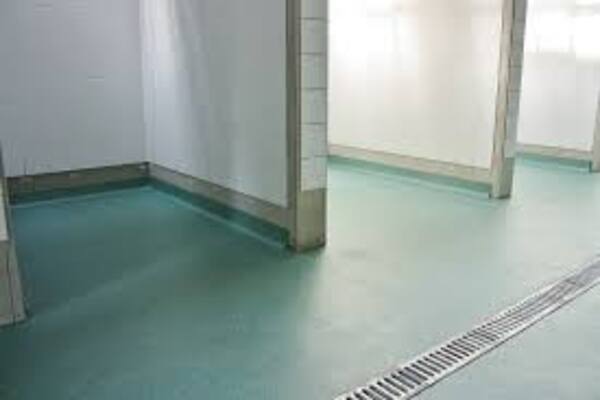
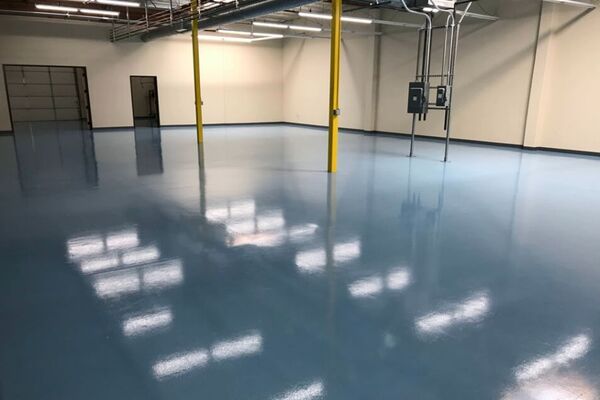
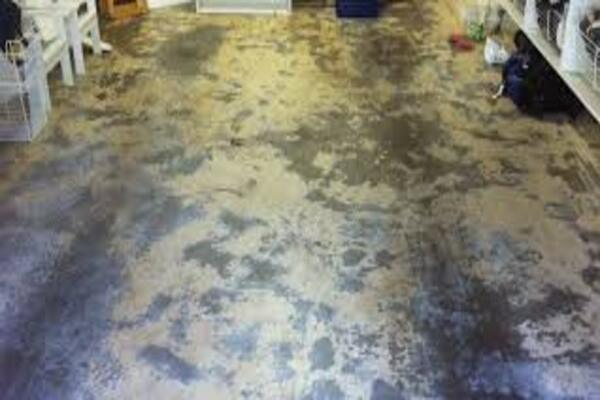
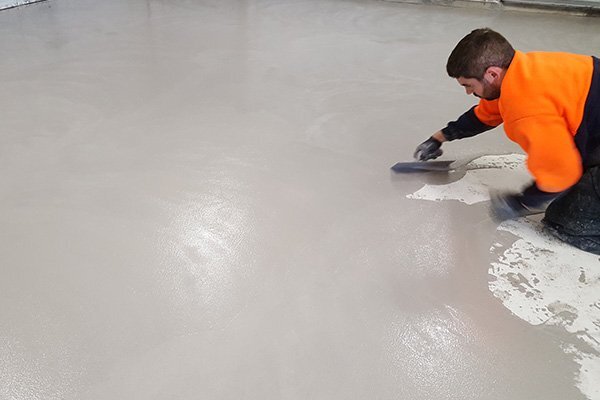
Concrete floors are very strong, but over time they can still crack. This happens because of weather changes, heavy weight, ground movement, or simple aging. Small cracks may look harmless at first, but if you ignore them, they can become bigger problems. Water can enter the cracks, freeze, expand, and make the damage worse.
Today, there are many concrete crack fillers available. Some are strong and rigid, while others are flexible and move with the concrete. Choosing the right one depends on the type of crack, the location, and how much movement the floor has.
In this guide, you will learn:
Best concrete floor crack fillers
Which filler is best for different crack types
How professionals choose fillers
Tips to make repair last longer
5 Best Concrete Floor Crack Filler in 2026
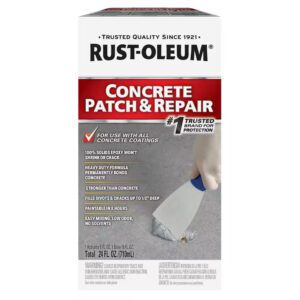
Rust-Oleum Concrete Patch & Repair (Best Heavy Duty Repair)
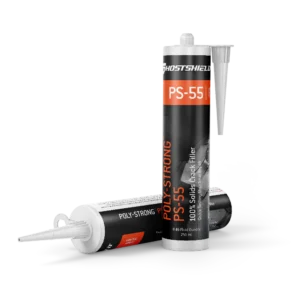
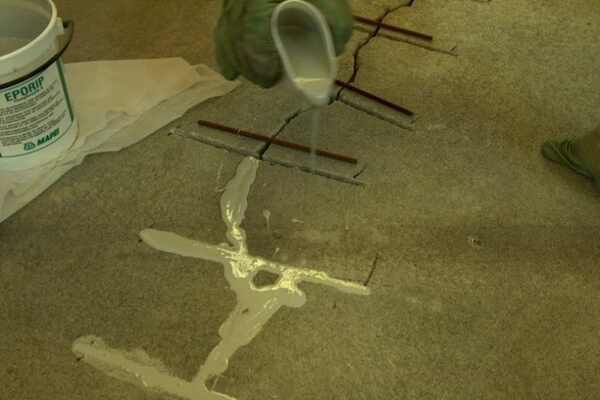
Rust-Oleum Concrete Patch & Repair is a 2-part epoxy repair material. It creates a surface that can be stronger than concrete itself. It is great for garage floors, industrial floors, and heavy traffic areas.
Why it’s good:
Very strong bond
Paintable after curing
No primer needed before coating
Some epoxy patch products can become stronger than concrete and create durable repairs for damaged areas.
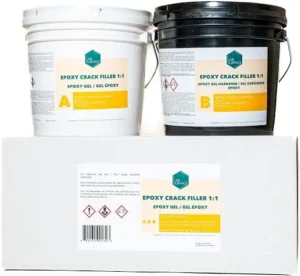
Epoxy injection fillers are used when strength is important. They bond concrete back together.
Best for:
Structural cracks
Load bearing slabs
Permanent repair
Epoxy repairs restore structural strength and create strong permanent bonds in narrow cracks.
How to Choose the Right Concrete Crack Filler
Choosing the wrong filler can waste time and money. If the crack is structural, epoxy is usually best. If the crack moves, polyurethane or polyurea works better. For small surface cracks, cement patch or repair compound is enough.
Many professionals recommend checking crack width, depth, and movement before selecting a repair product.
When Should You Call a Professional?
If cracks are wide, deep, or spreading, professional repair is usually safer. Professionals can check if the crack is structural and choose the correct repair method.
Companies like Old Stone Restoration & Installation Corp specialize in concrete floor repair, polishing, epoxy coatings, and natural stone restoration. According to business listings, the company has been serving residential and commercial clients since around 1990, building a reputation for high-quality floor work and surface restoration.
Why Professional Crack Repair Lasts Longer
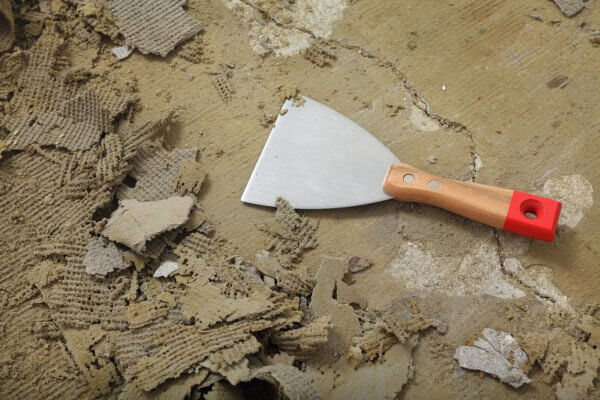
Professional repairs usually last longer because experts prepare the surface properly, use industrial materials, and apply fillers correctly. Poor preparation is one of the biggest reasons DIY repairs fail early.
Our Experience in Concrete Floor Repair
At Old Stone Restoration & Installation Corp, we bring more than 35+ years of experience in concrete floor repair, installation, and restoration. We focus on long-lasting repairs, not temporary fixes. Our team understands how different crack fillers perform in real-world conditions and chooses the right solution for each floor.
Concrete floor cracks are common, but ignoring them can cause bigger problems later. The right crack filler can stop damage, protect your floor, and extend its life for many years.
The best filler depends on crack type, location, and movement. If you are unsure, professional inspection can save money and prevent repeat repairs.
FAQs
What is the longest lasting concrete crack filler?
Epoxy fillers usually last the longest when the crack is stable and not moving.
Can I repair concrete cracks myself?
Small surface cracks can be DIY repaired, but structural cracks should be checked by professionals.
Will concrete cracks get worse over time?
Yes. Water, weather, and pressure can make cracks grow if not repaired.
Is polyurethane better than epoxy for concrete cracks?
Polyurethane is better for moving cracks. Epoxy is better for structural strength.
How long does concrete crack filler last?
Good quality repairs can last many years if applied correctly.
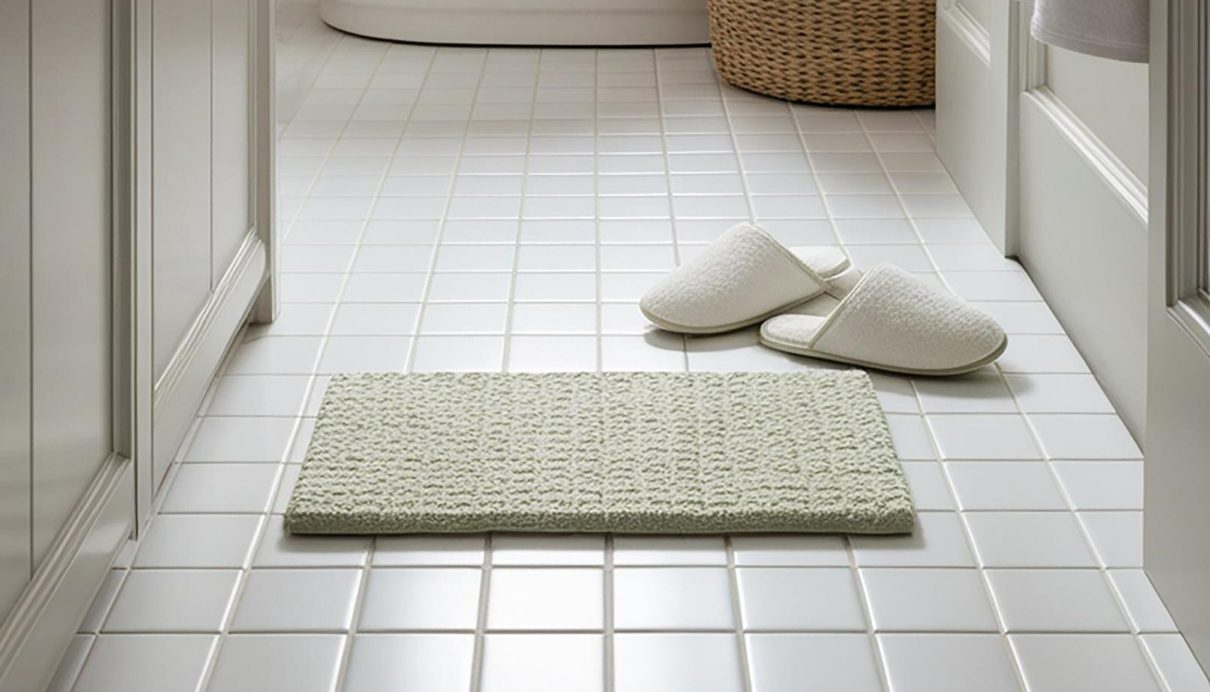
Choosing the best tile for bathroom floor is not only about looks. Bathrooms get wet fast, and wet floors can lead to slips, especially for kids, older adults, and anyone with limited mobility. In 2026, the best approach is simple: pick tiles for bathroom floor that have the right surface texture, a safer slip rating, and a layout that adds grip underfoot. This guide explains what to look for, what to avoid, and which non slip bathroom floor tiles are worth buying, and it also helps you plan for stone or tile installation so the right tile is installed the right way for long-term safety.
Why Slip Resistance Matters in Bathrooms
Bathrooms are one of the most common places where floors get wet. Water from showers, sinks, and wet feet can quickly create slippery floor surfaces. If you have children or elderly family members at home, choosing safer floor tiles for bathroom becomes even more important. Slip resistance is also a big deal in Long Island homes, where moisture from winter weather can increase the risk of slips on bathroom floors.
What Makes a Bathroom Tile Slip Resistant?
Slip resistance is not just one thing. It’s a mix of the tile surface, the finish, and even the grout lines.
Tile surface texture
A textured surface gives your feet more grip than a smooth surface. Many modern porcelain options include a light texture that looks clean but still helps prevent slipping.
Porosity
Some tiles absorb more water than others. Very porous stone can soak in water if it’s not sealed, which can lead to stains and long-term damage. With the right finish and sealing, stone can still be the best tile for bathroom floor in some cases, especially when slip safety is planned from day one.
Finish type
Glossy finishes reflect light and look shiny, but they often get slippery when wet. Matte and honed finishes usually feel more stable underfoot.
Grout spacing
Smaller tiles and mosaics have more grout lines, which can help add grip underfoot. This makes them a safer choice for wet areas like showers.
Understanding Slip Resistance Ratings
Slip ratings can feel confusing, but you only need a basic understanding to make a safer choice.
What is DCOF?
DCOF means Dynamic Coefficient of Friction. In simple terms, it’s a lab test that measures how much traction a surface has when something moves across it, often under wet conditions.
Safe DCOF rating for bathrooms
Many manufacturers and industry sources reference 0.42 wet DCOF as a key benchmark for level interior floors that may get wet (like many bathrooms). But DCOF is not a guarantee of safety in every real-life bathroom, because soap, oils, poor cleaning, and heavy wear can change traction.
What ratings to avoid
If a tile is listed with a lower wet DCOF and is not recommended for wet interior floors, it’s usually a bad match for bathrooms that frequently get water on the floor. Always check the manufacturer’s recommended use.
Best Non Slip Bathroom Floor Tiles
Below are the most common options homeowners choose in 2026 when they want style plus safety.
1. Textured Porcelain Tiles
Textured porcelain is one of the best all-around choices. It’s durable, water-resistant, and comes in many styles that mimic stone, concrete, or wood. If you want a low-maintenance floor tile for bathroom, textured porcelain is a smart pick.
2. Honed Natural Stone Tiles
Honed stone has a smooth look but is not shiny like polished stone. It often feels more stable underfoot than polished surfaces. If you want natural stone, ask for a finish that is appropriate for wet floors and plan for sealing and proper care.
3. Slate Tiles
Slate is known for its natural texture and grip. It’s a popular choice for people who want a more rustic look and better traction. Like many stones, it may need sealing depending on the type and finish.
4. Pebble Stone Tiles
Pebble tiles can be very grippy because of their uneven surface and many grout joints. They are common for shower floors but can also be used in small bathroom areas if you like the spa-like look.
5. Matte Finish Ceramic Tiles
Matte ceramic tile can work well in bathrooms when it has good texture. It’s often budget-friendly and comes in many colors and patterns. This is why you might see it listed among bathroom floor tile ideas for small bathrooms where you want the space to feel bright and clean.
6. Anti-Slip Treated Tiles
Some tiles are made or treated to improve traction. These can be helpful when you want a cleaner look but still need better grip. Make sure the product is meant for wet floors and ask how it should be cleaned so it stays effective.
Best Slip-Resistant Tiles for Shower Floors
Shower floors need extra traction because they get wet and soapy. Small-format tile is often safer in showers because it creates more grout joints. Industry research also notes that mosaics can have improved traction due to grout joints and drainage patterns, depending on the material and glaze. Great shower-floor choices include:
Mosaic porcelain tile
Pebble stone tile
Small matte-texture ceramic mosaics
Tiles to Avoid in Wet Bathrooms
Some tiles look beautiful but are risky in wet areas.
Polished marble can be very slippery when wet
Glossy ceramic with a smooth surface
Large smooth tiles with very few grout lines has less traction
If you love the look of polished stone, consider using it on walls, not floors.
How to Make Bathroom Floors More Slip Resistant
If you already have tile and it feels slippery, you still have options.
Anti-slip treatments: Some professional treatments can improve traction on certain surfaces.
Sealers (for natural stone): Sealing can protect porous stone from water and stains, but it does not automatically make a tile slip-proof.
Professional restoration: If stone is worn, etched, or uneven, professional refinishing can improve the feel and safety of the surface.
If you’re planning a new bathroom floor,, proper tile installation & stone installation in Long Island, NY matters just as much as tile choice. A well-installed floor has correct slope (where needed), solid grout work, and the right finish for wet use.
Final Buying Tips for Slip-Resistant Bathroom Tiles
Before you buy, keep these simple rules in mind:
Choose safety first, then style. Pick a tile that works in wet areas before you fall in love with the color.
Check the slip rating and recommended use. Look for a wet-floor recommendation and ask about DCOF.
Think about cleaning. Some textured tiles need a little more scrubbing than smooth tiles.
Plan for long-term care. Natural stone may need sealing and periodic maintenance.
Match tile size to the space. For bathroom floor tile ideas for small bathrooms, smaller tiles often work better and can add grip through grout lines.
A Note for Long Island, NY, Homeowners
If you’re in Long Island, NY, slip resistance matters even more during rainy seasons and winter months when wet shoes bring water indoors. Choosing the best tile for bathroom floor and installing them correctly can make your bathroom safer for years.For expert help with natural stone and tile installation, turn to Old Stone Restoration & Installation Corp. Call us at (631) 821-5619to discuss your needs.
FAQs
What is the best non slip bathroom floor tile in 2026?
Textured porcelain is one of the most common choices because it’s durable, water-resistant, and comes in many slip-friendly finishes.
What DCOF rating is considered safer for bathrooms?
Many sources reference 0.42 wet DCOF as a benchmark for interior level floors that may get wet, but real-life safety still depends on soap, cleaning, and use conditions.
What tile should I avoid for a wet bathroom floor?
Polished marble and glossy, smooth tiles are common slip risks in wet areas.
What are good bathroom floor tile ideas for small bathrooms?
Small-format porcelain or mosaic tiles can look great and add traction because they create more grout lines.
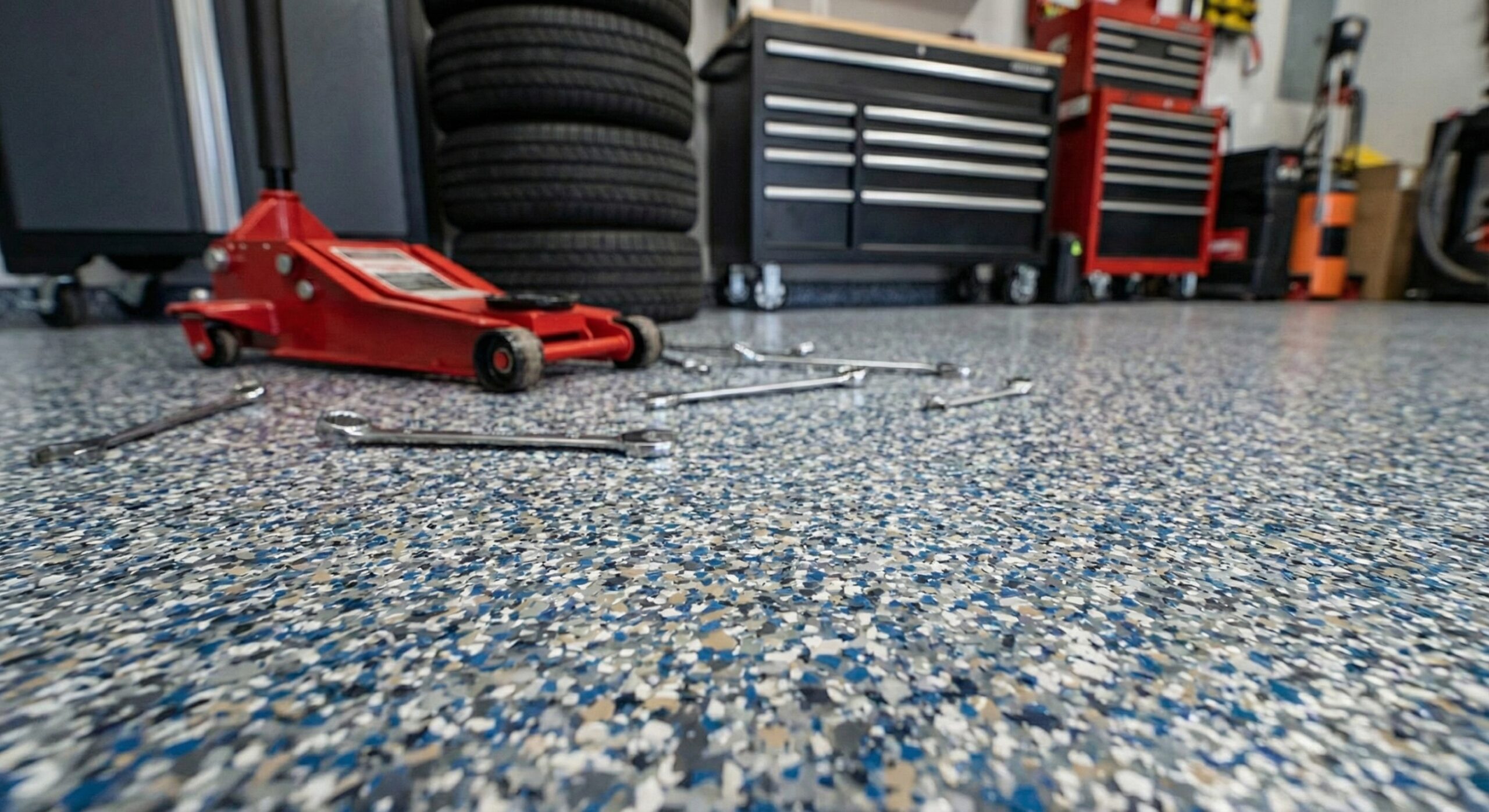
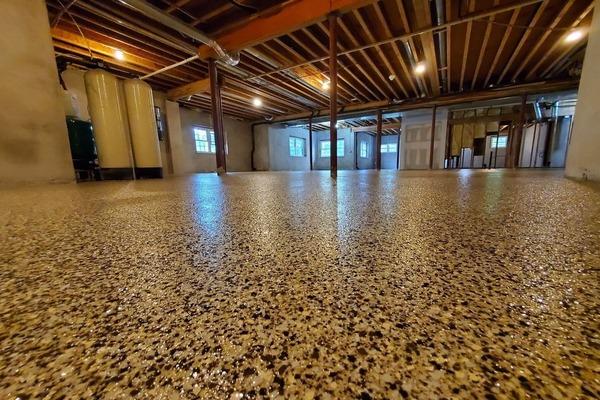
If you want a floor that looks clean, hides stains, and is easy to mop, you may have seen epoxy chip flooring online. This is the type of floor that has tiny colored flakes (also called epoxy floor chips) sprinkled into wet epoxy, then sealed with a clear top coat. It creates a strong surface with a speckled “stone-like” look.People love chip broadcast floors because they are tough, look great, and work well in busy spaces like garages, shops, and many commercial buildings. A common example of this system is a decorative flake broadcast floor built with an epoxy base and a clear (often UV-stable) topcoat.
What Is a Chip Broadcast Epoxy Floor?
A chip broadcast epoxy floor is made in layers:
Epoxy base coat goes down on concrete.
Epoxy floor chips (colored vinyl flakes) are broadcast (sprinkled) into the wet epoxy until the floor is covered.
After it heals, extra chips are scraped off and vacuumed.
A clear top coat is applied to seal everything in.
Many manufacturers describe this as a seamless floor system that is easy to clean and sealed with a clear or UV-stable top coat.
What Are Epoxy Floor Chips?
Epoxy floor chips are small colored flakes, usually vinyl. They come in many blends (gray mixes, tan mixes, bold color mixes, and more). The chips do two big things:
They make the floor look better by adding color and texture.
They help hide flaws like small stains, light cracking, and patch marks.
In many flake systems, the chips are part of a “broadcast” layer that is sealed in with a clear coat.
How Epoxy Chip Flooring Is Installed
Here is the basic process most pros follow. The exact steps can change based on the products used and the condition of the concrete.
1. Prep the concrete (this matters most)
This step is the difference between a floor that lasts and a floor that peels.Prep can include:
Grinding the surface so epoxy can bond
Fixing cracks and pitting
Cleaning off oil and old coatings
Checking for moisture issues
2. Apply the epoxy base coat
The base coat is the “glue layer” that holds the chips.
3. Broadcast the chips
Chips are tossed by hand into the wet epoxy. Some floors use a full broadcast (chips cover the epoxy completely). Others use a partial/medium broadcast (you still see some base coat).A full broadcast is often described as broadcasting chips until the epoxy is no longer visible, then scraping and vacuuming the extra chips before the clear coat.
4. Scrape and vacuum
Once the epoxy cures, loose chips are removed and the surface is leveled.
5. Seal with a clear top coat
The clear top coat locks the chips in, adds strength, and makes the floor easier to clean. Some systems use a UV-stable topcoat option (helpful if sunlight hits the floor often).
Pros of Chip Broadcast Epoxy Floors
1. Looks great and hides a lot
Epoxy chip flooring has a “finished” look that works in many settings. The chips also help hide:
Dirt
Small stains
Light concrete flaws
2. Strong and durable
Epoxy floors are known for being durable and low-maintenance in many commercial and industrial settings.The chip layer plus clear coat adds extra toughness for daily use.
3. Easier to clean than bare concrete
Bare concrete soaks up spills and holds dust. A sealed epoxy chip floor is smoother and less porous, so cleaning is easier.Many epoxy flake floors are described as non-porous and easy to clean with simple sweeping and occasional mopping.
4. Can improve slip resistance (when done right)
The chip texture can add grip compared to a super-slick painted floor. And if you need more traction, many installers can add a grip additive in the clear coat.Some epoxy guidance also notes slip resistance can be improved using additives when needed.
5. Tons of color choices
This is one reason people love epoxy floor chips. You can match the look to the space: clean gray blends for garages, brighter blends for retail, and neutral blends for basements.
Cons of Chip Broadcast Epoxy Floors
1. Prep is not optional
If the concrete is not prepped correctly, the coating can peel or bubble. This is why professional surface prep is a big part of the price.
2. Moisture can cause problems
If moisture is coming up through the slab, it can weaken the bond. Some floors need moisture testing and a moisture barrier system before coating.
3. Sunlight can change the look over time
Some epoxy products can yellow in UV light. A UV-stable topcoat can help, especially near garage doors or areas with strong sun.
4. Repairs can show
If a heavy tool drops and chips the surface, repairs are possible, but the patch may be visible up close because chip patterns are random.
5. It still has a cure time
Even if the install goes fast, you may need to stay off the floor for a set time. The exact timing depends on the products used.
Best Uses for Epoxy Chip Flooring
Chip broadcast systems are popular because they work well in places that need strength and easy cleaning.
Great places to use it
Garages (cars, salt, dirt, light chemicals)
Basements (clean look, easier to mop)
Laundry rooms (water splashes, easy cleaning)
Workshops (durable surface)
Retail and offices (clean, professional look)
Hallways and common areas (when a tough, easy-care floor is needed)
Some flake system sheets list indoor commercial uses such as schools, universities, and healthcare-related environments, depending on the system design.
Places where you should be careful
Outdoor areas in strong sun (ask about UV-stable top coats)
Very wet floors (ask about traction and slip resistance options)
Concrete with moisture issues (needs testing and the right prep)
Full Broadcast vs. Partial Broadcast (Quick Guide)
Full broadcast: chips cover the whole floor (most popular). It gives a rich, even “flake” look.
Partial broadcast: fewer chips, more base coat showing. It can cost less and still looks good, but it hides less.
If you want the most high-end flake look, full broadcast is usually the go-to.
Simple Maintenance Tips
Epoxy chip floors are easy to care for, but they still need basic cleaning.
Sweep or dust mop often (grit can scratch over time)
Mop with a gentle cleaner
Wipe spills sooner rather than later
Avoid harsh acids or unknown chemicals unless your installer confirms it’s safe
Many flake floors are described as easy to maintain with sweeping and occasional mopping.
FAQs
Are epoxy floor chips only for garages?
No. Garages are common, but chip broadcast floors also work well in basements, laundry rooms, shops, and many commercial spaces.
Is epoxy chip flooring slippery?
It can be slick if the top coat is very glossy and the floor gets wet. The good news is traction can often be improved with texture and anti-slip additives.
Can I use a chip broadcast epoxy floor outside?
Sometimes, but you need the right system and top coat. Sunlight can affect some coatings, so ask about UV-stable topcoats for areas with strong sun exposure.
How long does it take to install?
It depends on floor size, prep work, and the products used. Prep and repairs can add time. Your installer should give you a clear schedule before starting.
How do I clean epoxy chip flooring?
Sweep often and mop with a gentle cleaner. Avoid harsh chemicals unless your installer says they are safe.
How much does epoxy chip flooring cost?
Cost depends on surface prep, crack repairs, moisture issues, the type of top coat, and whether you choose full broadcast or partial broadcast. The best way to price it is an on-site quote.
Choosing a floor sounds simple, until you have to live with it every day. In Long Island homes, you might want something that looks warm and clean, but can handle kids, pets, and muddy shoes. In Long Island businesses, you may need a floor that stands up to heavy foot traffic and is easy to maintain.At Old Stone Restoration, we help people pick and install flooring that fits their space and their budget. We’ve served Long Island since 1990, working on both residential and commercial property floors. Below are the best flooring options we install and work with most often, plus how to choose the right one for your property.
1) Marble and Tile Installation
If you want a high-end look, marble and tile are hard to beat. They work well in:
Foyers and entryways
Bathrooms
Kitchens (especially tile)
Lobbies and reception areas
Why people love marble and tile
Looks premium right away
Easy to clean with the right products
Many styles and colors (modern, traditional, bold, simple)
What you should know
Stone and tile need proper installation. If the base isn’t prepared correctly, you can end up with cracked tiles or uneven areas. That’s why professional installation matters.We provide natural stone and tile installation for Long Island projects, from new floors to upgrades and remodels.
2) Epoxy Floor System
Epoxy is a type of resin used in many coatings and adhesives. If you want a floor that is tough and low maintenance, an epoxy floor system is a great option, especially for:
Garages
Basements
Workshops
Warehouses
Commercial back-of-house areas
Epoxy is a coating system applied over concrete. It can create a clean, sealed surface that’s easier to sweep and maintain than bare concrete.
Why epoxy is popular
Durable surface made for daily wear
Helps hide imperfections in older concrete, depending on the system
Many design options (solid color, metallic looks, flake systems)
For example, our solid color epoxy system is designed to provide coverage that helps hide common concrete issues and gives the floor a clean, solid look.We also offer specialty epoxy options like metallic systems for a bold, high-end finish.
3) Polished Concrete Floor
Polished concrete is one of the most requested modern floors today. It has a clean, smooth look and can work beautifully in:
Retail spaces
Offices and showrooms
Restaurants
Basements
Modern homes
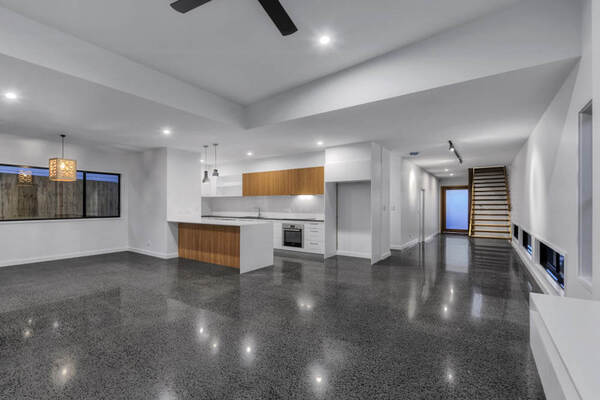
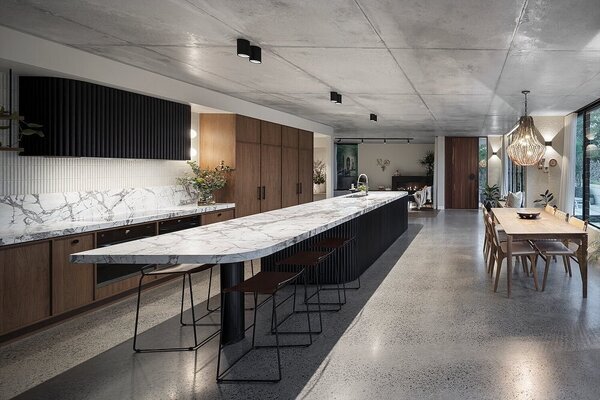
If you’re searching for polished concrete installation, this option can be a smart mix of style and strength. When done professionally, polished concrete can look sleek and stay easier to maintain than many people expect. We provide polished concrete installation in Long Island for both new and existing concrete floors, including garages and commercial spaces.
Why people choose polished concrete
Clean, modern appearance
No grout lines
Works well in high-traffic areas
Can help brighten a space because of the way it reflects light
A safety note important for businesses
Slip resistance matters. A report reviewing floor slip-resistance research explains that the coefficient of friction is a key factor related to slips and falls. If you want a simple explanation, the coefficient of friction is basically a number that describes how “grippy” a surface is.
4) Terrazzo Flooring
Terrazzo is a classic flooring choice that still looks modern today. It’s often used in:
Schools and universities
Hospitals and medical buildings
Lobbies and large hallways
High-end residential spaces
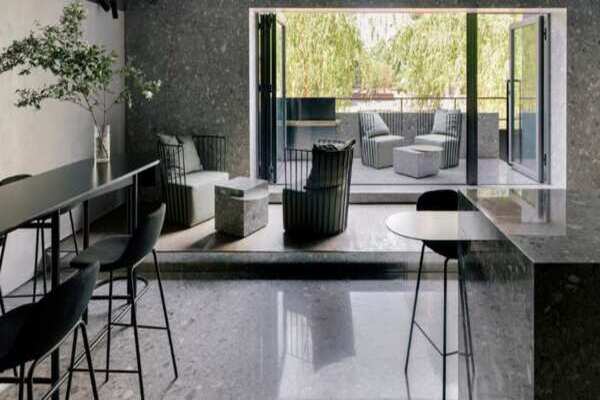
Terrazzo is a composite material that uses chips (like marble or granite) in a binder, then it’s finished smooth and polished.If you’ve been searching for ‘terrazzo floor installation near me,’ we can help you plan and install a terrazzo system that fits your space. For Long Island properties specifically, we also handle terrazzo floor installation in long island projects and related flooring work.
Why terrazzo is worth considering
Very strong for high-traffic buildings
Classic look that can be customized with color and design
Great long-term value when properly installed and maintained
Which Flooring Is Best for Your Space?
Here’s our recommendation:
Best Flooring for Homes in Long Island
Bathrooms: tile (safe, clean, water-friendly)
Kitchens: tile or stone (great look, easy cleanup)
Basements: epoxy or polished concrete (low maintenance)
Warehouses/Back rooms: epoxy systems (strong & easy care)
Lobbies/Hallways: terrazzo (built for traffic, timeless style)
Why Work With Old Stone Restoration in Long Island?
Flooring is not just “what looks good.” It’s also:
how long it lasts
how safe it is
how easy it is to clean
how well it holds up in real life
We’ve been working on floors across Long Island since 1990, and we handle both installation and specialty flooring services like polished concrete and epoxy systems. If you want to explore options, check out our services on our website https://oldstonerestoration.com/. To get in touch, call us (631) 821-5619 or write to us info@oldstonerestoration.com.
FAQs
What’s the easiest floor to maintain?
Polished concrete and epoxy floors are often very easy because they have a smooth surface and don’t have grout lines to scrub.
Is polished concrete too slippery?
It depends on the finish and maintenance. Slip resistance is tied to friction, and some government research shows friction is a key factor in slips and falls.
Do you do both installation and restoration?
Yes, our work includes installation and specialty services for stone, concrete, epoxy, and more across Long Island.
How do I choose between terrazzo and polished concrete?
Terrazzo is a composite floor made with chips in a binder and finished smooth, while polished concrete uses an existing or new concrete slab that’s ground and polished. If you want, tell me whether your space is home or business, and what room/area it is (garage, lobby, basement, showroom, etc.). We’ll suggest the best 2-3 options to match your needs.
Living near the coast brings natural beauty, ocean breezes, and sunlight-filled homes, but it also introduces challenges for homeowners with marble countertops. Salt air, humidity, and mineral-rich water gradually dull marble’s surface, leaving behind etching, rings, and loss of clarity. Even with regular cleaning, many residents in East Hampton and Oyster Bay notice their marble changing faster than expected. For those looking to maintain the longevity of their stone, experts like Old Stone Restoration & Installation Corp have observed that coastal environments require a more attentive approach to marble care.To preserve the elegance and value of natural stone in a coastal environment, understanding the right maintenance approach becomes essential. This guide breaks down everything coastal homeowners need to know, from sealing to cleaning to long-term care, so marble countertops remain bright, smooth, and beautifully protected year-round.
Why Coastal Marble Requires Special Care
Homes in East Hampton and Oyster Bay enjoy ocean breezes, expansive windows, and bright natural light, but that environment carries elements that interact with marble differently than in inland environments.
Salt Air Exposure: Salt carried in ocean air can settle on the surface of marble. Over time, it may disrupt sealants, weaken the protective layer, and contribute to dullness or etching.
High Humidity Levels: Moisture in the air can affect porous stones like marble, especially if they aren’t sealed routinely.
Mineral-Rich Well Water: Many homes in East Hampton rely on groundwater, which can contain minerals that leave marks or hard-water deposits on stone.
Frequent Use in Kitchens & Outdoor Areas: Coastal homes often feature open-air kitchens, wet bars, or outdoor serving spaces where marble is exposed to the elements more frequently.
Understanding these environmental pressures is the first step in choosing the right strategy for marble countertop maintenance in East Hampton.
How to Maintain Marble Countertops Near the Coast
Below are the essential maintenance practices homeowners should follow to protect marble surfaces in East Hampton and Oyster Bay from coastal wear.
1. Seal Marble Countertops Regularly
Marble is a porous stone. Sealers provide a protective barrier between your countertop and substances that can cause etching or staining, especially acidic foods, salt, and moisture.
Coastal homes require more frequent sealing
Most inland homes can seal once a year, but coastal homes benefit from sealing every 6–9 months, depending on use.
How to check if sealing is needed
Try the water-drop test:
Place a drop of water on the marble
If it absorbs quickly or darkens the stone, it’s time to reseal
Professional sealing products used in marble restoration in East Hampton often last longer and provide deeper protection than retail sealers.
2. Clean Daily With pH-Neutral Marble Cleaners
Countertop cleaners should never contain:
Vinegar
Lemon
Bleach
Ammonia
Abrasive powders
Salt and humidity magnify the effect of acidic cleaners, making etching more common in coastal homes. Instead, choose a pH-neutral stone cleaner formulated for marble.
Daily cleaning routine
Use a soft microfiber cloth
Spray pH-neutral cleaner
Wipe in gentle circular motions
Dry the surface to avoid mineral spotting
This helps prevent buildup from salt air and moisture.
3. Protect Against Etching from Coastal Cooking & Entertaining
While marble is heat-resistant, it is not acid-resistant. In coastal kitchens where homeowners frequently cook seafood, citrus-based dishes, vinaigrettes, or cocktails, countertops face a higher risk of etching.
Prevention tips
Use cutting boards, especially with lemons, tomatoes, and seafood marinades
Immediately wipe spills
Place coasters under drinks containing citrus or alcohol
Use trays for sunscreen bottles or lotions near poolside bars
For homes that already have dull patches or etching, professional marble restoration can resurface the top layer and bring back clarity.
4. Address Salt Air Deposits Quickly
Salt particles may not be visible, but they accumulate on surfaces near windows, sliding doors, and outdoor kitchens.
What salt does to marble
While salt doesn’t corrode marble directly, it can:
Weaken sealers
Make the surface feel rough over time
Contribute to cloudy patches
Maintenance strategy
Wipe surfaces daily
Use dehumidifiers indoors
Avoid letting saltwater splash or sit on surfaces
Keep windows closed on very windy ocean days when possible
Routine cleaning and sealing prevent long-term damage.
5. Prevent Water Rings & Mineral Spots
In East Hampton and Oyster Bay, many homes have well water with high mineral content. When glasses sweat, or water is left to dry on marble, it can leave mineral rings.
Over time, even well-maintained marble can lose clarity or develop etch marks. In coastal areas, this happens faster due to environmental exposure.At Old Stone Restoration & Installation Corp, we offer marble, granite, and terrazzo restoration. These services ensure your stone surfaces look fresh, smooth, and protected against the conditions of life near the water.
Long-Term Marble Countertop Maintenance in East Hampton
Annual Professional Inspection
Coastal homes benefit from yearly evaluations to:
Check seal integrity
Identify early etching
Correct mineral deposits
Restore finish clarity
Avoid Over-the-Counter Polishing Compounds
They often contain acids or waxes that can trap salt and moisture.
Keep a Maintenance Log
Record sealing dates, professional services, and any major spills or incidents.
Treat Damage Early
Scratches, rings, and dull spots are easier (and more affordable) to fix when addressed promptly.
Conclusion
Maintaining marble countertops in East Hampton and Oyster Bay takes a thoughtful approach that accounts for salt air, humidity, and daily use. With proper cleaning, sealing, and protective habits, your marble can remain stunning for decades. And when deeper restoration is needed, expert services like marble, granite, and stone restoration ensure your stone surfaces look as elegant as the day they were installed.Whether renovating an oceanfront property or caring for marble in a year-round residence, Old Stone Restoration & Installation Corp provides the craftsmanship and expertise needed to preserve the beauty of natural stone in coastal Long Island’s most prestigious neighborhoods. Call us at (631) 821-5619 to book your service.
FAQs
Is there a way to protect marble countertops?
Yes. The most effective way to protect marble countertops is by applying a high-quality penetrating sealer and maintaining a consistent cleaning routine with pH-neutral products.
What’s the best way to care for marble countertops?
Daily cleaning with a pH-neutral stone cleaner, regular sealing, and promptly wiping spills, especially acidic ones, are the key steps to caring for marble.
How to prevent water marks on marble?
Dry the surface after use, especially around sinks, and use coasters to prevent condensation rings.
Is marble good for outdoor countertops?
Marble can be used outdoors, but it requires more maintenance because weather, UV exposure, and salt air can accelerate etching and dullness, especially in coastal regions.
Does sealing marble actually work?
Yes. Sealing helps reduce absorption and provides a protective barrier against staining and moisture, though it does not make marble completely stain- or etch-proof.
Natural stone flooring is one of the defining features of luxury homes throughout Manhasset and Great Neck. Yet even the most beautiful marble or granite surfaces eventually begin to lose clarity, shine, or uniformity. When that happens, homeowners often search for a restoration method, only to discover a confusing question: Should the stone be polished, or honed?This uncertainty can make it difficult to choose the right service, especially when each finish changes the look and feel of the home in very different ways.In this guide, we break down the real differences between polishing and honing so homeowners can confidently choose the finish that aligns with their stone type, architectural style, and long-term maintenance needs.
What Is the Difference Between Polishing & Honing?
Although both processes are part of stone restoration, polishing and honing serve different purposes and create distinct finishes.
What Is Honing?
Honing uses diamond abrasives to remove surface scratches, etching, or dull areas while producing a smooth, matte, or satin finish. It does not create shine; instead, it restores uniformity and soft texture.
What Is Polishing?
Polishing uses progressively finer abrasives to bring the stone to a glossy, reflective finish. It enhances depth, sheen, and clarity, which is ideal for homeowners who want their floors to shine like a mirror.Understanding polishing vs honing is essential because each treatment supports different needs, lifestyles, and design preferences.
Marble Polishing vs Honing Differences
Marble is one of the most popular materials in Manhasset and Great Neck homes, especially in entrances, kitchens, and bathrooms. But marble is also softer than granite, making it prone to etching, dullness, and wear.
When to Choose Marble Honing
Honing is ideal when marble surfaces have:
Etch marks from acidic spills
Scratches or traffic wear
A desire for a modern, matte aesthetic
Floors that get frequent heavy use
Honed marble is easier to maintain in high-traffic areas because it doesn’t show marks as easily as polished marble.
When to Choose Marble Polishing
Polishing is preferred when homeowners want:
A high-gloss, luxurious finish
Color depth and veining enhancement
A reflective, upscale look
A protective finish that resists light staining
For homes in Manhasset, NY, polished marble is extremely popular in foyer spaces where elegance sets the tone. In Great Neck, NY, many homeowners choose polished marble for master bathrooms and formal living rooms.
Honing vs Polishing for Stone Floors
Different stones react differently to honing and polishing. Below is a general guide:
Granite Floors
Honing: Helps remove scratches and level uneven areas.
Polishing: Provides a durable, glossy finish for countertops and high-end floors.
Terrazzo Floors
Honing: Ideal for refinishing older terrazzo that has lost its uniformity.
Polishing: Restores shine and brings out the aggregate’s natural color and pattern.
Limestone & Travertine
Honing: Recommended due to naturally soft surfaces.
Polishing: Possible but requires more frequent maintenance.
Stone Finishes in Manhasset, NY
Homes in Manhasset, particularly in neighborhoods like the Strathmore community, Plandome, and Flower Hill, often feature marble or granite flooring in grand foyers and kitchens. These homes typically lean toward polished finishes because:
Natural light enhances the reflective effect
Polishing creates a “luxury estate” aesthetic
It highlights the stone’s color depth and character
However, modern renovations in Manhasset are moving toward honed marble and granite in kitchens and bathrooms for a softer, contemporary look.If your home requires surface correction, deep restoration, or full refinishing, our marble restoration service brings every surface back to life with precision craftsmanship.
Stone Honing Services in Great Neck, NY
Great Neck homes, especially in Kings Point, Saddle Rock, and Great Neck Estates, often feature stone materials that withstand heavy use, such as terrazzo, limestone, and travertine. Many homeowners prefer a honed finish for:
Less maintenance
A natural, understated aesthetic
Better resistance to visible etching and scratches
Families with children, pets, or high foot traffic often find that honed stone floors stay looking newer for longer. Still, polished stone remains popular in more formal rooms where elegance is a priority.We provide expert stone honing services, ensuring your flooring perfectly complements the lifestyle and architectural style of your home.
Which Is Better: Polishing or Honing?
There is no universally better option, only what works best for your flooring and your home.
Choose Honing If You Want:
A matte or satin finish
A modern, natural look
Less maintenance in busy areas
Better concealment of etches and scratches
Choose Polishing If You Want:
A glossy, reflective finish
Highlighted veining or aggregate
A luxurious, high-end appearance
A finish that resists mild stains
If you’re unsure, our team can assess your floor and recommend the correct service based on the condition of the stone, your lifestyle, and your design goals.
Polishing vs Honing: Cost Differences
Pricing depends on:
Stone type
Surface condition
Square footage
Whether restoration is needed before finishing
Generally:
Honing is typically more affordable because it requires fewer refinement steps.
Polishing may cost more due to additional polishing stages and the need for specialized equipment.
Whether you live in Manhasset or Great Neck, the choice between polishing and honing depends on your stone type, your home’s aesthetic, and your maintenance preferences. Honing provides a softer, modern feel ideal for active households, while polishing delivers a striking, glossy impact perfect for formal and luxurious spaces.At Old Stone Restoration & Installation Corp, we offer expert stone care tailored to Long Island’s most prestigious neighbourhoods. Whether your stone floors need a full restoration or simply a refreshed finish, our team provides the craftsmanship needed to protect and enhance your investment for years to come. Call us at (631) 821-5619to book a service.
Old concrete doesn’t just look tired, it cracks, stains, and generates dust that makes your space feel unfinished. An epoxy floor coating done by experienced epoxy floor contractor changes that fast, turning dull, porous concrete into a seamless, high-performance surface that looks like it belongs in a showroom, not a garage. Epoxy systems bond with the concrete and create a hard, protective layer that resists wear, chemicals, and moisture. Below is how modern epoxy solutions upgrade garages, basements, and workspaces, and which trends homeowners search for most.
Why Epoxy Floor Coating Is So Popular Right Now
Homeowners and businesses love epoxy because it:
Creates a tough, long-lasting surface that stands up to heavy traffic and impacts
Resists oil, road salt, chemicals, and everyday spills
Cleans easily with simple sweeping and mopping
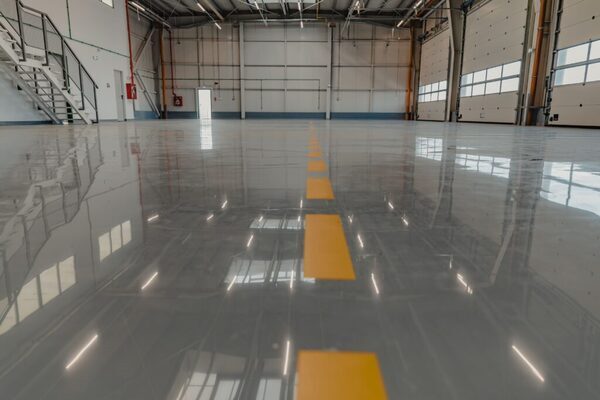
Makes spaces look brighter thanks to its smooth, light-reflective finish
Instead of endlessly re-sealing concrete, people increasingly choose epoxy once and enjoy years of low-maintenance performance.
Transforming Old Concrete Floors with Epoxy Concrete Floor Systems
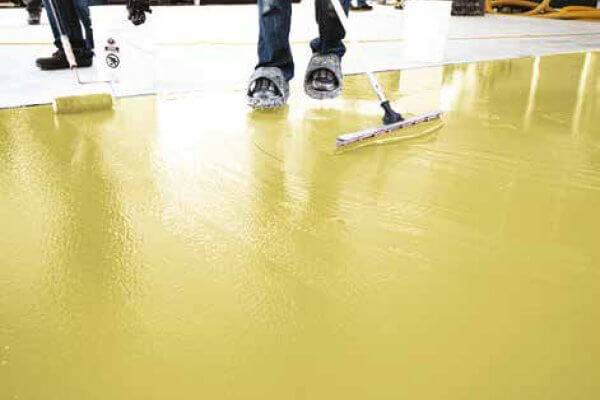
When you apply an epoxy concrete floor system, you do more than “paint” the surface. The process actually repairs and upgrades the slab.Typical steps include:
Surface prep
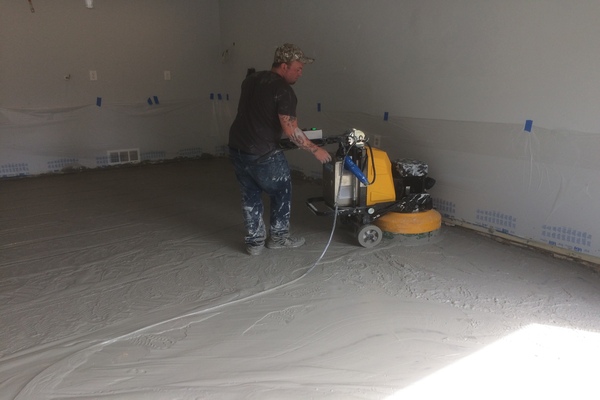
Grinding or shot-blasting removes old coatings and opens the pores so epoxy can bond deeply.
Crack and pit repair
Installers fill and smooth damaged areas, so flaws don’t show through the finished floor.
Epoxy primer and build coats
Resin and hardener react to form a dense, protective layer that seals the concrete.
Topcoat for gloss or matte finish
UV-stable and scratch-resistant topcoats lock everything in.The result? That chalky, stained slab turns into a continuous, high-performance surface that looks new and feels solid underfoot.
Garage Floor Epoxy and Basement Epoxy: Real-World Upgrades for Homeowners
Garage floor epoxy
In garages, epoxy helps:
Stop hot-tire pickup and peeling that you see with basic concrete paint
Resist oil and fluid stains from cars, tools, and projects
Reduce dust, making storage areas and home gyms cleaner
Many 2025 garage trends focus on epoxy coatings that combine durability with style, so the garage feels like an extension of the home, not a dark storage box.
Epoxy basement floor
Basements often deal with moisture, musty odors, and hard-to-clean concrete. Epoxy basement coatings:
Create a moisture-resistant surface that’s easier to keep clean
Help discourage mold and mildew growth on the floor surface
Make finished basements, gyms, and playrooms feel more polished and inviting
Design Trends: Metallic Epoxy Floor and Decorative Flakes
Today’s metallic epoxy floor and decorative flake systems prove that performance and style can go together.
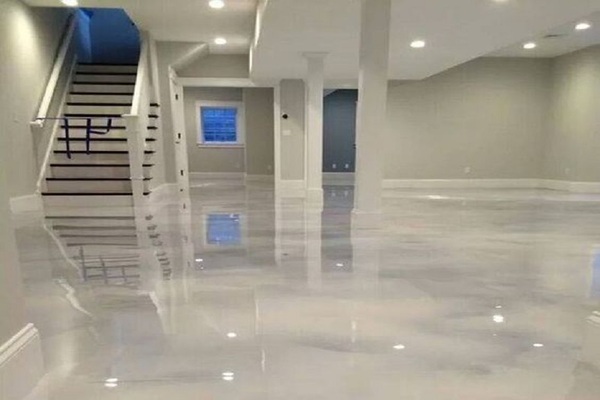
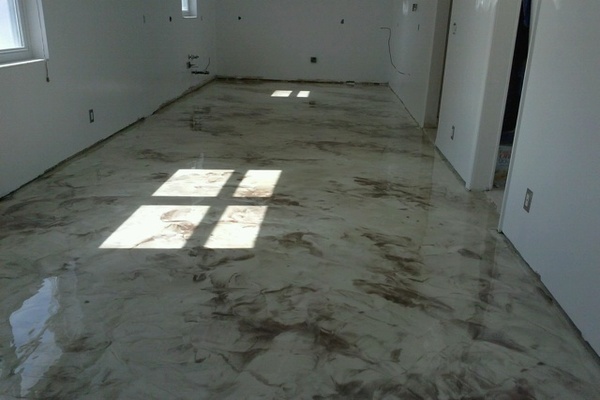
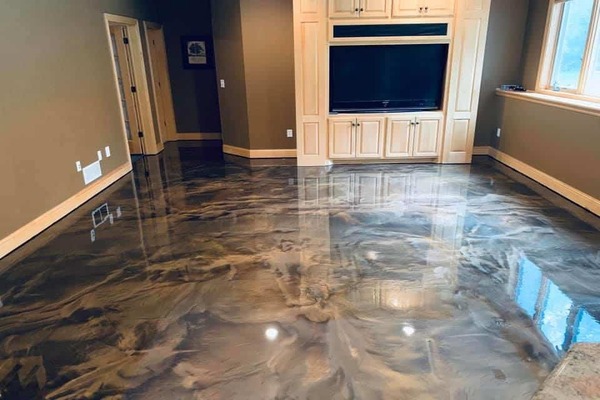
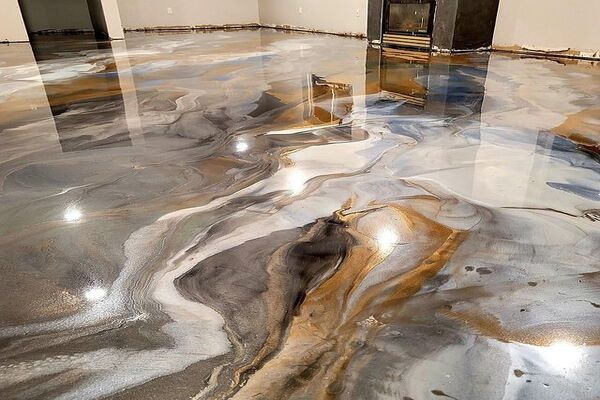
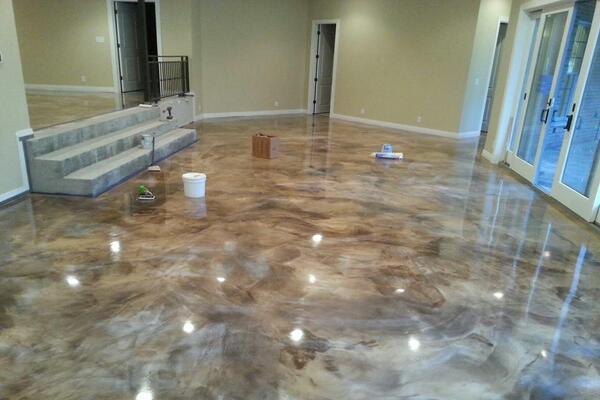
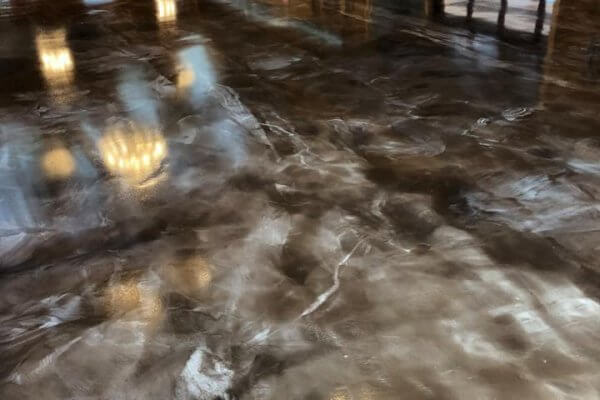
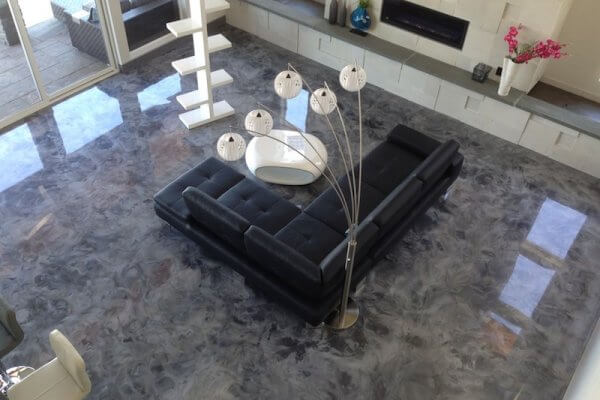
Metallic epoxy floors swirl pigments through clear epoxy to mimic marble, flowing water, or custom abstract designs. They’re a top 2025 trend in showrooms, home gyms, and high-end garages.
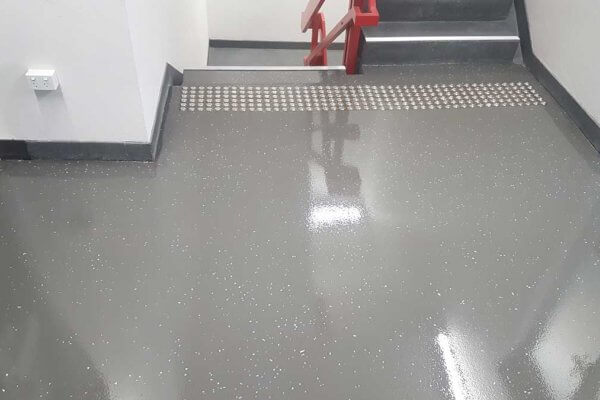
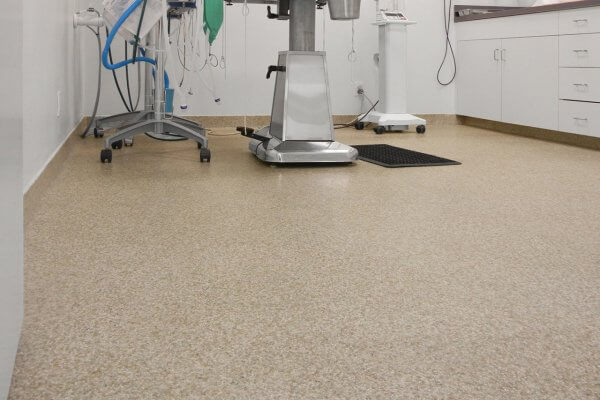
Decorative flake systems broadcast colored chips into the epoxy base, then seal them under a clear topcoat. They hide imperfections, add slip resistance, and come in endless color blends.
Instead of “just gray”, you can choose sleek solid colors, stone-inspired blends, or artistic metallic looks that truly transform the space.
Is Epoxy Floor Coating Right for Your Space?
If your concrete floor looks drab, chips easily, or constantly feels dusty, epoxy floor coating offers a smart upgrade. It strengthens the slab, improves appearance, and cuts down on maintenance for years. Whether you start with a garage floor epoxy project, a basement makeover, or a full epoxy concrete floor throughout a workshop, the transformation is dramatic: from tired, stained concrete to a durable, designer surface that can keep up with everyday life.Reach out to our epoxy flooring specialists at (631) 821-5619 or info@oldstonerestoration.comto get started. We’ll assess your space, explain the best epoxy floor coating systems for your needs (including solid color, flake, quartz, metallic, and anti-slip options), and connect you with reliable epoxy flooring contractors and certified installers. Give your concrete floors the protection, durability, and long-term value they deserve.