What Is a Chip Broadcast Epoxy Floor?
A chip broadcast epoxy floor is made in layers:- Epoxy base coat goes down on concrete.
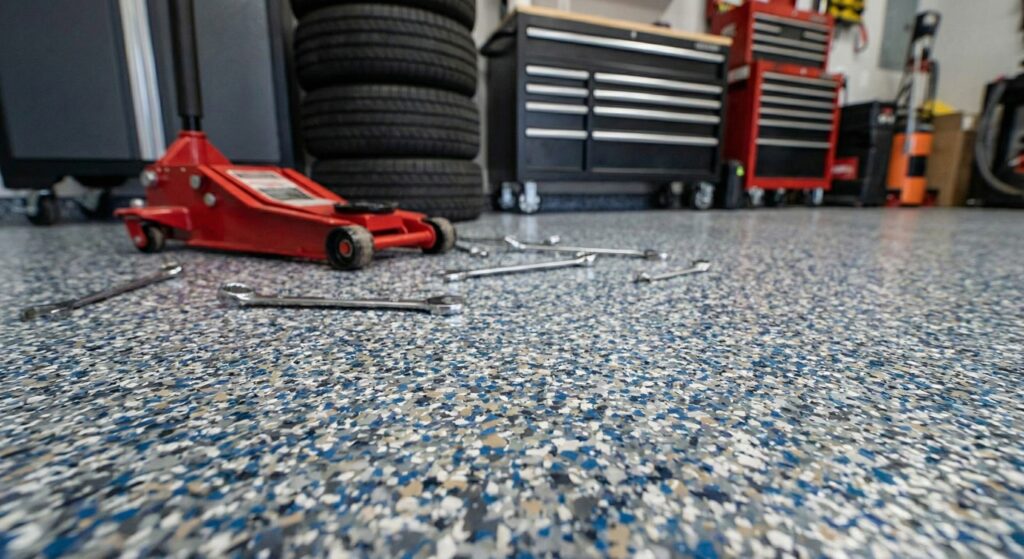
- Epoxy floor chips (colored vinyl flakes) are broadcast (sprinkled) into the wet epoxy until the floor is covered.
- After it heals, extra chips are scraped off and vacuumed.
- A clear top coat is applied to seal everything in.
What Are Epoxy Floor Chips?
Epoxy floor chips are small colored flakes, usually vinyl. They come in many blends (gray mixes, tan mixes, bold color mixes, and more). The chips do two big things:- They make the floor look better by adding color and texture.
- They help hide flaws like small stains, light cracking, and patch marks.
How Epoxy Chip Flooring Is Installed
Here is the basic process most pros follow. The exact steps can change based on the products used and the condition of the concrete.1. Prep the concrete (this matters most)
This step is the difference between a floor that lasts and a floor that peels.Prep can include:- Grinding the surface so epoxy can bond
- Fixing cracks and pitting
- Cleaning off oil and old coatings
- Checking for moisture issues
2. Apply the epoxy base coat
The base coat is the “glue layer” that holds the chips.3. Broadcast the chips
Chips are tossed by hand into the wet epoxy. Some floors use a full broadcast (chips cover the epoxy completely). Others use a partial/medium broadcast (you still see some base coat).A full broadcast is often described as broadcasting chips until the epoxy is no longer visible, then scraping and vacuuming the extra chips before the clear coat.4. Scrape and vacuum
Once the epoxy cures, loose chips are removed and the surface is leveled.5. Seal with a clear top coat
The clear top coat locks the chips in, adds strength, and makes the floor easier to clean. Some systems use a UV-stable topcoat option (helpful if sunlight hits the floor often).Pros of Chip Broadcast Epoxy Floors
1. Looks great and hides a lot
Epoxy chip flooring has a “finished” look that works in many settings. The chips also help hide:- Dirt
- Small stains
- Light concrete flaws
2. Strong and durable
Epoxy floors are known for being durable and low-maintenance in many commercial and industrial settings. The chip layer plus clear coat adds extra toughness for daily use.3. Easier to clean than bare concrete
Bare concrete soaks up spills and holds dust. A sealed epoxy chip floor is smoother and less porous, so cleaning is easier.Many epoxy flake floors are described as non-porous and easy to clean with simple sweeping and occasional mopping.4. Can improve slip resistance (when done right)
The chip texture can add grip compared to a super-slick painted floor. And if you need more traction, many installers can add a grip additive in the clear coat.Some epoxy guidance also notes slip resistance can be improved using additives when needed.5. Tons of color choices
This is one reason people love epoxy floor chips. You can match the look to the space: clean gray blends for garages, brighter blends for retail, and neutral blends for basements.Cons of Chip Broadcast Epoxy Floors
1. Prep is not optional
If the concrete is not prepped correctly, the coating can peel or bubble. This is why professional surface prep is a big part of the price.2. Moisture can cause problems
If moisture is coming up through the slab, it can weaken the bond. Some floors need moisture testing and a moisture barrier system before coating.3. Sunlight can change the look over time
Some epoxy products can yellow in UV light. A UV-stable topcoat can help, especially near garage doors or areas with strong sun.4. Repairs can show
If a heavy tool drops and chips the surface, repairs are possible, but the patch may be visible up close because chip patterns are random.5. It still has a cure time
Even if the install goes fast, you may need to stay off the floor for a set time. The exact timing depends on the products used.Best Uses for Epoxy Chip Flooring
Chip broadcast systems are popular because they work well in places that need strength and easy cleaning.Great places to use it
- Garages (cars, salt, dirt, light chemicals)
- Basements (clean look, easier to mop)
- Laundry rooms (water splashes, easy cleaning)
- Workshops (durable surface)
- Retail and offices (clean, professional look)
- Hallways and common areas (when a tough, easy-care floor is needed)
Places where you should be careful
- Outdoor areas in strong sun (ask about UV-stable top coats)
- Very wet floors (ask about traction and slip resistance options)
- Concrete with moisture issues (needs testing and the right prep)
Full Broadcast vs. Partial Broadcast (Quick Guide)
- Full broadcast: chips cover the whole floor (most popular). It gives a rich, even “flake” look.
- Partial broadcast: fewer chips, more base coat showing. It can cost less and still looks good, but it hides less.
Simple Maintenance Tips
Epoxy chip floors are easy to care for, but they still need basic cleaning.- Sweep or dust mop often (grit can scratch over time)
- Mop with a gentle cleaner
- Wipe spills sooner rather than later
- Avoid harsh acids or unknown chemicals unless your installer confirms it’s safe