Marble floors are a defining feature of many older homes, churches, hotels, and historic buildings. Some of these floors have been in place for a century or more. When they begin to look dull or worn, property owners often worry that polishing might damage or alter the original stone.
That concern is valid, but it does not mean polishing should be avoided. When carried out by trained professionals using the right methods, marble polishing can safely restore the appearance of historic floors without removing original material or changing the character of the stone.
Old Stone Restoration & Installation Corp specializes in marble floor restoration for historic and delicate stone surfaces. The approach begins with a full evaluation of the floor before any work starts, so restoration decisions are based on the actual condition of the marble rather than a one-size-fits-all process.
Why Old Marble Floors Require Special Care
Marble is a natural stone composed largely of calcite, which makes it reactive to acids and sensitive to harsh cleaning products. Common household items such as vinegar, lemon-based cleaners, bleach, and ammonia can etch the surface, strip the finish, or leave permanent dull spots. These risks apply to all marble, but older floors face additional challenges that make careful handling even more critical.
Age and Structural Condition
Older marble floors may have loose tiles, worn edges, hairline cracks, lippage, old filler repairs, or thinned surface layers from decades of foot traffic. Aggressive polishing on a structurally compromised floor can worsen existing damage rather than correct it. The National Park Service recommends evaluating the condition of historic features before selecting a treatment level. That principle applies directly to marble restoration. A floor that needs only light honing should not be subjected to heavy grinding.
Historic Value of Marble Floors
Historic marble floors carry architectural significance beyond their function as flooring. The National Park Service states that distinctive materials, features, finishes, and craftsmanship should be preserved, and that the gentlest effective treatment should always be chosen. Polishing a historic floor should aim to protect original stone and maintain its natural finish, not chase a high-gloss result that never existed in the first place.
Common Problems in Old Marble Floors
Historic and older marble floors commonly develop the following issues over time:
- Dullness and loss of natural luster
- Etching from acidic spills or wrong cleaners
- Fine surface scratches from foot traffic and grit
- Staining from water, oils, or minerals
- Uneven shine across different areas of the floor
- Worn traffic paths that appear flatter than surrounding stone
- Residue buildup from old wax coatings or improper maintenance products
In most cases, these problems reflect surface wear rather than deep structural failure. Professional marble polishing can address each of these issues without replacing the original stone.
Is Marble Polishing Safe for Historic Floors?
Yes. Marble polishing is safe for old or historic floors when it is performed by trained professionals using proper restoration methods. The key is using low-impact techniques that correct surface wear without removing more material than necessary.
Safe professional polishing typically involves an initial inspection, low-abrasion diamond tooling, step-by-step honing before any polish is applied, controlled moisture during the process, and protective sealing where appropriate. Historic preservation standards support this kind of limited-intervention approach.
Not every old marble floor needs the same treatment. Some floors require only light honing and polishing. Others need crack repair, tile stabilization, or stain treatment before restoration work begins. The safest process is always one tailored to the specific condition, thickness, finish, and historic character of the floor.
When Marble Polishing Is Not Safe
Using Harsh Chemicals
Acidic products etch the calcite in marble, while ammonia-based and bleach-based cleaners dull the surface finish. Historic stone is more vulnerable because the surface may already be worn from years of traffic and prior maintenance mistakes. Any polishing process that uses chemical compounds not matched to the stone type risks permanent damage.
Over-Polishing the Surface
Repeated aggressive grinding removes more stone than necessary. On historic floors, this can eliminate original surface material that cannot be replaced. Preservation standards call for evaluating the floor’s condition first and choosing the least invasive treatment. Polishing should never be done simply to achieve a mirror finish if doing so means removing original stone layers.
DIY Polishing Tools
Consumer-grade buffers, powder kits, and rental machines often produce uneven results. They can leave swirl marks, create patchy shine, or worsen existing damage when the wrong pad or compound is used. Old marble is not a suitable surface for trial and error.
Untrained Contractors
Not every floor contractor has experience working with natural stone, especially historic stone. The National Park Service recommends that cleaning and restoration of historic masonry be carried out under the guidance of a preservation or conservation specialist. That principle applies equally to marble floor polishing. Using a contractor without proper stone restoration experience on a historic floor introduces significant risk of irreversible damage.
Signs Your Old Marble Floor Needs Polishing
A historic or older marble floor may need professional marble polishing service when any of the following conditions are present:
- The marble looks dull, flat, or cloudy
- Stains remain after regular cleaning
- Scratches are visible in raking light
- The shine is uneven across different areas
- The surface feels rough or gritty in heavy-traffic zones
- Traffic lanes look noticeably flatter than surrounding stone
These signs usually point to surface wear, chemical etching, or residue buildup. In most cases, the stone can be restored through professional marble floor polishing rather than replacement.
How Professionals Safely Polish Historic Marble Floors
Marble Inspection
The first step is a thorough inspection of the floor for cracks, loose tiles, hollow spots, old repairs, staining, edge damage, and structural concerns. This determines whether the floor needs spot repairs, honing, polishing, sealing, or a combination of treatments. This condition-based evaluation aligns with preservation guidance that calls for assessing the full state of a historic feature before choosing a treatment.
Deep Cleaning
Before polishing begins, the floor is cleaned to remove dirt, wax residue, oils, and old maintenance product buildup. Polishing over contamination can trap defects or cause uneven results, so cleaning is a required step, not an optional one.
Honing Process
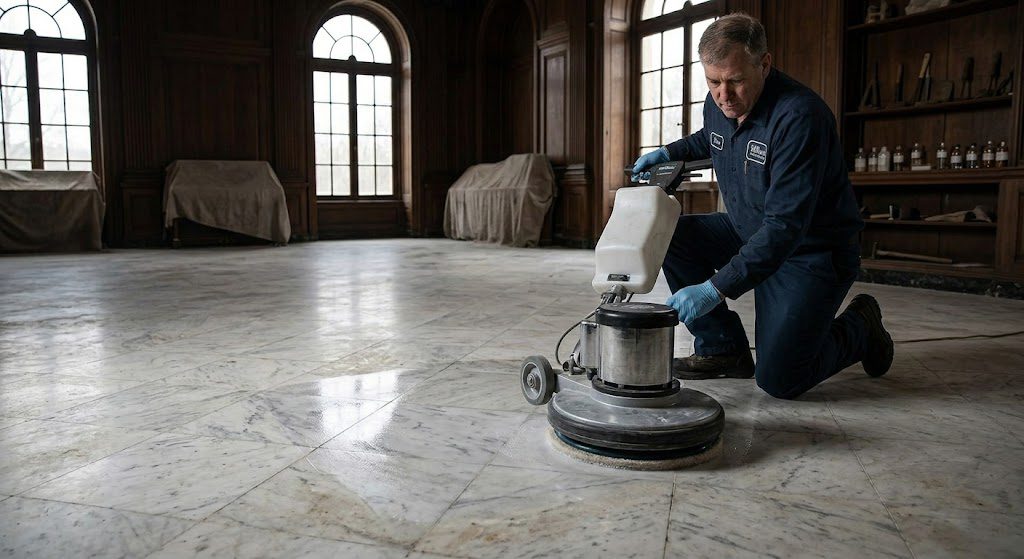
Honing uses diamond abrasives at progressive grits to smooth surface wear, reduce scratches, and blend etched areas. This step is often more important than polishing itself, because shine alone does not correct damaged stone. On historic floors, honing is done at the minimum level required to address the problem.
Marble Polishing
Polishing refines the honed surface by further smoothing the stone at a microscopic level, which restores clarity and light reflection. The result is the marble’s natural shine, not an artificial coating. Old Stone Restoration uses specialized equipment selected for the specific stone type and condition of the floor.
Sealing the Marble
After restoration, a penetrating sealer may be applied to slow liquid absorption and reduce staining risk. Sealing does not prevent acid etching, but it gives more time to clean up spills before they penetrate the stone. Sealing is recommended based on the porosity of the stone, not applied automatically to every project.
A professional floor marble polishing service such as Old Stone Restoration & Installation Corp uses specialized restoration techniques, one-project-at-a-time craftsmanship, and direct experience with historic stone to protect delicate marble surfaces. The company has served the New York metro area since 1990 and handles commercial, historical, and residential restoration work.
Benefits of Professional Marble Polishing for Old Floors
Professional marble polishing offers several practical advantages for historic and older floors:
- Restores natural shine without unnecessary material removal
- Smooths minor scratches, etch marks, and worn areas
- Extends the usable life of the original marble
- Improves day-to-day appearance and cleanliness
- Makes routine maintenance easier by removing surface irregularities that trap dirt
- Helps protect property value by preserving original materials
Professional polishing also eliminates microscopic surface texture that collects grit and accelerates future wear. When done correctly, restoration is far more practical and cost-effective than replacing original historic marble.
DIY Marble Polish vs. Professional Marble Polishing Service
| DIY Marble Polish | Professional Marble Polishing Service |
| Higher risk of surface damage | Safer, condition-based techniques |
| Uneven shine is common | Consistent, uniform finish |
| Wrong products may etch or dull the stone | Products and abrasives selected for the specific stone type |
| No damage assessment before starting | Inspection of cracks, wear, and repairs done first |
| Often skips sealing or uses the wrong sealer | Sealing applied only where appropriate |
| Limited effectiveness on historic or delicate floors | Designed for true marble floor restoration |
How Often Should Old Marble Floors Be Polished?
There is no fixed schedule that works for every property. In general, residential marble floors benefit from professional polishing every three to five years. High-traffic historic spaces such as lobbies, churches, or hotel corridors may need attention every one to three years, depending on foot traffic volume and maintenance practices.
Marble that is cleaned consistently with pH-neutral products and protected from grit holds its finish longer. Preventive restoration is also less costly than waiting until the floor needs heavy honing or structural repairs. Addressing early wear before it becomes permanent damage is the most practical approach for historic properties.
How to Maintain Historic Marble Floors After Polishing
Proper maintenance after polishing extends the life of the finish and reduces the frequency of future restoration work. The following practices are recommended for historic marble floors:
- Use only pH-neutral stone cleaners for routine cleaning
- Avoid vinegar, bleach, ammonia, and citrus-based cleaning products
- Clean up spills immediately to prevent staining and acid damage
- Remove grit and debris with regular dry or damp mopping
- Place entrance mats in high-traffic areas to reduce grit contact
- Reseal the stone when water absorption testing shows the sealer has worn
- Schedule professional maintenance before surface wear becomes deep damage
Professional Marble Polishing Services for Historic Floors
When an old marble floor has lost its shine, developed etching, or become uneven from decades of wear, professional restoration is the safest path forward. Old Stone Restoration & Installation Corp provides specialized marble polishing service and marble floor restoration service in Long Island for historic and delicate natural stone surfaces across Long Island and the New York metro area.
Free evaluations are available for many Long Island locations. The company’s preservation-minded approach means every project begins with a full assessment of the floor’s condition before any treatment is selected.
Why Choose Old Stone Restoration & Installation Corp?
Restoring marble floors in older or historic properties requires specialized experience. Not every contractor understands how to work with natural stone that has aged for decades. Old Stone Restoration & Installation Corp brings the following to every project:
- Experienced stone restoration specialists with decades of hands-on knowledge
- Advanced marble polishing equipment suited for delicate and historic stone
- Safe, condition-based techniques aligned with historic preservation principles
- Complete marble floor restoration, including honing, polishing, repair, and sealing
- Service across Long Island and the wider New York metro area since 1990
Conclusion
Marble polishing is safe for old or historic floors when it is carried out with proper restoration methods, a thorough initial inspection, and a preservation-first mindset. The goal is not maximum shine at any cost. It is to protect the original stone, correct surface wear, and restore a clean, natural finish that matches the age and character of the property.
If historic marble floors have become dull, scratched, or unevenly worn, a professional marble polishing service can restore their appearance while preserving the original stone for years to come. Old Stone Restoration & Installation Corp is available to evaluate the condition of historic marble and recommend the safest, most effective path to restoration.
FAQs
Is marble polishing safe for 100-year-old floors?
Yes, when the floor is fully inspected first, and restoration is carried out using the gentlest effective method. Historic preservation standards favor limited intervention and treatments that do not damage original materials.
Can damaged marble floors be restored?
In most cases, yes. Dull, scratched, etched, or stained marble floors can often be improved through professional marble floor restoration rather than replacement. The viability depends on the depth of the damage and the overall structural condition of the stone.
Does marble polishing remove scratches?
It can reduce or eliminate minor surface scratches and etch marks. More serious damage may require honing, structural repairs, or additional restoration work before polishing is applied.
How long does marble polishing last?
The lifespan of a polish depends on foot traffic, maintenance habits, and the cleaning products used. Floors maintained with pH-neutral cleaners and kept free of grit hold their finish significantly longer than floors exposed to harsh chemicals or heavy abrasion.
How much does marble polishing cost?
Cost varies based on floor size, overall condition, scope of repairs needed, and whether additional treatments such as honing, stain removal, or sealing are required before polishing. Historic floors typically need an in-person evaluation to provide an accurate cost estimate.