Marble has long been one of the most desirable natural stones used in residential design. Homeowners appreciate marble for its durability, elegant appearance, and ability to elevate almost any interior space. When selecting marble for a home, one of the most important decisions is choosing between honed finishes and polished finishes.
Both finishes show the natural beauty of marble in different ways. Understanding the difference between honed marble and polished marble helps homeowners select the right option based on safety, maintenance needs, and the overall design of their home.
This guide explains how each finish is created, where each works best, and how proper care, including marble honing and marble polishing, can keep marble surfaces looking beautiful for years.
What Is Honed Marble?
Honed marble has a smooth matte surface with very little light reflection. Instead of a shiny appearance, honed marble offers a softer and more natural look that fits well in modern and contemporary interiors.
The honing process involves grinding the surface of the marble until it becomes smooth but not glossy. This process removes the high shine associated with polished marble and creates a surface that feels soft and velvety.
As honed marble provides slightly more traction, it is often used in areas where slip resistance matters. Common uses include:
- Bathroom floors
• Kitchen floors
• Entryways
• Outdoor patios
• Pool areas
For homeowners who prefer a subtle and understated appearance, honed marble flooring is often the preferred option.
What Is Polished Marble?
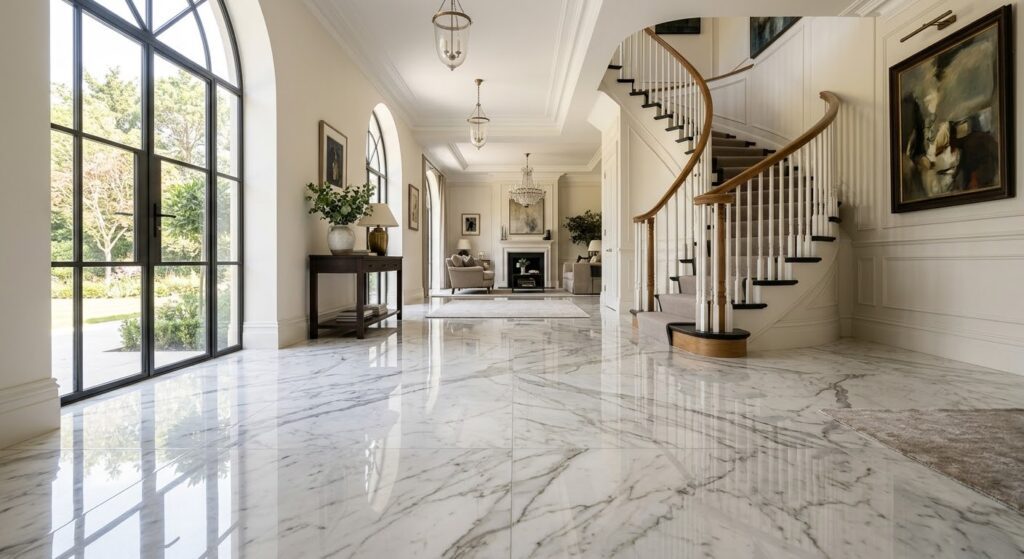
Polished marble features a high gloss finish that reflects light and highlights the natural color and veining within the stone. The polishing process uses progressively finer abrasives to create a mirror-like surface.
This glossy finish enhances the depth of the stone and gives marble a more dramatic appearance. As a result, polished marble is commonly used in spaces where homeowners want the stone to stand out as a design feature.
Common uses for polished marble floors and surfaces include:
- Living room flooring
• Fireplace surrounds
• Accent walls
• Kitchen countertops
• Bathroom vanity tops
Because polished marble reflects light so well, it can make a room appear brighter and more spacious.
Differences between Honed Marble & Polished Marble
Understanding the differences between these finishes helps homeowners choose the right material for each area of their home.
Feature | Honed Marble | Polished Marble |
| Surface Finish | Matte | Glossy |
Slip Resistance | Better grip | More slippery |
| Scratch Visibility | Hard to notice | Easily visible |
Stain Resistance | More porous | More resistant |
| Appearance | Soft and natural | Elegant and luxurious |
Maintenance | Needs sealing more often | Easier to clean |
The matte surface of honed marble helps conceal minor scratches and etching. In contrast, polished marble tends to highlight imperfections because of its reflective finish. These characteristics play an important role when planning long-term marble maintenance and care.
What are the Pros and Cons of Honed Marble?
Advantages of Honed Marble
Honed marble offers superior traction, making it the safer choice for wet areas like bathrooms and pool decks. The matte finish masks everyday wear, including light scratches and foot traffic patterns, making it particularly beneficial in high-traffic zones. The contemporary aesthetic of honed marble complements modern and transitional design styles perfectly. Additionally, the surface shows fewer water spots and fingerprints compared to polished alternatives.
Disadvantages of Honed Marble
The increased porosity of honed marble makes it more susceptible to staining and liquid absorption. Colors and veining patterns appear slightly muted compared to polished surfaces. Regular sealing becomes essential, typically required every six to twelve months, depending on usage. The matte finish also shows dirt and dust more readily, necessitating frequent cleaning.
What are the Pros and Cons of Polished Marble?
Advantages of Polished Marble
Polished marble creates an undeniably luxurious atmosphere with its high gloss finish. The surface brilliantly highlights natural patterns and colors, making each piece a work of art. Polished marble provides better stain resistance due to its less porous surface, and cleaning becomes easier with simple wiping. The reflective quality brightens spaces and creates an impression of increased square footage.
Disadvantages of Polished Marble
The glossy surface becomes dangerously slippery when wet, requiring caution in certain applications. Scratches, etching from acidic substances, and wear patterns show prominently on polished surfaces. Regular professional maintenance keeps the shine intact, and the formal appearance might not suit all design preferences.
Best Places to Use Each Marble Type
Both finishes serve different purposes depending on the space.
Areas for Honed Marble
Honed marble works best in areas where safety and durability are important. Common applications include:
- Bathroom floors
• Entryways
• Kitchen flooring
• Outdoor patios
• Pool decks
These areas benefit from the added traction and the ability to hide wear.
Ideal Areas for Polished Marble
Polished marble works best in spaces where the focus is on visual appeal. Common applications include:
- Formal living rooms
• Dining rooms
• Fireplace surrounds
• Feature walls
• Kitchen countertops
These areas allow polished marble to showcase its natural beauty.
Restoration Methods of Marble Honing & Marble Polishing
Over time, marble surfaces require professional restoration to maintain their beauty. Marble honing removes surface scratches, eliminates etching, and creates a uniform matte finish across worn surfaces. Marble polishing restores lost shine, removes dullness from foot traffic, and brings back the mirror like reflection homeowners love.
Professional restoration services prove invaluable when marble shows signs of wear. For those seeking expert Marble Polishing in Long Island, Old Stone Restoration specializes in restoring marble floors, countertops, and other natural stone surfaces to their original glory.
Tips for Maintenance of Honed and Polished Marble
Proper maintenance extends the life and beauty of both marble finishes. Use pH-neutral cleaners specifically designed for natural stone. Seal marble surfaces regularly; honed marble requires more frequent applications. Clean spills immediately to prevent staining, especially on honed surfaces. Avoid acidic liquids such as wine, citrus juices, and vinegar, which can cause etching. Schedule professional restoration when surfaces show significant wear or damage.
Cost Comparison
The cost difference between honed and polished marble usually depends on finishing and maintenance. Honed marble may cost slightly less initially, but it often requires more frequent sealing.
Polished marble can cost more during installation because of the additional polishing process. However, it typically requires sealing less often.
Professional restoration services, such as marble polishing, may be needed occasionally to maintain the original shine.
Which Marble Finish Is Best for Your Home?
Choose honed marble when slip resistance matters most, children or pets use the space regularly, or contemporary aesthetics align with design goals. High traffic areas benefit from honed marble’s ability to hide wear.
Select polished marble when creating luxurious, formal spaces, showcasing dramatic veining patterns, or using marble primarily for decorative purposes. Areas with minimal water exposure suit polished finishes well.
When to Hire a Professional Marble Restoration Service Provider?
There are several signs that indicate the need for professional intervention. Some of them are dull or cloudy marble floors, visible scratches or etching, persistent water stains, uneven shine across surfaces, and deep staining that regular cleaning cannot remove. Professional marble polishing and honing services restore stone surfaces effectively, saving replacement costs while maintaining property value.
Final Thoughts
Both honed and polished marble offer distinct advantages for residential applications. The choice between finishes depends on practical needs, design preferences, and maintenance commitments. Regular care and professional restoration when needed ensure marble surfaces remain beautiful for generations.
Homeowners in Long Island experiencing marble deterioration should consider professional restoration services. Old Stone Restoration & Installation Corp provides expert marble honing and polishing services that transform worn surfaces into stunning features. Contact Old Stone Restoration today to schedule a consultation and discover how professional marble restoration can revitalize your home’s natural stone surfaces, ensuring they maintain their beauty and value for years to come.
FAQs
Is honed marble better than polished marble?
Neither finish proves universally superior. Honed marble works better for floors and wet areas requiring slip resistance, while polished marble excels in decorative applications where visual impact matters most.
Does honed marble stain easily?
Yes, honed marble’s increased porosity makes it more susceptible to staining. Regular sealing and immediate spill cleanup prevent most staining issues.
Is polished marble slippery?
Polished marble becomes slippery when wet, making it unsuitable for bathrooms, pool areas, and other locations exposed to water.
Can honed marble be polished later?
Professional marble polishing services can transform honed marble into polished marble whenever homeowners desire a change in appearance.
How often should marble be polished?
Most marble floors benefit from professional polishing every one to three years, depending on foot traffic and wear patterns.