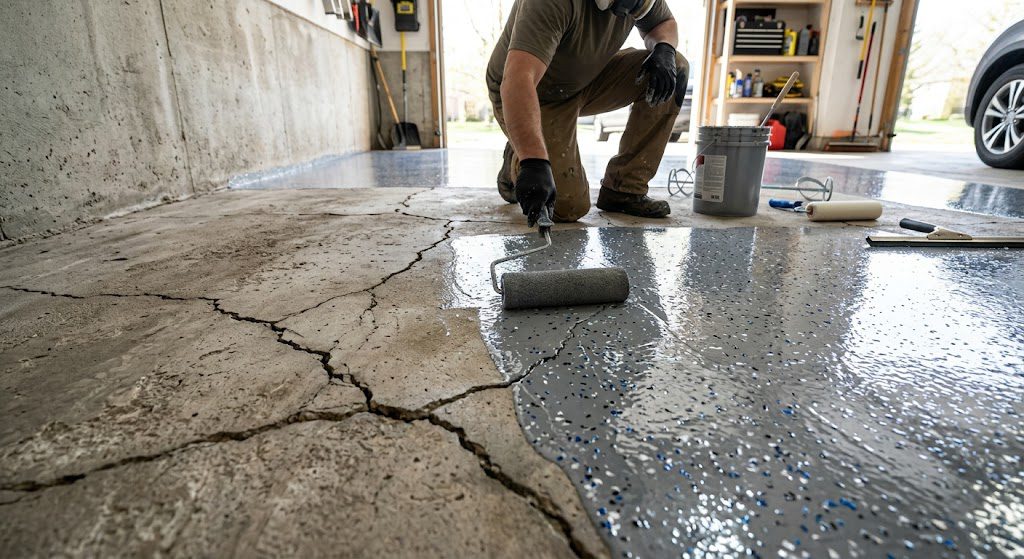
Cracked concrete often feels like a dealbreaker. Many homeowners and business owners look at the lines running across their garage floor or warehouse slab and assume the only option is to tear everything out and start fresh. That assumption can lead to unnecessary expense and frustration.
Most concrete cracks are repairable, and epoxy floor installation can be directly applied over them once the surface is properly prepared. The key lies in understanding what type of crack exists, whether it is still moving, and how deep the damage goes.
With over 35 years of experience, Old Stone Restoration and Installation Corp. has restored and coated concrete surfaces ranging from residential garages to commercial facilities across Long Island. That kind of hands-on knowledge matters when dealing with cracked concrete.
Quick Answer:
Yes, epoxy flooring can be installed over cracked concrete in most cases. Small cracks and surface cracks can usually be repaired before the epoxy is applied. However, large cracks, moving cracks, or cracks caused by foundation problems should be fixed first. When the concrete is properly repaired and prepared, epoxy flooring creates a strong, smooth, and long-lasting surface for garages, basements, warehouses, and other spaces.
According to the Portland Cement Association, understanding crack type and movement is essential before applying any protective coating (PCA – Concrete Crack Evaluation).
Coating over moving cracks often leads to failure, while dormant cracks typically accept repairs and coatings without issue.
Here is a quick reference for common crack types:
| Crack Type | Can Epoxy Be Installed? |
| Hairline Crack | Yes |
| Shrinkage Crack | Yes |
| Surface Crack | Yes |
| Settlement Crack | Sometimes |
| Structural Crack | Requires repair first |
| Active or Moving Crack | This is not recommended until stabilized |
Fresh concrete contains water. As that water evaporates during the curing process, the slab shrinks slightly. This shrinkage can create fine cracks that appear within the first few months after pouring.
Heavy Vehicle Traffic
Garages, warehouses, and industrial floors endure constant weight from vehicles, forklifts, and heavy equipment. Over time, this repeated stress can cause surface cracking, especially in areas where the concrete was poured too thin or without proper reinforcement.
Soil Movement and Settlement
The ground beneath the concrete is not always stable. Clay soils expand when wet and shrink when dry. This movement can cause the overlying slab to shift, leading to cracks at weak points.
Moisture Changes
Water seeping under a slab can erode the supporting base material. When that support disappears, sections of concrete may sink or crack under normal use.
Freeze Thaw Cycles
In colder climates like Long Island, water trapped in concrete pores expands when it freezes. Repeated freeze-and-thaw cycles can cause surface spalling and deeper cracking over multiple winters.
Poor Original Installation
Concrete mixed with too much water, poured over improperly compacted soil, or cured too quickly tends to develop cracks earlier than properly installed slabs.
Which Cracks Are Safe for Epoxy Flooring Installation?
Hairline Cracks
These tiny lines are usually cosmetic. They rarely compromise structural integrity and respond well to simple crack filling prior to epoxy application.
Minor Surface Cracks
Common in older epoxy garage floors, these shallow cracks typically stay stable over time. After cleaning and filling, they make excellent candidates for epoxy coating.
Dormant Cracks
Industry guidance commonly notes that dormant or static cracks can be repaired and coated successfully when properly prepared. If a crack has not changed in size or shape over several months, it is likely dormant and ready for treatment.
Which Cracks Need Professional Repair Before Epoxy Flooring?
Structural Cracks
Wide cracks that run deep into the slab may indicate foundation issues. These require evaluation by a qualified professional before any coating work begins.
Wide Cracks
Cracks wider than a quarter inch often need more than simple filling. Epoxy mortar or specialized repair compounds may be necessary to restore surface integrity.
Active Cracks
If a crack is still moving due to ongoing soil settlement or structural stress, coating over it will only hide the problem temporarily. The crack will likely reappear through the epoxy layer.
Foundation Related Cracks
Cracks that appear near load-bearing walls or in patterns suggesting foundation movement need structural attention first.
Moisture-Damaged Concrete
Concrete that stays damp, shows efflorescence, or has visible water intrusion often indicates drainage problems that must be resolved before epoxy installation.
Important Note: Applying epoxy directly over moving cracks can result in visible cracking, peeling, or delamination later. Proper repair and stabilization must happen first.
How Professionals Repair Cracked Concrete Before Installing Epoxy Flooring
This step-by-step process separates professional epoxy flooring service from quick DIY attempts that often fail within a year or two.
Step 1: Detailed Concrete Inspection
A thorough walkthrough identifies all cracks, spalled areas, and potential problem spots. This inspection determines what repairs are needed and whether the slab can support an epoxy coating.
Step 2: Moisture Testing
Excess moisture trapped in concrete causes epoxy to fail. Professional installers test moisture levels to ensure proper adhesion.
Step 3: Crack Cleaning
Cracks must be free of dust, debris, and loose material before repair compounds can bond properly. Wire brushing, vacuuming, and sometimes pressure washing accomplish this.
Step 4: Crack Filling
Depending on crack width and depth, professionals use epoxy fillers, polyurea compounds, or cementitious repair materials. Each product serves a different purpose.
Step 5: Surface Grinding
Diamond grinding removes the top layer of concrete, opening pores and creating a profile that allows epoxy to bond mechanically with the slab.
Step 6: Surface Profiling
The concrete surface needs a specific texture for optimal adhesion. Too smooth and the coating will not stick. Too rough and coverage becomes uneven.
Step 7: Final Epoxy Application
Multiple coats build up the final floor system. A primer coat penetrates the surface, followed by the body coat and a protective topcoat.
Professional installers typically repair cracks and mechanically prepare the slab before coating to improve adhesion and durability.
Will Cracks Show Through Epoxy Flooring?
This question comes up frequently, and the honest answer depends on several factors.
Repaired Hairline Cracks: Properly filled hairline cracks typically disappear completely under quality epoxy flooring. The repair material and coating create a seamless appearance.
Improperly Repaired Cracks: Cracks filled with the wrong material or without proper cleaning may show through or telegraph to the surface over time.
Moving Cracks: Real-world installers and users frequently note that movement joints and active cracks may remain visible or reappear over time because the concrete beneath the coating continues to move.
Control Joints: Intentional grooves cut into concrete to control where cracks form will typically remain visible through epoxy. Many property owners choose to fill these joints with a flexible sealant that allows continued movement without damaging the coating.
Can Epoxy Flooring Prevent Future Concrete Damage?
Once installed over properly prepared concrete, epoxy flooring service offers several protective benefits.
Chemical Resistance: Oil, gasoline, brake fluid, and common household chemicals sit on the surface rather than soaking into the concrete below.
Moisture Protection: A sealed epoxy surface prevents water penetration that can cause freeze-thaw damage or erosion of the underlying slab.
Abrasion Resistance: Heavy traffic, dropped tools, and dragged equipment cause less damage to epoxy-coated floors than bare concrete.
Easier Maintenance: Smooth epoxy surfaces clean quickly with regular sweeping and occasional mopping. Stains that would permanently mark bare concrete wipe away easily.
Improved Lifespan: By protecting concrete from the elements and daily wear, epoxy coating can extend a slab’s service life by many years.
What are the Key Signs your Concrete is too damaged for Epoxy Flooring?
Sometimes, concrete damage goes beyond what repair and coating can address.
Severe Structural Movement: Large sections of floor that have shifted significantly may need removal and replacement rather than repair.
Extensive Spalling: When large areas of concrete surface are flaking, the slab may lack the structural integrity needed to support an epoxy coating.
Major Foundation Problems: Cracks accompanied by bowing walls, sticking doors, or visible settlement indicate foundation issues that require structural repair before any cosmetic work.
Continuous Moisture Intrusion: Concrete that stays wet despite drainage improvements may need waterproofing treatment or slab replacement.
Large Uneven Sections: Sections of the floor that have sunk by more than an inch or two may require mudjacking or slab replacement to restore a level surface.
Residential Areas Where Epoxy Flooring Works Well Over Repaired Concrete
Garage Floors: The most common residential application. Garage floors endure vehicle traffic, chemical spills, and temperature swings that epoxy handles well.
Basements: Properly treated basement floors become usable living space or storage areas protected from moisture and dust.
Workshops: Epoxy flooring is well-suited for homes due to its durability and easy cleanup.
Patios: Exterior-rated urethane systems protect outdoor concrete from weather while adding visual appeal.
Utility Rooms: Laundry rooms and mechanical spaces stay cleaner and more organized with coated floors.
Commercial Spaces That Benefit from Epoxy Flooring
Warehouses: Heavy forklift traffic and constant product movement demand the durability that epoxy mortar systems provide.
Manufacturing Facilities: Chemical resistance and easy cleaning make epoxy ideal for production environments.
Retail Spaces: Attractive metallic garage floor or quartz broadcast systems create welcoming customer environments while withstanding foot traffic.
Restaurants: Commercial kitchen floors require sanitary, slip-resistant surfaces that meet health code requirements.
Automotive Facilities: Service bays and showrooms both benefit from chemical-resistant, easy-clean epoxy surfaces.
Why Hiring a Professional Epoxy Flooring Service Matters
Surface preparation equipment, crack assessment expertise, moisture testing capabilities, proper repair products, and application experience all contribute to long-term durability. Skipping any of these steps can lead to coating failure within months.
With 35 years of hands-on restoration and flooring experience, Old Stone Restoration and Installation Corp. understands how to evaluate cracked concrete and recommend the professional epoxy flooring solution for long-lasting results.
Why Choose Old Stone Restoration & Installation Corp for Epoxy Flooring?
Old Stone Restoration & Installation Corp brings 35 years of hands-on experience in concrete floor installation, restoration, and coating systems to every project. That depth of experience translates into correct product selection, proper surface preparation, and finished floors that hold up over time.
Residential and commercial expertise spans a wide range of project types and environments. The epoxy flooring service team has access to industrial-grade epoxy and urethane mortar systems not available through retail channels. Comprehensive surface preparation includes diamond grinding, moisture testing, and crack repair for every job.
Customized flooring solutions get matched to the specific demands of each space. A long-term performance focus prioritizes durability over quick, inexpensive shortcuts that fail within a few years.
Conclusion
Yes, epoxy flooring can be installed over cracked concrete in most situations. The key is proper inspection, accurate crack identification, and thorough surface preparation before any coating is applied.
Skipping preparation steps or coating over active cracks typically leads to peeling, visible crack lines, and premature failure. Taking the time to do it right the first time saves money and frustration down the road.
Old Stone Restoration & Installation Corp has installed and restored concrete floors for over 35 years, bringing the same standard of preparation and product quality to every project, regardless of size. Whether the project calls for a standard residential garage floor coating or an industrial-grade epoxy urethane mortar system built to withstand the toughest conditions, the team delivers floors that perform and last.
Contact Old Stone Restoration & Installation Corp. today to discuss the right epoxy flooring system for the project. Call (631) 821-5619 to request a consultation.
FAQs
Can epoxy flooring cover cracks completely?
Most hairline and minor surface cracks become invisible after proper filling and epoxy application. Larger or moving cracks may remain visible or reappear over time.
How large can a crack be before epoxy installation?
Cracks up to a quarter inch wide typically respond well to standard repair methods. Wider cracks may need epoxy mortar or specialized repair before coating.
Will cracks come back after epoxy flooring?
Dormant cracks that are properly repaired rarely reappear. Active cracks that continue to move may eventually telegraph through the coating.
Do I need to repair the cracks in the garage floor before applying epoxy?
Yes. Skipping crack repair often leads to coating failure. Even small cracks should be cleaned and filled before application.
How long does crack repair take?
Most residential crack repairs require 1 day to fill and cure before epoxy application can begin.
Is epoxy flooring better than replacing concrete?
In most cases involving repairable damage, epoxy coating over repaired concrete costs significantly less than full slab replacement while providing excellent results.