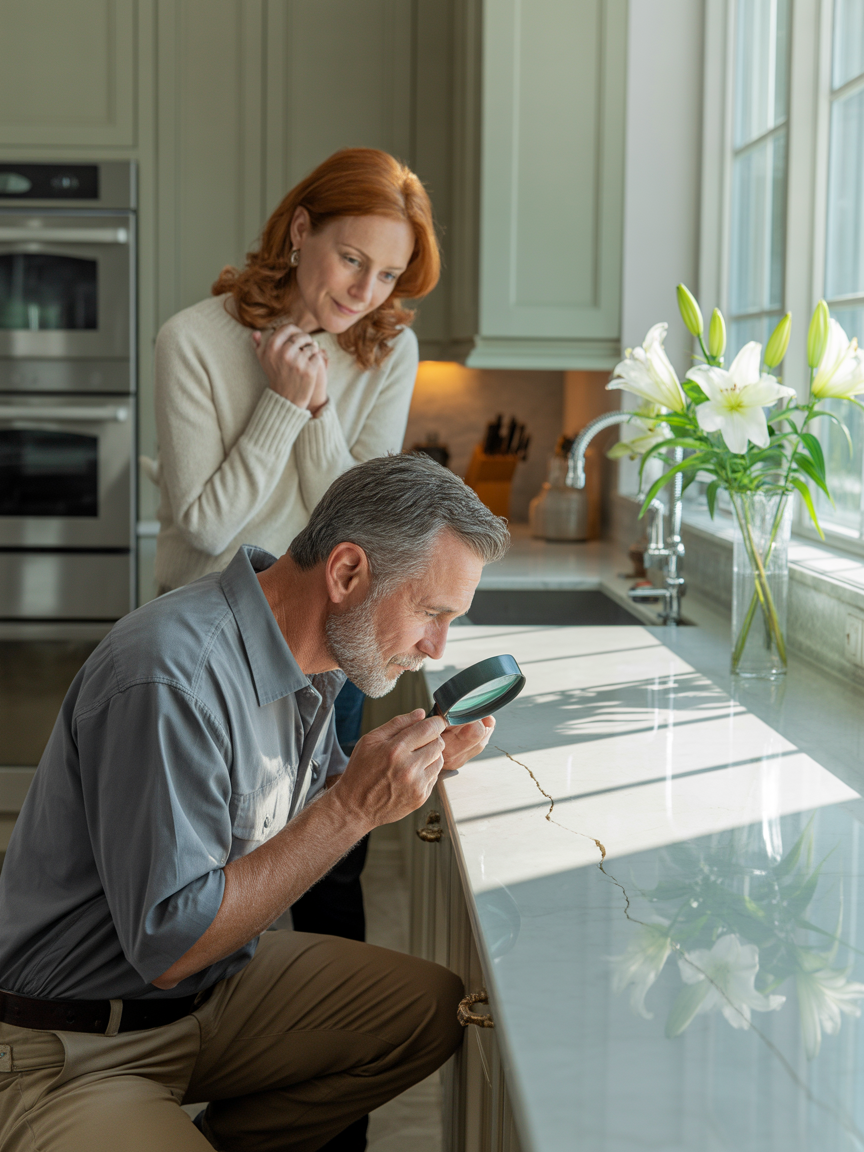
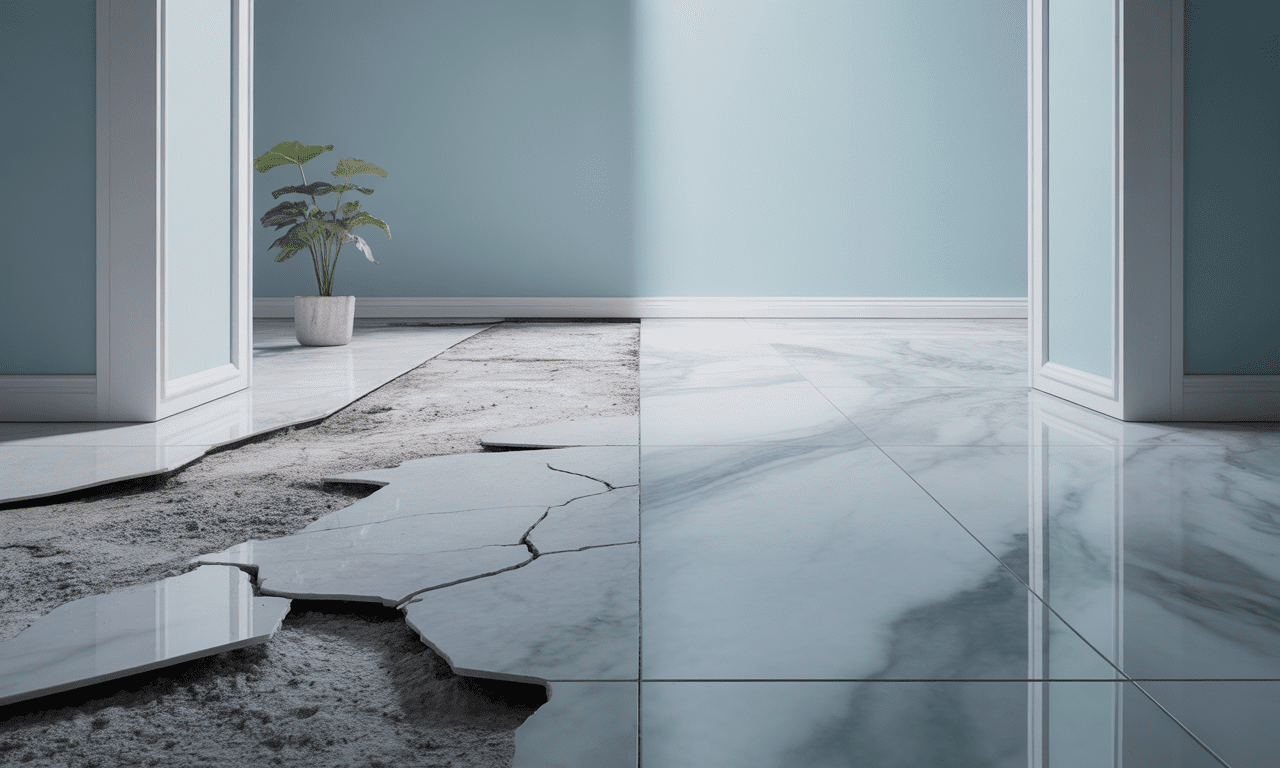
Concrete seems tough and permanent, but even the strongest slabs develop cracks over time. Some cracks are harmless surface blemishes. Others signal deeper problems that could affect the safety and stability of a floor, driveway, or garage slab.
At Old Stone Restoration & Installation Corp, our team has spent over 35 years inspecting and repairing cracked concrete floors, driveways, and slabs across residential and commercial properties throughout Long Island and New York. Our team inspects and repairs cracked concrete floors, driveways, and slabs for homes and businesses of all sizes.
What Causes Concrete Cracks in the First Place?
Concrete cracking occurs for several reasons, most of which are completely normal. The material itself is under stress from the moment it is poured. Understanding these causes helps prevent future damage and choose the right repair method.
Shrinkage During the Drying Process
Fresh concrete contains a lot of water. As that water evaporates during curing, the concrete shrinks slightly. This shrinkage creates internal tension, and cracks often form as a result. According to the Portland Cement Association, shrinkage cracking remains one of the most common issues in residential and commercial concrete work.
Most shrinkage cracks appear within the first few days or weeks after pouring. They tend to be thin and shallow, running in random patterns across the surface.
Poor Installation or Mixing Problems
When concrete gets mixed with too much water, it becomes weaker after curing. A weak mix shrinks more and cracks more easily. Similarly, if workers pour concrete too quickly or skip proper finishing steps, the slab may develop defects that later show up as cracks.
Proper concrete installation requires careful attention to water ratios, curing conditions, and timing. Cutting corners during this phase often leads to problems down the road.
Heavy Load Stress on the Slab
Concrete has limits. Parking heavy vehicles, placing industrial machinery, or storing excessive weight on a slab can cause stress cracks over time. Garage floors and driveways frequently experience this type of damage, especially when the original concrete thickness was not designed for heavy loads.
Temperature Changes and Freeze-Thaw Cycles
Concrete expands when temperatures rise and contracts when temperatures drop. In regions with cold winters, water can seep into small cracks, freeze, and expand. This freeze-thaw cycle gradually widens existing cracks and creates new ones. This seasonal movement explains why concrete damage often worsens during spring in northeastern states like New York.
Soil Movement or Settlement Under the Slab
The ground beneath the concrete does not always stay still. Soil can shift, settle, or erode over time, especially if drainage is poor or the area has recently undergone construction. When the supporting soil moves, the concrete above it may crack, sink, or heave upward.
Missing or Poorly Placed Control Joints
Control joints are intentional grooves cut into concrete to guide where cracks will form. Without these joints, concrete cracks wherever internal stress finds a weak point. Random cracking often indicates that control joints were either missing or placed incorrectly during installation.
What are the Different Types of Concrete Cracks and What They Mean?
Not all cracks are created equal. Identifying the type of crack helps determine whether a simple DIY fix will work or whether professional repair is needed.
Hairline Cracks on the Surface
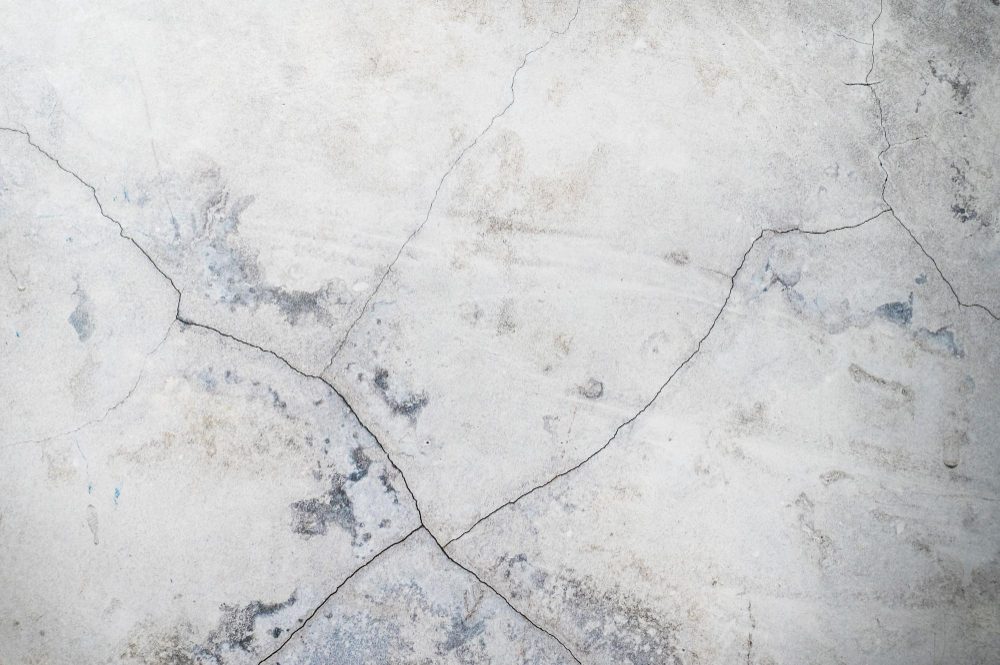
These thin, shallow cracks typically measure less than 1/16 inch wide. They usually affect only the surface layer and do not compromise structural integrity. Hairline cracks are common in new concrete and often stop growing once the curing process is complete.
Structural Cracks That Go Deep
Structural cracks extend through the full thickness of the concrete or show signs of significant movement. They often appear wider than 1/8 inch and may have uneven edges. These cracks can indicate foundation problems, excessive loading, or serious soil issues beneath the slab.
Settlement Cracks From Ground Movement
When soil settles unevenly under a slab, one section may sink lower than another. This creates cracks along with noticeable level changes in the floor. Settlement cracks tend to grow over time if the underlying soil problem continues.
Expansion Cracks From Temperature Stress
Concrete slabs that lack proper expansion joints may crack when temperature changes cause the material to expand against walls, other slabs, or fixed objects. These cracks often run parallel to walls or appear at corners where movement meets resistance.
When Should Concrete Cracks Cause Concern?
Minor cracking is normal and expected in most concrete installations. However, certain warning signs suggest that the damage may be more serious and warrant prompt attention.
- Cracks wider than 1/8 inch deserve closer attention. Wide cracks allow water penetration, which can worsen damage during freeze-thaw cycles or create moisture problems in basements and garages.
- Cracks that keep growing or changing indicate ongoing movement or stress. Monitoring crack width over several weeks can reveal whether the problem is active or stable.
- Uneven slabs, with one side higher than the other, suggest settlement or heaving issues that may require professional assessment.
- Water seeping through cracks signals that the damage extends through the full slab thickness. Moisture intrusion can lead to mold growth, floor coating failure, and damage to stored items.
- Garage floor cracks accompanied by flaking, spalling, or soft spots may indicate deeper deterioration that simple crack filling will not address.
Professional inspection is often worthwhile before structural damage spreads or becomes more expensive to repair.
How to Repair Cracks in Concrete: Step-by-Step Methods
The right concrete repair approach depends on the crack size, depth, and location, as well as whether the damage is active or stable. Here are the most effective methods for different situations.
Method 1: DIY Surface Crack Repair (Small Cracks)
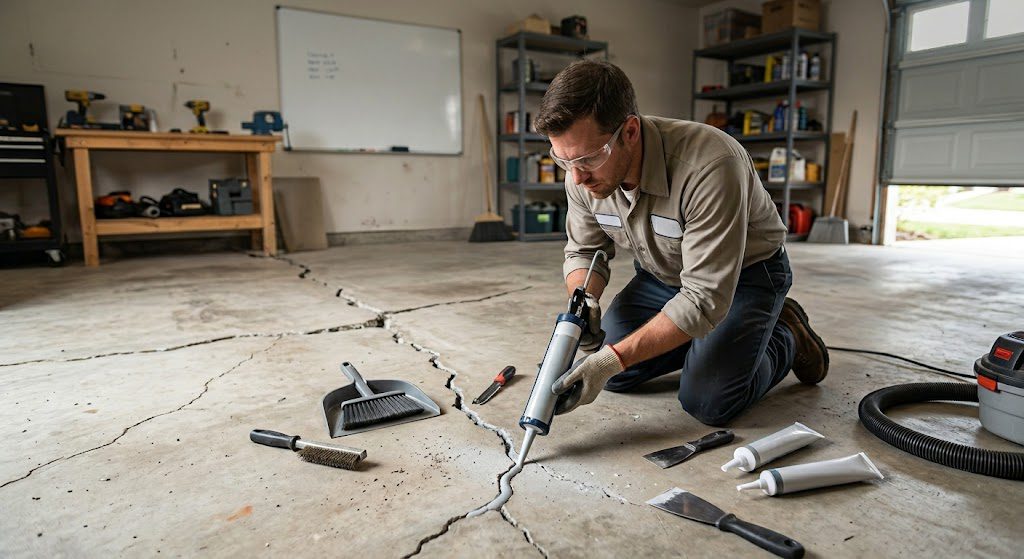
Small hairline cracks and minor surface damage can often be repaired without professional help. The process involves cleaning the crack thoroughly to remove dust, debris, and loose concrete. A wire brush or shop vacuum works well for this step.
For very narrow cracks, slightly widening them with a chisel can help the repair materials bond better. The next step involves applying a concrete crack filler. Polymer or epoxy-based fillers work well for small surface cracks. After filling, smoothing the surface with a trowel creates a clean finish.
This method works best for cosmetic repairs on stable cracks that are not growing or causing structural concerns.
Method 2: Epoxy Injection for Structural Crack Repair
Structural cracks in slabs and garage floors often require epoxy injection, a professional technique that restores the concrete to its original strength. This method involves sealing the crack surface first, then drilling small injection ports along the crack length.
Epoxy resin is injected under pressure, completely filling the crack from the bottom to the top. After the epoxy cures, the surface gets sealed and finished.
At Old Stone Restoration, this epoxy concrete crack repair is one of the most common methods our technicians use for structural slab repair. The 100% solids epoxy formulations bond strongly and can be topcoated immediately for a seamless finish.
Method 3: Driveway Crack Repair Methods
Driveway cracks experience different stresses than indoor floors. Vehicle traffic, weather exposure, and temperature swings all affect repair materials differently.
For driveway crack repair, the process typically starts with routing or widening the crack to create a consistent channel. A flexible sealant is applied to accommodate ongoing movement caused by temperature changes. Larger damaged areas may need patching with concrete repair compound, followed by surface leveling to restore a smooth driving surface.
Flexibility matters in driveway crack filling because rigid fillers can crack again when concrete expands and contracts with temperature changes.
Method 4: Garage Floor Crack Repair Techniques
Garage floor cracks present unique challenges because moisture vapor can rise through the slab, and the floor often receives coatings or epoxy finishes. Checking for moisture issues before repair helps ensure lasting results.
Epoxy injection works well for structural cracks in garage floors. For less severe damage, polyurethane foam injection can fill voids and stabilize the slab. If the surface shows extensive damage, grinding and resurfacing may be needed before applying a protective floor coating.
Method 5: Full Concrete Resurfacing for Severe Damage
When cracks are widespread or the surface has deteriorated significantly, patching individual cracks may not be practical. Full resurfacing involves applying a concrete overlay system that creates a new wearing surface over the existing slab.
This approach restores both appearance and function while addressing multiple defects at once. Self-leveling toppings can correct minor unevenness, while thicker overlays can handle more serious damage.
DIY Repair or Professional Help: Making the Right Choice
Some concrete repairs make good weekend projects. Others require specialized equipment, materials, and expertise.
DIY repair tends to work well for hairline cracks, small surface damage, and cosmetic issues on stable slabs. Hardware store crack fillers and patching compounds can handle these repairs effectively.
Professional repair is necessary for structural cracks, garage slab damage affecting the building’s foundation, driveways that are sinking or showing movement, and any situation involving water intrusion or safety concerns.
| Repair Type | DIY Suitable | Professional Recommended |
| Hairline surface cracks | Yes | Optional |
| Cracks wider than 1/8 inch | Sometimes | Yes |
| Structural cracks | No | Yes |
| Settlement or heaving | No | Yes |
| Pre-coating preparation | Sometimes | Occasionally |
Old Stone Restoration & Installation Corp specializes in diagnosing and repairing cracks in structural concrete using industrial-grade systems. Our factory-trained technicians have the tools and experience to handle complex repairs that DIY methods cannot address effectively.
How to Prevent Future Concrete Cracks With Old Stone Restoration?
Prevention saves money and hassle compared to repair. Several practices can help minimize cracking in new concrete or slow the progression of damage in existing slabs.
- Proper control joint placement during installation guides cracks to predetermined locations where they cause less harm.
- Correct curing procedures, including keeping new concrete moist during the initial curing period, reduce shrinkage cracking.
- Applying seal coating every few years protects the surface from water penetration and reduces freeze-thaw damage.
- Avoiding loads heavier than the slab was designed to prevent stress cracking. This matters especially for garage floors and driveways where vehicle weights can vary significantly.
- Managing drainage around slabs prevents water from pooling and saturating the soil beneath.
What does Concrete Crack Repair typically Cost?
Repair costs vary widely depending on crack severity, repair method, and project scope. Minor surface crack filling using DIY products costs relatively little and takes minimal time.
Professional epoxy injection for structural cracks requires more labor and specialized materials, thereby increasing the cost. Full slab repair or resurfacing represents the highest investment but addresses extensive damage comprehensively.
Concrete crack repair methods cost depends heavily on crack depth, width, and structural impact. Getting an accurate assessment before committing to a repair approach helps avoid surprises and ensures the chosen method actually solves the problem.
Professional Concrete Repair Services in New York
Concrete cracks do not have to mean expensive replacement or ongoing frustration. The right repair approach, applied correctly with quality materials, can restore integrity and appearance for years to come.
At Old Stone Restoration & Installation Corp, our team brings over 35 years of hands-on experience to every concrete repair project. From hairline surface cracks to serious structural damage, we use industrial-quality products and factory-trained technicians to deliver lasting results.
Contact Old Stone Restoration today at (631) 821-5619 or info@oldstonerestoration.com to schedule an on-site estimate.
FAQs
What causes cracks in concrete driveways?
Driveway cracks commonly result from shrinkage during curing, freeze-thaw cycles, heavy vehicle loads, tree root pressure, and soil settlement beneath the slab. Poor original installation and the absence of control joints also contribute to cracking.
How do you fix cracks in a concrete slab?
Small cracks can be filled with polymer or epoxy crack filler after cleaning. Larger structural cracks typically require epoxy injection under pressure. Severely damaged slabs may need resurfacing or partial replacement.
Can cracked concrete be repaired permanently?
Many crack repairs last for years when done correctly with quality materials. However, active cracks caused by ongoing soil movement or structural issues may reappear if the underlying cause is not addressed. Movement joints and active cracks may remain visible or reappear over time as concrete continues to move.
Is epoxy good for concrete crack repair?
Epoxy works well for crack repair, especially structural cracks that require strength restoration. 100% solids epoxy fillers bond strongly, cure quickly, and can be topcoated immediately. Epoxy is one of the most trusted materials for professional concrete repair.
When should concrete be replaced instead of repaired?
Replacement may be necessary when damage is too extensive for cost-effective repair, when the slab has settled significantly, or when structural problems make the concrete unsafe. A professional concrete slab repair solution can help determine whether repair or replacement makes more sense.
Dull marble. Faint scratches across a countertop. Cloudy patches near the kitchen sink. Etch marks from a spilled glass of wine. These are the everyday issues homeowners and property managers face with natural stone, and they almost always lead to the same question: should the marble be polished or fully restored?
Most people use these two terms interchangeably, but they are not the same service. Choosing the wrong one wastes money, delays real repairs, and sometimes makes the damage worse. A quick polish on a deeply etched floor will leave the etching behind. A full restoration on a lightly dulled countertop is more work than the stone actually needs.
At Old Stone Restoration & Installation Corp, our team has over 35 years of experience restoring marble, terrazzo, and natural stone surfaces in homes and commercial properties across Long Island and the New York metro area. This guide breaks down the real difference between marble polishing and marble restoration so the right choice becomes obvious.
Marble Polishing vs Restoration: Quick Difference
Marble polishing restores shine and smoothness to marble that has minor dullness, light wear, or surface haze. It is a cosmetic refresh.
Marble restoration is a deeper, multi-step process used on damaged marble with scratches, stains, etching, cracks, lippage, or heavy wear. It repairs the stone before refinishing it.
| Factor | Marble Polishing | Marble Restoration |
| Purpose | Restore shine | Repair and refinish |
| Damage level | Light surface wear | Moderate to severe damage |
| Process | 1 to 2 steps | 5 to 7 steps |
| Equipment | Polishing pads, powders | Diamond abrasives, grinding tools, sealers |
| Time required | A few hours | One to several days |
| Cost | Lower | Higher |
| Results | Smoother, shinier finish | Stone looks new again |
| Best for | Maintenance | Damaged or aged marble |
What Is Marble Polishing?
Marble polishing is a refinishing process that brings back the natural shine and smoothness of marble surfaces. It uses diamond polishing pads, polishing powders, and water to refine the top layer of the stone until light reflects evenly off the surface again.
Polishing does not repair damage. It refines what is already there. A high-gloss polish creates a mirror-like finish, while a honed finish produces a softer matte look. The choice depends on the homeowner’s preference and the stone’s original finish.
Signs You Only Need Marble Polishing
- Light dullness across the surface
- Gradual loss of shine over time
- Minor surface scratches that cannot be felt with a fingernail
- Marble still feels smooth and even
- No deep etching, staining, or cracks
- Counters and floors look tired but undamaged
Benefits of Marble Polishing
- Restores the original shine
- Improves overall appearance
- Makes daily cleaning easier
- Extends the life of the sealer
- Affordable compared to full restoration
What Is Marble Restoration?
Marble restoration is a complete repair and refinishing service that addresses the actual condition of the stone, not just its appearance. It includes grinding down uneven surfaces, repairing cracks and chips, removing stains, treating etching, honing, polishing, and sealing.
Professional marble restoration services like those offered by Old Stone Restoration & Installation Corp focus on repairing the real damage instead of only improving the surface shine. The process can take a marble floor that looks beyond saving and bring it back to a finish that rivals the day it was installed.
Signs You Need Marble Restoration Instead of Polishing
- Deep scratches that catch a fingernail
- Water stains and rings
- Acid etching from wine, juice, or cleaning chemicals
- Uneven tiles or lippage between slabs
- Visible cracks, chips, or broken corners
- Heavy traffic wear paths
- Dull spots that return quickly after cleaning
- Yellowing or discoloration
- A cloudy, hazy appearance that polishing cannot fix
How to Tell Which Service Your Marble Needs
Choose Marble Polishing only If
- The marble was restored recently and just needs a refresh
- The surface is smooth but has lost its shine
- No deep damage is visible
- The floor or counter is in a low-traffic area
- The stone is properly sealed and well maintained
Choose Marble Restoration only If
- The marble has not been serviced in years
- Multiple types of damage are visible
- The surface feels rough or uneven
- High-traffic patterns are worn into the floor
- A hotel lobby, commercial entrance, or staircase shows heavy wear
- A residential bathroom shows etching and water damage around fixtures
Can Marble Polishing Fix Scratches?
Light surface scratches can often be removed through polishing because they sit on the top micro-layer of the stone. Deep scratches that can be felt with a fingernail cannot. Those require grinding and honing, which is part of the restoration process. Trying to polish out deep scratches usually leaves them visible and wastes the service.
Does Marble Restoration Include Polishing?
Yes. Marble restoration almost always ends with a polishing stage. Restoration is a multi-step process where polishing is the final refinement after grinding, honing, repairs, and cleaning. Polishing alone is not restoration because it skips the repair work that damaged stone actually needs.
Marble Restoration Process Step-by-Step
Experienced marble polishing contractors understand that every stone surface reacts differently depending on age, finish, and traffic exposure. A proper restoration follows a clear sequence.
Inspection
The stone is evaluated for damage type, depth, finish, and traffic exposure.
Deep Cleaning
Dirt, residue, old sealer, and wax buildup are removed before any abrasive work begins.
Grinding
Coarse diamond abrasives flatten uneven tiles, remove lippage, and grind out deep scratches and etching.
Honing
Finer abrasives smooth the surface and prepare the stone for either a matte or polished finish.
Crack and Chip Repair
Cracks, chips, and missing corners are filled with color-matched materials.
Marble Polishing
The stone is refined with fine polishing pads and powders to bring back its natural shine.
Sealing and Protection
A penetrating sealer is applied to protect against stains, water, and future etching.
Common Marble Problems That Require Restoration
Etching
Acidic substances like lemon juice, wine, and vinegar eat into the stone surface, leaving dull marks that polishing alone cannot fix.
Water Damage
Standing water leaves rings, dull patches, and mineral deposits, especially around sinks and showers.
Uneven Marble Tiles
Lippage between tiles creates trip hazards and uneven wear. Grinding levels the surface.
Deep Stains
Oil, rust, and organic stains penetrate the stone and require specialized poultices and refinishing.
Cracks and Chips
Structural damage needs proper repair before any polishing or sealing.
Heavy Foot Traffic Wear
Lobbies, hallways, and entrances develop visible wear paths that only full restoration can correct.
Marble Polishing vs Restoration Cost
Several factors influence pricing for both services. Square footage, damage severity, stone type, finish preference, and whether the project is residential or commercial all play a role. Restoration usually costs more because it involves repair, grinding, honing, and refinishing rather than surface polishing alone. However, restoration also lasts much longer, which often makes it the more cost-effective choice over time.
DIY vs Professional Marble Restoration
DIY marble polishing kits are widely sold, but they come with real risks. The wrong chemicals can permanently etch the stone. Uneven hand pressure creates burn marks and swirl patterns. Improper sealing traps moisture and leads to discoloration. Once marble is damaged by a DIY attempt, professional restoration becomes the only option, and the cost goes up.
With more than 35 years of natural stone experience, Old Stone Restoration & Installation Corp has restored marble surfaces ranging from residential floors and countertops to large commercial stone installations, hotel lobbies, and historic properties throughout Long Island.
How Long Does Marble Polishing Last?
A professional marble polish typically lasts one to three years on residential surfaces and six months to two years on commercial floors. Lifespan depends on foot traffic, cleaning products, sealer condition, and how the stone is used. Acidic cleaners, abrasive pads, and unsealed surfaces shorten the polish life significantly.
How to Maintain Marble After Restoration
Use pH-Neutral Cleaners
Acidic and alkaline cleaners damage marble. Stick with cleaners made specifically for natural stone.
Avoid Acidic Products
Vinegar, lemon juice, and bleach should never touch marble.
Seal Marble Regularly
A quality penetrating sealer should be reapplied based on the stone’s exposure and finish.
Use Floor Mats
Place mats at entrances and high-traffic zones to reduce grit and wear.
Schedule Maintenance Polishing
Light polishing every one to two years preserves the finish and prevents deeper damage.
Why Professional Marble Restoration Matters
Marble restoration requires specialized diamond abrasives, variable-speed equipment, finish-matching skills, and deep knowledge of how different stones respond to grinding and polishing. A general contractor or cleaning company rarely has these tools or this training.
At Old Stone Restoration & Installation Corp, marble restoration is approached as both a repair process and a preservation process to help extend the life of natural stone surfaces. Every job is treated with the precision needed to protect surrounding finishes, furniture, and fixtures.
Areas and Surfaces That Commonly Need Marble Restoration
- Marble floors in foyers, kitchens, and bathrooms
- Marble countertops and vanities
- Hotel and commercial lobbies
- Office building entrances
- Marble staircases and treads
- Terrazzo floors in schools, hospitals, and historic buildings
- Granite countertops and commercial surfaces
- Shower walls and tub surrounds
Granite restoration and terrazzo restoration follow similar principles and are part of the same craft. Old Stone Restoration & Installation Corp handles all three on residential, commercial, and historical projects. Learn more about the full marble, granite, and terrazzo restoration services available across Long Island and the tri-state area.
Conclusion
Marble polishing is a cosmetic refresh for stone that has lost its shine. Marble restoration is a full repair and refinishing process for stone that has actual damage. Choosing the right service the first time saves money, preserves the stone, and avoids repeat work.
If the marble has deep wear, stains, scratches, etching, or uneven areas, a professional inspection can determine whether polishing or full restoration is the better solution. With over 35 years of hands-on experience, Old Stone Restoration & Installation Corp provides free evaluations for most locations on Long Island. Call (631) 821-5619 to schedule an expert assessment and bring natural stone back to its original beauty.
FAQs
Is marble polishing the same as restoration?
No. Polishing only refreshes the shine. Restoration repairs damage and then polishes the stone.
How often should marble be polished?
Residential marble benefits from polishing every one to three years. Commercial floors may need it more often depending on traffic.
Can damaged marble be restored?
Yes. Most marble damage, including scratches, etching, stains, and cracks, can be repaired through professional restoration.
Does restoration remove scratches?
Yes. Restoration uses diamond abrasives to grind out deep scratches that polishing cannot reach.
How long does marble restoration take?
Most residential projects take one to three days. Larger commercial jobs may take longer based on square footage and damage.
Will restoration make old marble look new again?
In most cases, yes. Restored marble often looks close to its original installed condition.
Is sealing included after restoration?
Yes. A penetrating sealer is applied at the end of the process to protect the stone.
Can etched marble be repaired?
Yes. Light etching can be polished out. Deeper etching requires honing and refinishing.
What causes marble to lose its shine?
Foot traffic, acidic spills, abrasive cleaners, hard water, and lack of sealing all contribute to dullness.
Should I replace or restore marble?
Restoration is almost always cheaper and faster than replacement, and it preserves the original stone. Only severely broken or missing slabs need replacement.
Choosing the right countertop can feel confusing. Many homeowners search for cultured marble vs granite countertops because both look beautiful but work very differently. In this simple guide, you’ll learn what each material is, how much they cost, how long they last, and which one is best for your home.
At Old Stone Restoration & Installation Corp, with 35+ years of experience (since 1990), we’ve restored thousands of marble and granite surfaces across Long Island. Based on real work, not just theory, this guide will help you make the right choice.
Quick Comparison: Cultured Marble vs Granite Countertops
| Feature | Cultured Marble | Granite |
|---|
| Material | Engineered (man-made) | Natural stone |
| Cost | Lower | Medium to high |
| Durability | Moderate | Very high |
| Maintenance | Low | Medium |
| Heat Resistance | Low | High |
| Lifespan | 10–20 years | 30+ years |
What Are Cultured Marble Countertops?
Cultured marble is a mix of crushed marble stone (about 75%) and resin. It is shaped in molds and finished with a smooth gel coating.
One big reason people choose it is because it is a non-porous countertop, which means it does not absorb water easily. This makes cleaning simple.
It also comes in many colors and styles, so you can match it with your bathroom or kitchen design. Compared to natural stone vs engineered stone, cultured marble falls in the engineered category.
What Are Granite Countertops?
Granite is a natural stone that comes from the earth. Each slab is cut from large rocks, which means every piece is unique.
Granite is known for its strength and beauty. It can handle heat from hot pans and resists scratches better than most materials. This is why granite countertops durability is often considered one of the best in the market.
Appearance & Design: Which Looks Better?
Cultured marble has a smooth and even look. It often looks softer and more uniform. This is great if you want a clean and simple design.
Granite, on the other hand, has natural patterns. No two slabs look the same. It gives a rich and premium feel to kitchens and bathrooms.
Durability & Lifespan (Expert Insight)
When it comes to countertop lifespan, granite clearly lasts longer.
Granite:
- Very strong and hard
- Can resist heat and scratches
- Can last over 30 years with proper care
Cultured Marble:
- Softer surface
- Can scratch, chip, or burn with heat
- Usually lasts 10–20 years
In our 35+ years of restoration work, granite surfaces usually need fewer repairs. Cultured marble is more likely to get surface damage over time.
Maintenance & Cleaning Guide
If you are looking for a simple countertop maintenance guide, here’s what you need to know.
Cultured marble is easy to maintain. Since it is non-porous, it does not need sealing. You can clean it with mild soap and water.
Granite needs a bit more care. It is slightly porous, so it should be sealed once a year. This helps prevent stains and keeps the surface strong.
If your stone has lost its shine, professional marble restoration in Long Island can bring it back to life.
Granite vs Cultured Marble Cost (2026)
Cost is one of the biggest deciding factors.
Cultured Marble:
- $30 to $100 per square foot
- Lower installation cost
- Budget-friendly option
Granite:
- $35 to $100 per square foot
- Installation may cost more
- Higher long-term value
While the starting price looks similar, granite often lasts longer, which makes it a better investment over time.
Best Use Cases (Where Each Works Best)
Best for Bathrooms → Cultured Marble
Cultured marble is a great choice for bathrooms. It allows seamless sinks and smooth finishes. It is also more affordable, which is helpful for large bathroom projects.
Best for Kitchens → Granite
Granite is better for kitchens because it handles heat and heavy use. If you cook often, granite is the safer and stronger option.
Cultured Marble Countertops Pros and Cons
Cultured marble has its own benefits and drawbacks.
Pros:
- Affordable
- Easy to clean
- Non-porous surface
Cons:
- Can scratch or chip
- Not heat resistant
- Less natural look
Granite Countertops Pros and Cons
Granite is a premium option, but it also has some downsides.
Pros:
- Very durable
- Heat resistant
- Natural and unique appearance
Cons:
- Needs sealing
- Higher upfront cost
Restoration & Repair (Important for Long-Term Care)
Over time, both materials can lose their shine. Scratches, stains, and dull spots are common.
Professional marble and granite restoration can fix these problems and make surfaces look new again. If you are looking for expert care, check this service:
We also provide trusted granite restoration in Long Island, helping homeowners protect their investment for years.
Which One Should You Choose?
Your choice depends on your needs and budget.
Choose Cultured Marble if:
- You want a lower-cost option
- You are working on a bathroom
- You want easy maintenance
Choose Granite if:
- You want a long-term investment
- You need strong kitchen countertops
- You prefer natural stone beauty
Expert Verdict
Based on our experience since 1990, granite is usually the better long-term choice for most homes. It lasts longer and handles daily use better.
However, cultured marble is still a smart option for budget-friendly bathroom designs.
Conclusion
Both materials have their place. Cultured marble is simple, affordable, and easy to maintain. Granite is strong, natural, and built to last.
If your countertops need expert care, Old Stone Restoration & Installation Corp provides trusted services across Long Island. With 35+ years of experience, we help restore and protect your stone surfaces so they look like new again.
FAQs
Is cultured marble cheaper than granite?
Yes, cultured marble is usually more affordable, especially for large areas.
Does granite require sealing?
Yes, sealing once a year helps protect it from stains.
Which lasts longer?
Granite lasts much longer, often over 30 years.
Can cultured marble be restored?
Yes, but it is more limited compared to natural stone restoration.
Is granite worth the cost?
Yes, because it lasts longer and adds more value to your home.
Choosing the right stone for your home is not always easy. Many people search for quartzite vs marble vs granite because these three stones look similar at first, but they are actually very different in how they perform, how long they last, and how much care they need. If you are planning a kitchen countertop, bathroom vanity, or flooring, understanding these differences can help you avoid costly mistakes and choose a surface that truly fits your lifestyle.
In this guide, everything is explained in very simple language so you can clearly understand which stone is best for you.
What is Quartzite?
Quartzite is a natural stone that starts as sandstone and becomes harder over time due to heat and pressure deep inside the earth. This natural process makes quartzite very strong and durable. One of the biggest reasons people choose quartzite is because it looks very similar to marble, with soft lines and light colors, but it is much tougher and less likely to get damaged.
Quartzite works very well in kitchens because it can handle heat and daily use. However, it still needs sealing from time to time to protect it from stains. Overall, quartzite is a great option if you want beauty and strength in one stone.
What is Marble?
Marble is a natural stone made from limestone. It is known for its smooth surface and beautiful veining, which gives it a luxurious and timeless look. This is why marble has been used for centuries in famous buildings and sculptures.
However, marble is softer compared to quartzite and granite. This means it can scratch more easily and may stain if spills are not cleaned quickly. Over time, marble can also lose its shine, which is why many homeowners look for marble restoration to bring back its original beauty. Marble is perfect for people who love elegance and are ready to take care of it properly.
What is Granite?
Granite is one of the hardest natural stones available. It is formed from cooled lava deep inside the earth, which makes it extremely strong and long-lasting. Granite has a grainy look with small patterns and comes in many different colors.
Because of its strength, granite is widely used in kitchens and high-traffic areas. It can handle heat, scratches, and daily wear better than marble. It is also easier to maintain, which makes it a practical choice for busy households. Even after many years, if granite starts to look dull, granite restoration can help restore its shine and appearance.
Quartzite vs Marble vs Granite: Key Differences Explained
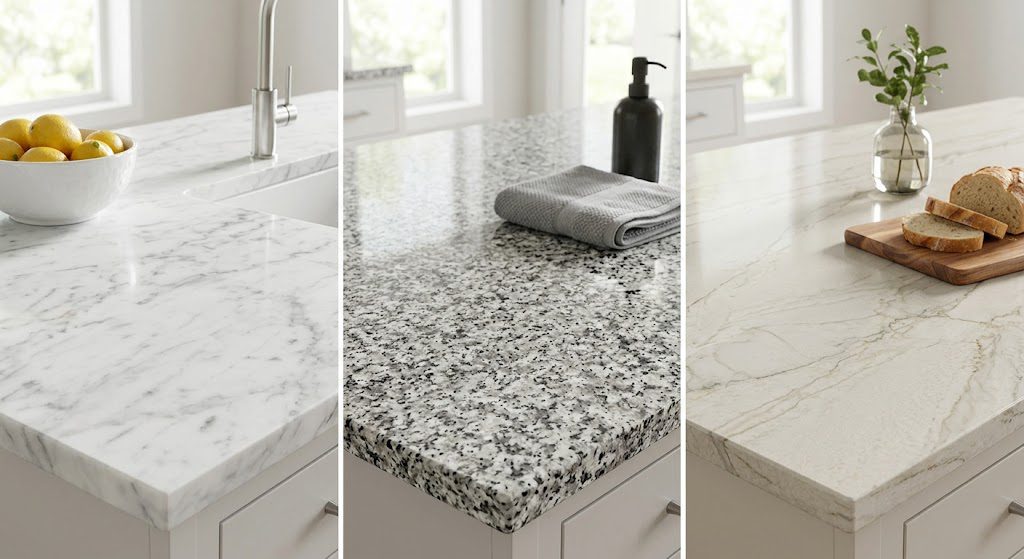
When comparing quartzite vs marble vs granite, the main differences come down to durability, maintenance, and appearance. Quartzite is strong and looks like marble, marble is elegant but delicate, and granite is tough and easy to maintain.
If you want a surface that can handle daily kitchen use without much worry, granite or quartzite is usually a better option. But if your main goal is to achieve a high-end, classic look, marble is often the preferred choice.
Quartzite vs Marble vs Granite Pros and Cons
Understanding the pros and cons of each stone helps you make a smarter decision. Each one has its strengths and weaknesses depending on how you plan to use it.
Quartzite is very strong and durable, making it a great choice for kitchens and busy spaces. It resists heat and scratches better than marble, but it still needs sealing to prevent stains. Marble, on the other hand, is loved for its beauty and smooth texture. It adds a luxury feel to any space, but it is more prone to scratches, stains, and dullness over time, which means regular care and professional marble restoration contractors may be needed.
Granite offers a balance between strength and ease of maintenance. It is highly durable, resistant to heat, and does not scratch easily. It also requires less upkeep compared to marble. However, some people feel that granite does not have the same soft and elegant look as marble or quartzite.
Quartzite vs Marble vs Granite Comparison Table
| Feature | Quartzite | Marble | Granite |
|---|
| Strength | Very strong | Medium (softer) | Very strong |
| Appearance | Marble-like, natural veins | Elegant, soft veining | Grainy, speckled patterns |
| Maintenance | Medium (needs sealing) | High (needs regular care) | Low (easy to maintain) |
| Scratch Resistance | High | Low | High |
| Stain Resistance | Medium | Low | High |
| Best Use | Kitchens, countertops | Bathrooms, low-use areas | Kitchens, heavy-use areas |
Which Stone is Best for Your Home?
Choosing between quartzite, marble, and granite depends on your lifestyle and priorities. If you want a surface that is strong and easy to maintain, granite is a safe and practical choice. If you want something that looks luxurious and unique, marble is a beautiful option, but it requires more care. If you want a mix of both beauty and durability, quartzite is a great middle ground.
It is also important to think about long-term care. All natural stones need maintenance after some years. Surfaces can lose shine, develop stains, or get small scratches. This is completely normal, and professional restoration can fix these issues and make the stone look new again.
Why Professional Stone Restoration is Important
Natural stone surfaces are an investment, so proper care is very important. Over time, even the best stones can lose their shine or develop damage. Simple cleaning is not always enough to fix these problems.
Professional services like marble restoration and granite restoration help bring back the original beauty of your stone. Experts use special tools and techniques to safely remove stains, repair scratches, and polish the surface without causing further damage. This not only improves the look but also increases the life of your stone.
Trusted Experts for Stone Care
At Old Stone Restoration & Installation Corp, we have been working with natural stone for over 35+ years. Our team understands how to care for marble, granite, and quartzite surfaces with the right techniques and attention to detail.
Whether you need expert marble restoration, reliable marble restoration contractors, or professional granite restoration, we are here to help. We focus on quality work that restores your stone and keeps it looking beautiful for years.
FAQs
Which is better: quartzite, marble, or granite?
There is no single best option. Quartzite is strong and stylish, marble is elegant, and granite is durable and easy to maintain.
Does marble require a lot of maintenance?
Yes, marble needs regular cleaning, sealing, and sometimes professional restoration to keep it looking good.
Is quartzite good for kitchen countertops?
Yes, quartzite is a strong and heat-resistant option, making it great for kitchens.
Can granite get damaged over time?
Granite is very strong, but it can lose shine after years. Professional granite restoration can fix this.
How often should stone surfaces be restored?
It depends on usage, but most surfaces benefit from professional care every few years.
Marble has long been one of the most desirable natural stones used in residential design. Homeowners appreciate marble for its durability, elegant appearance, and ability to elevate almost any interior space. When selecting marble for a home, one of the most important decisions is choosing between honed finishes and polished finishes.
Both finishes show the natural beauty of marble in different ways. Understanding the difference between honed marble and polished marble helps homeowners select the right option based on safety, maintenance needs, and the overall design of their home.
This guide explains how each finish is created, where each works best, and how proper care, including marble honing and marble polishing, can keep marble surfaces looking beautiful for years.
What Is Honed Marble?
Honed marble has a smooth matte surface with very little light reflection. Instead of a shiny appearance, honed marble offers a softer and more natural look that fits well in modern and contemporary interiors.
The honing process involves grinding the surface of the marble until it becomes smooth but not glossy. This process removes the high shine associated with polished marble and creates a surface that feels soft and velvety.
As honed marble provides slightly more traction, it is often used in areas where slip resistance matters. Common uses include:
- Bathroom floors
• Kitchen floors
• Entryways
• Outdoor patios
• Pool areas
For homeowners who prefer a subtle and understated appearance, honed marble flooring is often the preferred option.
What Is Polished Marble?
Polished marble features a high gloss finish that reflects light and highlights the natural color and veining within the stone. The polishing process uses progressively finer abrasives to create a mirror-like surface.
This glossy finish enhances the depth of the stone and gives marble a more dramatic appearance. As a result, polished marble is commonly used in spaces where homeowners want the stone to stand out as a design feature.
Common uses for polished marble floors and surfaces include:
- Living room flooring
• Fireplace surrounds
• Accent walls
• Kitchen countertops
• Bathroom vanity tops
Because polished marble reflects light so well, it can make a room appear brighter and more spacious.
Differences between Honed Marble & Polished Marble
Understanding the differences between these finishes helps homeowners choose the right material for each area of their home.
Feature | Honed Marble | Polished Marble |
| Surface Finish | Matte | Glossy |
Slip Resistance | Better grip | More slippery |
| Scratch Visibility | Hard to notice | Easily visible |
Stain Resistance | More porous | More resistant |
| Appearance | Soft and natural | Elegant and luxurious |
Maintenance | Needs sealing more often | Easier to clean |
The matte surface of honed marble helps conceal minor scratches and etching. In contrast, polished marble tends to highlight imperfections because of its reflective finish. These characteristics play an important role when planning long-term marble maintenance and care.
What are the Pros and Cons of Honed Marble?
Advantages of Honed Marble
Honed marble offers superior traction, making it the safer choice for wet areas like bathrooms and pool decks. The matte finish masks everyday wear, including light scratches and foot traffic patterns, making it particularly beneficial in high-traffic zones. The contemporary aesthetic of honed marble complements modern and transitional design styles perfectly. Additionally, the surface shows fewer water spots and fingerprints compared to polished alternatives.
Disadvantages of Honed Marble
The increased porosity of honed marble makes it more susceptible to staining and liquid absorption. Colors and veining patterns appear slightly muted compared to polished surfaces. Regular sealing becomes essential, typically required every six to twelve months, depending on usage. The matte finish also shows dirt and dust more readily, necessitating frequent cleaning.
What are the Pros and Cons of Polished Marble?
Advantages of Polished Marble
Polished marble creates an undeniably luxurious atmosphere with its high gloss finish. The surface brilliantly highlights natural patterns and colors, making each piece a work of art. Polished marble provides better stain resistance due to its less porous surface, and cleaning becomes easier with simple wiping. The reflective quality brightens spaces and creates an impression of increased square footage.
Disadvantages of Polished Marble
The glossy surface becomes dangerously slippery when wet, requiring caution in certain applications. Scratches, etching from acidic substances, and wear patterns show prominently on polished surfaces. Regular professional maintenance keeps the shine intact, and the formal appearance might not suit all design preferences.
Best Places to Use Each Marble Type
Both finishes serve different purposes depending on the space.
Areas for Honed Marble
Honed marble works best in areas where safety and durability are important. Common applications include:
- Bathroom floors
• Entryways
• Kitchen flooring
• Outdoor patios
• Pool decks
These areas benefit from the added traction and the ability to hide wear.
Ideal Areas for Polished Marble
Polished marble works best in spaces where the focus is on visual appeal. Common applications include:
- Formal living rooms
• Dining rooms
• Fireplace surrounds
• Feature walls
• Kitchen countertops
These areas allow polished marble to showcase its natural beauty.
Restoration Methods of Marble Honing & Marble Polishing
Over time, marble surfaces require professional restoration to maintain their beauty. Marble honing removes surface scratches, eliminates etching, and creates a uniform matte finish across worn surfaces. Marble polishing restores lost shine, removes dullness from foot traffic, and brings back the mirror like reflection homeowners love.
Professional restoration services prove invaluable when marble shows signs of wear. For those seeking expert Marble Polishing in Long Island, Old Stone Restoration specializes in restoring marble floors, countertops, and other natural stone surfaces to their original glory.
Tips for Maintenance of Honed and Polished Marble
Proper maintenance extends the life and beauty of both marble finishes. Use pH-neutral cleaners specifically designed for natural stone. Seal marble surfaces regularly; honed marble requires more frequent applications. Clean spills immediately to prevent staining, especially on honed surfaces. Avoid acidic liquids such as wine, citrus juices, and vinegar, which can cause etching. Schedule professional restoration when surfaces show significant wear or damage.
Cost Comparison
The cost difference between honed and polished marble usually depends on finishing and maintenance. Honed marble may cost slightly less initially, but it often requires more frequent sealing.
Polished marble can cost more during installation because of the additional polishing process. However, it typically requires sealing less often.
Professional restoration services, such as marble polishing, may be needed occasionally to maintain the original shine.
Which Marble Finish Is Best for Your Home?
Choose honed marble when slip resistance matters most, children or pets use the space regularly, or contemporary aesthetics align with design goals. High traffic areas benefit from honed marble’s ability to hide wear.
Select polished marble when creating luxurious, formal spaces, showcasing dramatic veining patterns, or using marble primarily for decorative purposes. Areas with minimal water exposure suit polished finishes well.
When to Hire a Professional Marble Restoration Service Provider?
There are several signs that indicate the need for professional intervention. Some of them are dull or cloudy marble floors, visible scratches or etching, persistent water stains, uneven shine across surfaces, and deep staining that regular cleaning cannot remove. Professional marble polishing and honing services restore stone surfaces effectively, saving replacement costs while maintaining property value.
Final Thoughts
Both honed and polished marble offer distinct advantages for residential applications. The choice between finishes depends on practical needs, design preferences, and maintenance commitments. Regular care and professional restoration when needed ensure marble surfaces remain beautiful for generations.
Homeowners in Long Island experiencing marble deterioration should consider professional restoration services. Old Stone Restoration & Installation Corp provides expert marble honing and polishing services that transform worn surfaces into stunning features. Contact Old Stone Restoration today to schedule a consultation and discover how professional marble restoration can revitalize your home’s natural stone surfaces, ensuring they maintain their beauty and value for years to come.
FAQs
Is honed marble better than polished marble?
Neither finish proves universally superior. Honed marble works better for floors and wet areas requiring slip resistance, while polished marble excels in decorative applications where visual impact matters most.
Does honed marble stain easily?
Yes, honed marble’s increased porosity makes it more susceptible to staining. Regular sealing and immediate spill cleanup prevent most staining issues.
Is polished marble slippery?
Polished marble becomes slippery when wet, making it unsuitable for bathrooms, pool areas, and other locations exposed to water.
Can honed marble be polished later?
Professional marble polishing services can transform honed marble into polished marble whenever homeowners desire a change in appearance.
How often should marble be polished?
Most marble floors benefit from professional polishing every one to three years, depending on foot traffic and wear patterns.
Marble floors are a defining feature of many older homes, churches, hotels, and historic buildings. Some of these floors have been in place for a century or more. When they begin to look dull or worn, property owners often worry that polishing might damage or alter the original stone.
That concern is valid, but it does not mean polishing should be avoided. When carried out by trained professionals using the right methods, marble polishing can safely restore the appearance of historic floors without removing original material or changing the character of the stone.
Old Stone Restoration & Installation Corp specializes in marble floor restoration for historic and delicate stone surfaces. The approach begins with a full evaluation of the floor before any work starts, so restoration decisions are based on the actual condition of the marble rather than a one-size-fits-all process.
Why Old Marble Floors Require Special Care
Marble is a natural stone composed largely of calcite, which makes it reactive to acids and sensitive to harsh cleaning products. Common household items such as vinegar, lemon-based cleaners, bleach, and ammonia can etch the surface, strip the finish, or leave permanent dull spots. These risks apply to all marble, but older floors face additional challenges that make careful handling even more critical.
Age and Structural Condition
Older marble floors may have loose tiles, worn edges, hairline cracks, lippage, old filler repairs, or thinned surface layers from decades of foot traffic. Aggressive polishing on a structurally compromised floor can worsen existing damage rather than correct it. The National Park Service recommends evaluating the condition of historic features before selecting a treatment level. That principle applies directly to marble restoration. A floor that needs only light honing should not be subjected to heavy grinding.
Historic Value of Marble Floors
Historic marble floors carry architectural significance beyond their function as flooring. The National Park Service states that distinctive materials, features, finishes, and craftsmanship should be preserved, and that the gentlest effective treatment should always be chosen. Polishing a historic floor should aim to protect original stone and maintain its natural finish, not chase a high-gloss result that never existed in the first place.
Common Problems in Old Marble Floors
Historic and older marble floors commonly develop the following issues over time:
- Dullness and loss of natural luster
- Etching from acidic spills or wrong cleaners
- Fine surface scratches from foot traffic and grit
- Staining from water, oils, or minerals
- Uneven shine across different areas of the floor
- Worn traffic paths that appear flatter than surrounding stone
- Residue buildup from old wax coatings or improper maintenance products
In most cases, these problems reflect surface wear rather than deep structural failure. Professional marble polishing can address each of these issues without replacing the original stone.
Is Marble Polishing Safe for Historic Floors?
Yes. Marble polishing is safe for old or historic floors when it is performed by trained professionals using proper restoration methods. The key is using low-impact techniques that correct surface wear without removing more material than necessary.
Safe professional polishing typically involves an initial inspection, low-abrasion diamond tooling, step-by-step honing before any polish is applied, controlled moisture during the process, and protective sealing where appropriate. Historic preservation standards support this kind of limited-intervention approach.
Not every old marble floor needs the same treatment. Some floors require only light honing and polishing. Others need crack repair, tile stabilization, or stain treatment before restoration work begins. The safest process is always one tailored to the specific condition, thickness, finish, and historic character of the floor.
When Marble Polishing Is Not Safe
Using Harsh Chemicals
Acidic products etch the calcite in marble, while ammonia-based and bleach-based cleaners dull the surface finish. Historic stone is more vulnerable because the surface may already be worn from years of traffic and prior maintenance mistakes. Any polishing process that uses chemical compounds not matched to the stone type risks permanent damage.
Over-Polishing the Surface
Repeated aggressive grinding removes more stone than necessary. On historic floors, this can eliminate original surface material that cannot be replaced. Preservation standards call for evaluating the floor’s condition first and choosing the least invasive treatment. Polishing should never be done simply to achieve a mirror finish if doing so means removing original stone layers.
DIY Polishing Tools
Consumer-grade buffers, powder kits, and rental machines often produce uneven results. They can leave swirl marks, create patchy shine, or worsen existing damage when the wrong pad or compound is used. Old marble is not a suitable surface for trial and error.
Untrained Contractors
Not every floor contractor has experience working with natural stone, especially historic stone. The National Park Service recommends that cleaning and restoration of historic masonry be carried out under the guidance of a preservation or conservation specialist. That principle applies equally to marble floor polishing. Using a contractor without proper stone restoration experience on a historic floor introduces significant risk of irreversible damage.
Signs Your Old Marble Floor Needs Polishing
A historic or older marble floor may need professional marble polishing service when any of the following conditions are present:
- The marble looks dull, flat, or cloudy
- Stains remain after regular cleaning
- Scratches are visible in raking light
- The shine is uneven across different areas
- The surface feels rough or gritty in heavy-traffic zones
- Traffic lanes look noticeably flatter than surrounding stone
These signs usually point to surface wear, chemical etching, or residue buildup. In most cases, the stone can be restored through professional marble floor polishing rather than replacement.
How Professionals Safely Polish Historic Marble Floors
Marble Inspection
The first step is a thorough inspection of the floor for cracks, loose tiles, hollow spots, old repairs, staining, edge damage, and structural concerns. This determines whether the floor needs spot repairs, honing, polishing, sealing, or a combination of treatments. This condition-based evaluation aligns with preservation guidance that calls for assessing the full state of a historic feature before choosing a treatment.
Deep Cleaning
Before polishing begins, the floor is cleaned to remove dirt, wax residue, oils, and old maintenance product buildup. Polishing over contamination can trap defects or cause uneven results, so cleaning is a required step, not an optional one.
Honing Process
Honing uses diamond abrasives at progressive grits to smooth surface wear, reduce scratches, and blend etched areas. This step is often more important than polishing itself, because shine alone does not correct damaged stone. On historic floors, honing is done at the minimum level required to address the problem.
Marble Polishing
Polishing refines the honed surface by further smoothing the stone at a microscopic level, which restores clarity and light reflection. The result is the marble’s natural shine, not an artificial coating. Old Stone Restoration uses specialized equipment selected for the specific stone type and condition of the floor.
Sealing the Marble
After restoration, a penetrating sealer may be applied to slow liquid absorption and reduce staining risk. Sealing does not prevent acid etching, but it gives more time to clean up spills before they penetrate the stone. Sealing is recommended based on the porosity of the stone, not applied automatically to every project.
A professional floor marble polishing service such as Old Stone Restoration & Installation Corp uses specialized restoration techniques, one-project-at-a-time craftsmanship, and direct experience with historic stone to protect delicate marble surfaces. The company has served the New York metro area since 1990 and handles commercial, historical, and residential restoration work.
Benefits of Professional Marble Polishing for Old Floors
Professional marble polishing offers several practical advantages for historic and older floors:
- Restores natural shine without unnecessary material removal
- Smooths minor scratches, etch marks, and worn areas
- Extends the usable life of the original marble
- Improves day-to-day appearance and cleanliness
- Makes routine maintenance easier by removing surface irregularities that trap dirt
- Helps protect property value by preserving original materials
Professional polishing also eliminates microscopic surface texture that collects grit and accelerates future wear. When done correctly, restoration is far more practical and cost-effective than replacing original historic marble.
DIY Marble Polish vs. Professional Marble Polishing Service
| DIY Marble Polish | Professional Marble Polishing Service |
| Higher risk of surface damage | Safer, condition-based techniques |
| Uneven shine is common | Consistent, uniform finish |
| Wrong products may etch or dull the stone | Products and abrasives selected for the specific stone type |
| No damage assessment before starting | Inspection of cracks, wear, and repairs done first |
| Often skips sealing or uses the wrong sealer | Sealing applied only where appropriate |
| Limited effectiveness on historic or delicate floors | Designed for true marble floor restoration |
How Often Should Old Marble Floors Be Polished?
There is no fixed schedule that works for every property. In general, residential marble floors benefit from professional polishing every three to five years. High-traffic historic spaces such as lobbies, churches, or hotel corridors may need attention every one to three years, depending on foot traffic volume and maintenance practices.
Marble that is cleaned consistently with pH-neutral products and protected from grit holds its finish longer. Preventive restoration is also less costly than waiting until the floor needs heavy honing or structural repairs. Addressing early wear before it becomes permanent damage is the most practical approach for historic properties.
How to Maintain Historic Marble Floors After Polishing
Proper maintenance after polishing extends the life of the finish and reduces the frequency of future restoration work. The following practices are recommended for historic marble floors:
- Use only pH-neutral stone cleaners for routine cleaning
- Avoid vinegar, bleach, ammonia, and citrus-based cleaning products
- Clean up spills immediately to prevent staining and acid damage
- Remove grit and debris with regular dry or damp mopping
- Place entrance mats in high-traffic areas to reduce grit contact
- Reseal the stone when water absorption testing shows the sealer has worn
- Schedule professional maintenance before surface wear becomes deep damage
Professional Marble Polishing Services for Historic Floors
When an old marble floor has lost its shine, developed etching, or become uneven from decades of wear, professional restoration is the safest path forward. Old Stone Restoration & Installation Corp provides specialized marble polishing service and marble floor restoration service in Long Island for historic and delicate natural stone surfaces across Long Island and the New York metro area.
Free evaluations are available for many Long Island locations. The company’s preservation-minded approach means every project begins with a full assessment of the floor’s condition before any treatment is selected.
Why Choose Old Stone Restoration & Installation Corp?
Restoring marble floors in older or historic properties requires specialized experience. Not every contractor understands how to work with natural stone that has aged for decades. Old Stone Restoration & Installation Corp brings the following to every project:
- Experienced stone restoration specialists with decades of hands-on knowledge
- Advanced marble polishing equipment suited for delicate and historic stone
- Safe, condition-based techniques aligned with historic preservation principles
- Complete marble floor restoration, including honing, polishing, repair, and sealing
- Service across Long Island and the wider New York metro area since 1990
Conclusion
Marble polishing is safe for old or historic floors when it is carried out with proper restoration methods, a thorough initial inspection, and a preservation-first mindset. The goal is not maximum shine at any cost. It is to protect the original stone, correct surface wear, and restore a clean, natural finish that matches the age and character of the property.
If historic marble floors have become dull, scratched, or unevenly worn, a professional marble polishing service can restore their appearance while preserving the original stone for years to come. Old Stone Restoration & Installation Corp is available to evaluate the condition of historic marble and recommend the safest, most effective path to restoration.
FAQs
Is marble polishing safe for 100-year-old floors?
Yes, when the floor is fully inspected first, and restoration is carried out using the gentlest effective method. Historic preservation standards favor limited intervention and treatments that do not damage original materials.
Can damaged marble floors be restored?
In most cases, yes. Dull, scratched, etched, or stained marble floors can often be improved through professional marble floor restoration rather than replacement. The viability depends on the depth of the damage and the overall structural condition of the stone.
Does marble polishing remove scratches?
It can reduce or eliminate minor surface scratches and etch marks. More serious damage may require honing, structural repairs, or additional restoration work before polishing is applied.
How long does marble polishing last?
The lifespan of a polish depends on foot traffic, maintenance habits, and the cleaning products used. Floors maintained with pH-neutral cleaners and kept free of grit hold their finish significantly longer than floors exposed to harsh chemicals or heavy abrasion.
How much does marble polishing cost?
Cost varies based on floor size, overall condition, scope of repairs needed, and whether additional treatments such as honing, stain removal, or sealing are required before polishing. Historic floors typically need an in-person evaluation to provide an accurate cost estimate.
Bathroom floors deal with more water, foot traffic, and wear than almost any other space in the home. Choosing the wrong stone can lead to slippery surfaces, stains, and constant maintenance. This guide breaks down the best options for stone flooring for bathrooms in 2026, realistic cost ranges, and what to know about maintenance. We’ll also discuss bathroom stone floor pros and cons. For homeowners, this is a helpful checklist for choosing the best stone for bathroom floor in Long Island, NY.
Why Choosing the Best Stone for Bathroom Floors Matters
Here’s why stone choice for bathroom matters:
- Water exposure: Splashing and humidity happen every day. Some stones absorb more water and stain easier.
- Slipping risk: Smooth stones can become slippery when wet, especially in socks.
- Maintenance: Some stones need regular sealing and careful cleaning.
- Long-term durability: The best stone flooring for bathrooms should resist chips, stains, and wear over time.
If the bathroom is used by kids, guests, or older adults, slip resistant stone bathroom floor options become even more important.
What Makes a Stone Suitable for Bathroom Floors?
Not every natural stone works well in a wet room. When evaluating natural stone for bathroom floor use, focus on these points:
Water resistance
Some stones absorb water more easily than others. Lower-porosity materials generally handle bathroom conditions better.
Slip resistance
A stone that looks beautiful can still be unsafe if it’s too smooth when wet. Honed, textured, tumbled, or brushed finishes usually provide better traction than polished finishes.
Porosity
Porous stones can absorb water, soap, and oils. That can lead to dark spots, stains, or etching depending on the material.
Maintenance level
Some stones just need a wipe. Others require sealing, pH-neutral cleaners, and quick cleanup after spills.
Sealing requirements
Many stones need a protective sealer. A good sealer helps reduce water absorption and staining, but it does not make stone waterproof.
10 Best Stones for Bathroom Floors in 2026
Each option below includes a simple traction guideline and upkeep level so it’s easier to choose waterproof stone flooring bathroom style surfaces (or the closest practical option).
1. Porcelain Stone Tile
Porcelain is not a natural stone, but it’s one of the best “stone-look” options for bathrooms.
Pros
- Very low absorption, excellent for wet spaces
- Easy to clean
- Many stone looks (marble, slate, terrazzo)
Cons
- Grout still needs cleaning
- Can feel cold without radiant heat
Best use cases
- Busy family bathrooms, rentals, and remodels with low upkeep goals
Maintenance level: Low
Slip resistance rating: Good when choosing matte or textured finishes
Typical cost (material): $3–$12/sq ft
2. Honed Marble
Honed marble has a soft, matte finish that is often less slippery than polished marble.
Pros
- High-end, classic look
- Honed finish hides small scratches better than polished
- Works well in timeless bathroom designs
Cons
- Can etch from acidic products
- Requires sealing and gentle cleaning
- Not ideal for people who want “zero maintenance”
Best use cases
- Primary bathrooms where appearance matters and cleaning habits are consistent
Maintenance level: Medium to High
Slip resistance rating: Medium (better than polished)
Typical cost (material): $8–$25/sq ft
3. Slate Stone
Slate is a strong choice for bathrooms because it naturally has texture.
Pros
- Naturally slip resistant
- Handles wet conditions well when sealed
- Great for modern and rustic styles
Cons
- Color variation can be strong
- Some slate can flake if low quality
- Sealing recommended
Best use cases
- Shower floors, wet areas, family bathrooms
Maintenance level: Medium
Slip resistance rating: High
Typical cost (material): $5–$15/sq ft
4. Travertine (Filled & Honed)
Travertine is a type of limestone with natural holes. “Filled and honed” is the bathroom-friendly version.
Pros
- Warm, natural look
- Comfortable underfoot
- Good traction when honed
Cons
- Needs sealing
- Can stain if left unsealed
- Softer than granite and quartzite
Best use cases
- Spa-style bathrooms, larger floors with a warm tone
Maintenance level: Medium
Slip resistance rating: Medium to High (honed)
Typical cost (material): $6–$18/sq ft
5. Limestone
Limestone gives a clean, soft look that works in many bathroom styles.
Pros
- Natural, calming appearance
- Softer look than granite
- Often available in light tones
Cons
- More porous than many stones
- Needs sealing and careful cleaning
- Can scratch easier than harder stones
Best use cases
- Guest baths with lighter use, powder rooms with stone continuity
Maintenance level: Medium to High
Slip resistance rating: Medium (choose honed or textured)
Typical cost (material): $6–$30/sq ft
6. Granite
Granite is one of the best options for durability and low fuss when sealed correctly.
Pros
- Hard and scratch resistant
- Resists staining better than many stones
- Good long-term durability
Cons
- Some patterns can look busy
- Polished granite may be slippery when wet
Best use cases
- High-traffic bathrooms, long-term homes
Maintenance level: Low to Medium
Slip resistance rating: Medium (better in honed/leathered)
Typical cost (material): $6–$18/sq ft
7. Quartzite
Quartzite is a natural stone known for strength and a clean, upscale look.
Pros
- Very durable
- Often resists scratching well
- Great for luxury bathrooms
Cons
- Can be expensive
- Needs sealing
- Some slabs are mislabeled, so source matters
Best use cases
- Primary bathrooms where durability and look both matter
Maintenance level: Medium
Slip resistance rating: Medium (choose honed or textured)
Typical cost (material): $8–$25/sq ft
8. Terrazzo
Terrazzo is a classic material that has become popular again in modern designs.
Pros
- Long lifespan
- Unique, customizable appearance
- Works well with radiant heat
Cons
- Needs sealing
- Can be slippery if highly polished
- Repairs should be done properly to avoid patchy spots
Best use cases
- Modern bathrooms, design-forward remodels
Maintenance level: Medium
Slip resistance rating: Medium (better in matte finish)
Typical cost (material): $10–$25/sq ft
9. Pebble Stone Flooring
Pebble floors are common in showers and spa-style bathrooms.
Pros
- Strong grip underfoot
- Great drainage in shower floors
- Natural spa look
Cons
- More grout lines, so cleaning takes longer
- Uneven surface may feel uncomfortable to some
- Needs sealing
Best use cases
- Shower floors, wet zones, accent areas
Maintenance level: Medium to High
Slip resistance rating: High
Typical cost (material): $7–$20/sq ft
10. Engineered Stone Tiles
Engineered stone tiles use stone particles and binders to create a consistent look.
Pros
- More uniform appearance
- Can be easier to maintain than porous natural stone
- Often budget-friendly compared to premium natural slabs
Cons
- Quality varies by manufacturer
- Not all products are suitable for wet floors
- Always confirm installation requirements
Best use cases
- Bathrooms where a consistent stone look is the priority
Maintenance level: Low to Medium
Slip resistance rating: Medium (choose textured finish)
Typical cost (material): $5–$18/sq ft
ALSO READ:
Best Stone for Small vs Large Bathrooms
Small bathroom recommendations
- Porcelain stone tile (easy upkeep, makes spaces feel clean)
- Honed marble (luxury look, especially in smaller areas)
- Terrazzo (adds style without busy veining)
Large bathroom recommendations
- Slate (traction and durability across more surface area)
- Travertine (warm tone, spa feel)
- Granite or quartzite (strong long-term performance)
Best Low-Maintenance Stone for Bathroom Floors
For most homes, the easiest options are:
- Porcelain stone tile (lowest maintenance)
- Granite (durable with simple sealing)
- Engineered stone tile (when rated for wet floors)
These are often the best choices when searching for low maintenance stone for bathroom floor solutions.
Stones to Avoid for Bathroom Floors
Some materials can work, but they often lead to frustration if the goal is easy upkeep.
- Highly polished marble: looks beautiful but can etch and become slippery
- Soft untreated limestone: stains and scratches easily
- Unsealed stone of any kind: absorbs water and stains quickly
Stone Bathroom Floor Maintenance Tips
Good maintenance keeps the stone floor for bathrooms looking clean and prevents damage.
Sealing frequency
- Many stones need periodic sealing. Frequency depends on the stone type, finish, and daily use.
Cleaning dos
- Use a pH-neutral cleaner
- Wipe standing water near tubs and showers
- Clean grout lines consistently
Cleaning don’ts
- Avoid harsh acids and abrasive cleaners on natural stone
- Avoid bleach-heavy routines unless confirmed safe for your material
Professional restoration benefits
If stone floors look dull, stained, or etched, restoration can often bring them back without replacing the floor. For homeowners, professional stone restoration can be a cost-effective way to refresh marble, granite, terrazzo, and more. If you need expert stone restoration services in Long Island, NY, Old Stone Restoration & Installation Corp can help.
Final Thoughts: Which Stone Is Best for Your Bathroom in 2026?
The best stone for bathroom floor use depends on priorities. For most homes, porcelain stone tile is the easiest. For natural stone lovers, slate, granite, and honed travertine offer a strong balance of looks and durability. Marble and limestone can still work, but they need more careful maintenance.
If the goal is safety, choose a textured or honed finish and prioritize slip resistance. If the goal is low upkeep, focus on low-porosity materials and simple cleaning routines.
FAQs
What is the best stone flooring for bathroom floors in 2026?
Porcelain stone tile is a top choice for most bathrooms because it resists water and is easy to maintain. For natural stone, slate and granite are strong options when sealed properly.
Is natural stone waterproof for bathrooms?
Most natural stones are not fully waterproof. Sealing helps reduce absorption and staining, but good ventilation and regular cleaning still matter.
What is the most slip resistant stone bathroom floor option?
Slate and pebble stone flooring are often chosen for traction. Matte or textured porcelain can also be very slip resistant.
How often should stone bathroom floors be sealed?
It depends on the stone and usage. High-traffic bathrooms may need sealing more often than guest baths.
What is the easiest stone bathroom floor to maintain?
Porcelain stone tile is typically the lowest-maintenance option because it is highly water resistant and does not require the same sealing routine as many natural stones.
In a busy kitchen, the countertop gets hit with everything. Hot pans, sharp tools, spills, and constant wiping are part of daily life. That is why the best stone for kitchen countertops is not always the ones that look the fanciest. The best choice is the stone that fits cooking habits and the time available for upkeep. If you’re thinking “what stone is best for kitchen countertops,” this list breaks down 11 best countertop stones.
The Best Stone Countertops for Kitchen: A Quick Comparison
| Stone | Durability | Stain Risk | Etch Risk | Heat | Maintenance | Best for |
| Granite | High | Low–Med | Low | High | Seal sometimes | Busy kitchens, all-around use |
| Quartzite (natural) | High | Low–Med | Low–Med | High | Seal sometimes | “Marble look” with toughness |
| Marble | Med | Med–High | High | Med | More care | Classic look, baking zones |
| Soapstone | Med–High | Low | Low | High | Optional oiling | Heat-friendly, soft matte look |
| Dolomite | Med | Med | Med–High | Med | Seal + gentle care | Marble-like style with slightly more strength |
| Limestone | Low–Med | High | High | Low–Med | High upkeep | Low-use kitchens, soft warm tones |
| Travertine | Low–Med | High | High | Low–Med | High upkeep | Rustic look, light-use areas |
| Slate | Med | Low–Med | Low | High | Seal sometimes | Dark tones, practical homes |
| Onyx | Low | Med–High | High | Low–Med | High upkeep | Statement bars, feature tops |
| Sandstone | Low–Med | High | Med | Med | Seal often | Texture lovers, careful households |
| Quartz (engineered) | High | Low | Low | Med | Low upkeep | Busy homes that want easy cleaning |
1. Granite
Best for: Granite is one of the best choices for busy homes because it is tough, handles daily wear well, and resists heat. Many homeowners choose granite because it works well for cooking, meal prep, and everyday life.
Considerations: Granite is still a natural stone, so some slabs are more porous than others and can stain if sealing is ignored.
Maintenance tips: Clean with mild soap and water or a stone-safe cleaner. Test the seal once or twice a year with a small water drop. If water darkens the stone instead of beading, it is time to reseal.
2. Quartzite (Natural)
Best for: Natural quartzite is popular because it can look like marble but performs more like a hard, durable stone. It is often a strong option for kitchens that cook a lot and want a lighter, brighter look.
Considerations: Not every slab sold as “quartzite” behaves the same. Some slabs can contain minerals that react to acids and may etch, so slab selection matters.
Maintenance tips: Plan on sealing. Many guides suggest resealing on a schedule like every 1–3 years, depending on use and the sealer. Use mild soap and wipe spills sooner rather than later.
3. Marble
Best for: Marble is a favorite for a classic, high-end look. Many bakers like marble because it stays cool and looks beautiful around baking stations.
Considerations: Marble etches easily from acids like lemon juice, vinegar, and many common cleaners. Etching is a finish change, not a “dirt stain,” so it does not scrub away like a spill.
Maintenance tips: Use a pH-neutral stone cleaner and wipe acidic spills fast. If etches build up, honing and polishing are common restoration options that can bring back a smoother finish.
4. Soapstone
Best for: Soapstone is known for strong heat tolerance and a smooth, soft feel. It does not need sealing in the same way many other stones do, and it can be a good fit for busy homes that like a matte, cozy look.
Considerations: Soapstone can scratch or dent more easily than granite, but it also hides wear well over time with a natural “lived-in” look.
Maintenance tips: Clean with mild soap and water. Some owners apply mineral oil to deepen color and even out the look, but oiling is optional and depends on the style preferred.
5. Dolomite
Best for: Dolomite is often chosen by homeowners who want a marble-like look with a bit more strength for daily use. It can be a nice middle ground for style-focused kitchens.
Considerations: Dolomite can still etch and can still stain if spills sit too long. It is not “marble-proof,” so expectations should be realistic.
Maintenance tips: Use gentle cleaners and reseal as needed. Avoid acidic cleaners and wipe up citrus, wine, and sauces quickly.
6. Limestone
Best for: Limestone has a warm, soft, natural look that works well in calm, low-use kitchens. It can make a space feel relaxed and timeless.
Considerations: Limestone is usually more porous and more likely to etch and stain, especially in busy kitchens with frequent cooking.
Maintenance tips: Sealing helps, but it does not make limestone “worry-free.” Use coasters, wipe spills fast, and avoid acidic cleaners.
7. Travertine
Best for: Travertine gives a rustic, old-world look. It can be a great design choice for homes that want texture and natural variation.
Considerations: Travertine often has natural pits and voids, and it can stain easily. For busy kitchens, it needs careful habits.
Maintenance tips: Sealing is important, and quick wipe-ups matter. Many homeowners use travertine more successfully in lower-traffic kitchens or as a secondary surface.
8. Slate
Best for: Slate can be a practical choice with a darker, earthy look. It often hides crumbs and smudges better than bright stones.
Considerations: Some slate has a cleft, textured surface that can be harder to keep perfectly clean.
Maintenance tips: Use mild soap and water. Sealing can help with stain resistance and easier cleanup, depending on the slate finish and how the kitchen is used.
9. Onyx
Best for: Onyx is dramatic and can be backlit for a showpiece look. It is often used for bars, islands, and feature areas.
Considerations: Onyx is softer and more likely to scratch and etch. It is usually not the best pick for a high-traffic family kitchen work zone.
Maintenance tips: Treat onyx like a “special surface.” Use coasters, avoid acids, and clean gently.
10. Sandstone
Best for: Sandstone can offer a natural, textured look that stands out. Some homeowners love it for its earthy feel.
Considerations: Sandstone is porous and can absorb liquids, which increases stain risk. Some sources note costs can run high depending on the slab and rarity.
Maintenance tips: Sealing is a must for most sandstone counters. Wipe spills quickly and avoid harsh cleaners.
11. Quartz (Engineered Stone)
Best for: Engineered quartz is one of the easiest choices for busy homes because it is non-porous, resists stains well, and is simple to clean. It is often listed among the best stone countertops for kitchens, even though it is engineered, not a natural slab.
Considerations: Quartz can be damaged by high heat because of the resins used in the material. Hot pans should not go directly on the surface.
Maintenance tips: Use mild soap and water or a gentle cleaner. Use trivets for hot cookware and avoid harsh chemicals and abrasive pads.
Restore and Protect Your Stone Countertops
Choosing the right stone is important, but proper care is what keeps it looking its best. If a countertop has stains, dull spots, etching, or scratches, professional restoration can improve the finish and help prevent future damage. Old Stone Restoration & Installation Corp provides cleaning, sealing, refinishing and stone restoration services in Long Island & nearby areas that make natural stone countertops look better and stay easier to maintain in busy homes. Call us at (631) 821-5619 to get started.
FAQs
What is the best stone for kitchen countertops?
The best stone for kitchen countertops depends on how the kitchen is used and how much maintenance is acceptable. For busy homes, granite, natural quartzite, and engineered quartz are popular because they handle daily wear well and clean easily. Softer stones like marble can still work, but they require more care and realistic expectations.
What is the most durable stone for kitchen countertops?
For many busy homes, granite and natural quartzite are top picks because they handle daily wear well and are very heat-resistant. Quartz is also very durable in daily use, but it needs heat protection because of its resin content.
Which stone is the lowest maintenance?
Engineered quartz is usually the lowest maintenance because it is non-porous and does not require routine sealing like many natural stones.
Do granite and quartzite need to be sealed?
Often, yes. Many stone care guides recommend sealing on a schedule based on use, with a common range like every 1–3 years, and using a simple water test to see if sealing is needed.
How do etch marks get removed from marble countertops?
Etching happens when acids react with the surface, leaving a dull spot. Marble can often be restored with honing and polishing, which refines the surface finish and reduces the look of etches.
Your stone floors have lost their shine despite regular cleaning. The once glossy surface now looks hazy, dull, and lifeless, making your entire space appear neglected. This happens because most homeowners unknowingly use the wrong cleaners, allow grit to accumulate, apply too much water during mopping, or layer topical products that create buildup. The solution involves understanding proper stone care techniques and using a neutral cleaner for natural stone to maintain that pristine appearance your floors deserve.
Why Do Stone Floors Turn Dull (Even When They’re “Clean”)?
Stone floors lose their luster for specific reasons that regular cleaning often worsens rather than improves. Understanding these causes helps you avoid common mistakes when you clean stone floors.
Micro-Scratches from Grit and Sand
Dirt particles act like sandpaper on stone surfaces. Every footstep grinds these abrasive particles against your floor, creating microscopic scratches that accumulate over time. These tiny scratches scatter light instead of reflecting it uniformly, resulting in a dull appearance even on recently cleaned surfaces.
Acid Etching on Sensitive Stones
Marble, limestone, and travertine react chemically with acidic substances. Common household cleaners, citrus spills, and even some tap water can cause etching. This chemical reaction removes the polished layer of stone, leaving behind dull spots that cleaning cannot fix. The damage appears as light-colored marks or rings that feel rougher than the surrounding areas.
Cleaner Residue and Product Overuse
Using too much cleaning product creates a film that attracts dirt and dulls stone surfaces. Soap buildup occurs gradually, layer by layer, until your floors develop a cloudy appearance. Many all-purpose cleaners contain additives that leave residue, making floors look worse after cleaning than before.
Hard Water Minerals and Haze
Mineral deposits from hard water create a chalky film on stone surfaces. This haze becomes more noticeable on dark stones like granite or black marble. The minerals bond to the stone surface, requiring specific removal techniques beyond standard cleaning.
Distinguishing Between Worn Sealer and Damaged Stone
Worn sealer appears as an inconsistent sheen across your floor, with some areas looking duller than others. Damaged stone shows physical changes like etching, scratches, or pitting. This distinction matters because resealing fixes the former, while the latter requires professional restoration.
Step-by-Step: Best Way to Clean Stone Floors
Following the correct sequence when learning how to clean stone floors prevents damage while maintaining maximum shine.
1) Dry Dust-Mop First (The Step Most People Skip)
Start with a microfiber dust mop to remove loose dirt and debris. This crucial step prevents scratching during wet mopping. In high-traffic areas, dust mopping should occur daily. Microfiber attracts and holds particles better than traditional mops, preventing them from redistributing across your floor.
2) Use a pH-Neutral Stone Cleaner (Not All-Purpose)
pH neutral cleaner for natural stone maintains a 7 on the pH scale, neither acidic nor alkaline. This balance preserves your stone’s integrity without causing chemical reactions. Mix the cleaner according to the manufacturer’s directions, as over-concentration leaves residue while under-dilution reduces effectiveness. The right dilution ratio typically ranges from 1:16 to 1:32 for regular maintenance cleaning.
3) Damp Mop, Not Wet Mop
Excessive water penetrates stone pores and grout lines, potentially causing damage and discoloration. Use the two-bucket method: one for cleaning solution, another for rinse water. Wring your mop until barely damp. Change both buckets frequently to avoid spreading dirty water across clean areas. Work in sections, overlapping slightly to ensure complete coverage without oversaturating any area.
4) Rinse if Needed and Dry/Buff
Some pH-neutral cleaners require rinsing, while others don’t. Check product instructions carefully. After mopping, use a clean, dry microfiber cloth to buff the surface. This final step removes any remaining moisture and prevents water spots or streaking, revealing your stone’s natural shine.
Products and Tools That Are Safe (and What to Avoid)
Safe Tools for Stone Floor Care
Microfiber mops provide gentle, effective cleaning without scratching. Soft-bristle brushes work for textured surfaces like slate. Vacuums with hard floor settings prevent scatter while removing debris. Chamois or terry cloth towels excel at drying and buffing.
Safe Cleaners for Natural Stone
Quality pH-neutral stone cleaners contain no acids, ammonia, or harsh detergents. Look for products specifically formulated for natural stone that won’t strip sealers or etch surfaces. Concentrated formulas offer better value and reduce plastic waste. Always verify the product specifies safety for your stone type.
Products to Avoid
Never use vinegar on stone floors, despite its popularity as a natural cleaner. Bleach, ammonia, and degreasers cause permanent damage to many stone types. Powdered abrasive cleaners scratch polished surfaces. Oil soaps leave residue that attracts dirt. Acrylic “shine” products create temporary gloss but yellow over time and prevent proper stone breathing.
Stone-Specific Cleaning Notes (Quick Guide)
Marble / Limestone / Travertine
These calcium carbonate stones require extra care due to acid sensitivity. Even mild acids cause immediate etching. Use only cleaners specifically labeled safe for marble. Blot spills immediately, especially wine, coffee, or citrus. Consider professional sealing every 12 to 24 months.
Granite
Granite resists etching better than marble but still requires proper care. Avoid alkaline cleaners that cause hazing. Though durable, granite can absorb oils and liquids through micro-fissures. Clean spills promptly and maintain sealer integrity for best results.
Slate
The cleft texture of slate traps dirt in crevices. Use a soft brush with your pH-neutral cleaner to reach recessed areas. Avoid wax-based products that build up in texture variations. Some slates benefit from color-enhancing sealers that deepen natural hues.
Terrazzo
Terrazzo combines marble chips with cement or resin binders. Use neutral cleaners exclusively, as harsh alkalines damage the binder. Avoid acids that etch marble components. Regular diamond polishing maintains terrazzo’s signature shine better than topical products.
Can You Use a Steam Mop on Stone Floors?
Steam mopping poses risks to natural stone installations. High temperatures combined with moisture can compromise sealers, loosen tiles, and damage grout. Weak or cracked grout allows steam penetration beneath tiles, potentially causing lifting or discoloration. Temperature shock from steam can stress certain stones, particularly in older installations.
Safer alternatives include spray mopping with a proper stone cleaner or using a barely damp microfiber mop. These methods clean effectively without heat-related risks.
How to Fix Dull Spots (Cleaning Won’t Fix These)
Removing Residue Buildup
If dullness results from product buildup, use a stone-safe stripper following the manufacturer’s instructions. Apply stripper, allow dwell time, then agitate gently with a soft brush. Remove completely with clean water and dry thoroughly. This process may require multiple applications for heavy buildup.
Addressing Etching and Scratches
Etching and scratches require mechanical polishing or honing. Diamond polishing pads in progressively finer grits restore shine to small areas. Larger areas need professional equipment and expertise. Attempting DIY restoration on valuable stone often worsens damage.
When Professional Help Makes Sense
Call professionals when dealing with widespread etching, deep scratches, or valuable installations. Professional restoration costs less than replacement and achieves results impossible with consumer-grade tools. Old Stone Restoration & Installation Corp. specializes in bringing dull, damaged stone back to life with Stone Restoration Service.
Maintenance Routine to Keep Stone Shiny Longer
- Daily: Dust mop high-traffic areas. Clean spills immediately with pH-neutral cleaner.
- Weekly: Damp mop the entire floor with proper stone cleaner. Check and clean doormats.
- Monthly: Deep clean with the two-bucket method. Inspect for damage or wear patterns. Clean under furniture and along baseboards.
- Annually: Professional inspection and resealing if needed. Address minor repairs before they worsen.
Place quality entrance mats inside and outside doors to reduce tracked debris. Install felt pads under furniture legs to prevent scratching. Schedule periodic professional maintenance to address issues beyond the routine cleaning scope.
Restore Your Stone’s Natural Beauty
Maintaining brilliant stone floors requires proper techniques and products designed specifically for natural stone care. When cleaning challenges exceed routine maintenance or when your floors need professional restoration, Old Stone Restoration & Installation Corp. provides expert services throughout the area. Our certified technicians restore stone to its original beauty using advanced equipment and proven techniques. Contact us today at (631) 821-5619 for a consultation and discover how professional stone care transforms your floors from dull to dazzling.
FAQ
What is the best mop for stone floors?
Microfiber mops work best for stone floors. They trap dirt effectively, rinse clean easily, and won’t scratch polished surfaces when used properly.
How often should stone floors be sealed?
Most stone floors need resealing every 12 to 36 months, depending on traffic and stone type. Perform a water drop test annually to check the sealer condition.
Why does the floor look cloudy after mopping?
Cloudiness indicates cleaner residue, hard water deposits, or using too much product. Switch to pH-neutral stone cleaner and ensure proper dilution and rinsing.
Can Dawn dish soap be used on stone?
While Dawn won’t etch stone as acids do, it leaves a residue that dulls surfaces over time. Use cleaners specifically formulated for natural stone instead.
Can vinegar be used on stone floors?
Never use vinegar on natural stone. Its acidity causes permanent etching on marble, limestone, and travertine.
How should marble floors be mopped?
Mop marble with a pH-neutral cleaner diluted appropriately, using a damp (not wet) microfiber mop. Dry immediately to prevent water spots.
Why do stone floors look dull?
Dullness results from microscratches, cleaner residue, acid etching, worn sealers, or improper cleaning methods, all of which damage the surface finish.
When your marble floors lose their shine or your granite countertops start showing scratches, it’s natural to wonder whether stone restoration or a full stone replacement is the better choice. Natural stone is an investment, and you want to make the smartest decision for both your space and budget. At Old Stone Restoration & Installation, we help you understand the true difference so they can choose the option that delivers the best long-term results.
Understanding the Difference Between Restoration and Replacement
Stone or Marble restoration focuses on repairing, polishing, grinding, honing, and refinishing your existing stone surfaces. This process brings back the stone’s original beauty by correcting the damage without removing the material. On the other hand, stone replacement means tearing out the damaged slabs and doing new Stone & Tile Installation.
Both options have their place, but many business owners and residents are surprised to learn how often restoration provides the same fresh, flawless appearance at a fraction of the cost.
When To Opt For Stone Restoration?
1. Your Stone Has Surface-Level Damage
If you’re dealing with scratches, dullness, watermarks, or light etching, restoration is almost always the smarter choice. Most of this damage sits on the top layer of the stone, and with the right equipment and techniques, we can bring the surface back to life without replacement.
This applies to surfaces such as:
- Marble floors
- Granite countertops
- Limestone tiles
- Terrazzo flooring
High-ranking keywords: marble restoration, granite repair, stone polishing, floor restoration.
2. You Want to Save Money Without Sacrificing Quality
Full stone replacement includes demolition, disposal, material purchase, fabrication, and installation, costs that can climb quickly. Restoring your stone can save you up to 70% compared to replacement while still giving you a renewed, high-end look.
Restoration is cost-efficient because it works with the stone you already have. Most natural stone slabs are extremely durable, which means they respond beautifully to refinishing and polishing, even after years of wear.
3. You Want to Preserve Original or Hard-to-Find Stone
Older homes or custom-designed properties often feature stone materials that are no longer available. If you replace, you may struggle to match color, pattern, or texture.
This is where stone restoration becomes the ideal choice. You keep your original stone while improving its appearance and durability. Whether it’s an antique marble foyer or a specialty limestone staircase, restoring allows you to maintain that unique character.
4. You Need Faster Results With Less Disruption
Replacement can take days, or even weeks, depending on fabrication timelines and installation complexity. In contrast, restoration is typically quicker:
- No demolition
- No dust-heavy construction
- No long waiting periods
Most owners appreciate that stone refinishing, honing, and polishing give them a revitalized surface with minimal downtime.
5. Your Stone Is Structurally Sound
As long as the stone is not cracked through its full depth or broken into pieces, restoration is highly effective. Deep scratches, stains, and etching can all be corrected through grinding, polishing, and professional sealing.
If you are unsure whether your stone is repairable, schedule an inspection. We can assess the damage and recommend the right approach through our Stone Restoration service.
When Replacement Is the Better Option?
While restoration solves most problems, replacement may be necessary when:
- The stone is severely cracked
- Entire sections are missing
- The subfloor or surface underneath has major damage
- You want a completely new color or stone type
In these situations, replacing your stone may offer longer-lasting results and a fresh start. But even then, we always review restoration possibilities first because many issues can still be repaired.
Summing It All Up
Stone restoration delivers the best balance of cost, appearance, and durability. It keeps your stone looking spectacular while preserving the material you already love. Whether you’re dealing with dull marble floors or worn-out granite countertops, restoration is often the more practical, and more budget-friendly, solution.
If you’re ready to revive your existing stone surfaces, explore your options with Old Stone Restoration’s Stone Restoration Services. To get in touch, call us at (631) 821-5619 or visit our website.