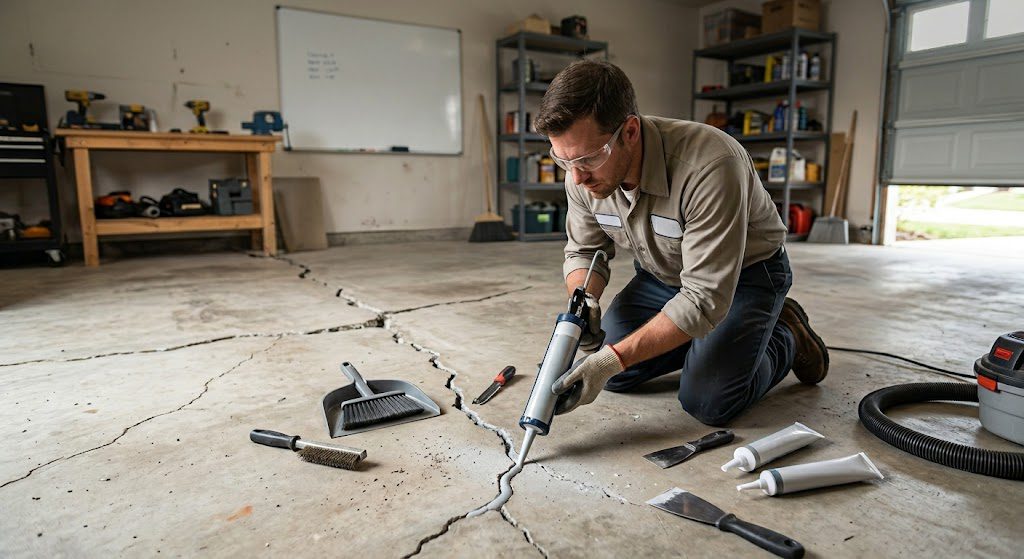
Concrete seems tough and permanent, but even the strongest slabs develop cracks over time. Some cracks are harmless surface blemishes. Others signal deeper problems that could affect the safety and stability of a floor, driveway, or garage slab.
At Old Stone Restoration & Installation Corp, our team has spent over 35 years inspecting and repairing cracked concrete floors, driveways, and slabs across residential and commercial properties throughout Long Island and New York. Our team inspects and repairs cracked concrete floors, driveways, and slabs for homes and businesses of all sizes.
What Causes Concrete Cracks in the First Place?
Concrete cracking occurs for several reasons, most of which are completely normal. The material itself is under stress from the moment it is poured. Understanding these causes helps prevent future damage and choose the right repair method.
Shrinkage During the Drying Process
Fresh concrete contains a lot of water. As that water evaporates during curing, the concrete shrinks slightly. This shrinkage creates internal tension, and cracks often form as a result. According to the Portland Cement Association, shrinkage cracking remains one of the most common issues in residential and commercial concrete work.
Most shrinkage cracks appear within the first few days or weeks after pouring. They tend to be thin and shallow, running in random patterns across the surface.
Poor Installation or Mixing Problems
When concrete gets mixed with too much water, it becomes weaker after curing. A weak mix shrinks more and cracks more easily. Similarly, if workers pour concrete too quickly or skip proper finishing steps, the slab may develop defects that later show up as cracks.
Proper concrete installation requires careful attention to water ratios, curing conditions, and timing. Cutting corners during this phase often leads to problems down the road.
Heavy Load Stress on the Slab
Concrete has limits. Parking heavy vehicles, placing industrial machinery, or storing excessive weight on a slab can cause stress cracks over time. Garage floors and driveways frequently experience this type of damage, especially when the original concrete thickness was not designed for heavy loads.
Temperature Changes and Freeze-Thaw Cycles
Concrete expands when temperatures rise and contracts when temperatures drop. In regions with cold winters, water can seep into small cracks, freeze, and expand. This freeze-thaw cycle gradually widens existing cracks and creates new ones. This seasonal movement explains why concrete damage often worsens during spring in northeastern states like New York.
Soil Movement or Settlement Under the Slab
The ground beneath the concrete does not always stay still. Soil can shift, settle, or erode over time, especially if drainage is poor or the area has recently undergone construction. When the supporting soil moves, the concrete above it may crack, sink, or heave upward.
Missing or Poorly Placed Control Joints
Control joints are intentional grooves cut into concrete to guide where cracks will form. Without these joints, concrete cracks wherever internal stress finds a weak point. Random cracking often indicates that control joints were either missing or placed incorrectly during installation.
What are the Different Types of Concrete Cracks and What They Mean?
Not all cracks are created equal. Identifying the type of crack helps determine whether a simple DIY fix will work or whether professional repair is needed.
Hairline Cracks on the Surface
These thin, shallow cracks typically measure less than 1/16 inch wide. They usually affect only the surface layer and do not compromise structural integrity. Hairline cracks are common in new concrete and often stop growing once the curing process is complete.
Structural Cracks That Go Deep
Structural cracks extend through the full thickness of the concrete or show signs of significant movement. They often appear wider than 1/8 inch and may have uneven edges. These cracks can indicate foundation problems, excessive loading, or serious soil issues beneath the slab.
Settlement Cracks From Ground Movement
When soil settles unevenly under a slab, one section may sink lower than another. This creates cracks along with noticeable level changes in the floor. Settlement cracks tend to grow over time if the underlying soil problem continues.
Expansion Cracks From Temperature Stress
Concrete slabs that lack proper expansion joints may crack when temperature changes cause the material to expand against walls, other slabs, or fixed objects. These cracks often run parallel to walls or appear at corners where movement meets resistance.
When Should Concrete Cracks Cause Concern?
Minor cracking is normal and expected in most concrete installations. However, certain warning signs suggest that the damage may be more serious and warrant prompt attention.
- Cracks wider than 1/8 inch deserve closer attention. Wide cracks allow water penetration, which can worsen damage during freeze-thaw cycles or create moisture problems in basements and garages.
- Cracks that keep growing or changing indicate ongoing movement or stress. Monitoring crack width over several weeks can reveal whether the problem is active or stable.
- Uneven slabs, with one side higher than the other, suggest settlement or heaving issues that may require professional assessment.
- Water seeping through cracks signals that the damage extends through the full slab thickness. Moisture intrusion can lead to mold growth, floor coating failure, and damage to stored items.
- Garage floor cracks accompanied by flaking, spalling, or soft spots may indicate deeper deterioration that simple crack filling will not address.
Professional inspection is often worthwhile before structural damage spreads or becomes more expensive to repair.
How to Repair Cracks in Concrete: Step-by-Step Methods
The right concrete repair approach depends on the crack size, depth, and location, as well as whether the damage is active or stable. Here are the most effective methods for different situations.
Method 1: DIY Surface Crack Repair (Small Cracks)
Small hairline cracks and minor surface damage can often be repaired without professional help. The process involves cleaning the crack thoroughly to remove dust, debris, and loose concrete. A wire brush or shop vacuum works well for this step.
For very narrow cracks, slightly widening them with a chisel can help the repair materials bond better. The next step involves applying a concrete crack filler. Polymer or epoxy-based fillers work well for small surface cracks. After filling, smoothing the surface with a trowel creates a clean finish.
This method works best for cosmetic repairs on stable cracks that are not growing or causing structural concerns.
Method 2: Epoxy Injection for Structural Crack Repair
Structural cracks in slabs and garage floors often require epoxy injection, a professional technique that restores the concrete to its original strength. This method involves sealing the crack surface first, then drilling small injection ports along the crack length.
Epoxy resin is injected under pressure, completely filling the crack from the bottom to the top. After the epoxy cures, the surface gets sealed and finished.
At Old Stone Restoration, this epoxy concrete crack repair is one of the most common methods our technicians use for structural slab repair. The 100% solids epoxy formulations bond strongly and can be topcoated immediately for a seamless finish.
Method 3: Driveway Crack Repair Methods
Driveway cracks experience different stresses than indoor floors. Vehicle traffic, weather exposure, and temperature swings all affect repair materials differently.
For driveway crack repair, the process typically starts with routing or widening the crack to create a consistent channel. A flexible sealant is applied to accommodate ongoing movement caused by temperature changes. Larger damaged areas may need patching with concrete repair compound, followed by surface leveling to restore a smooth driving surface.
Flexibility matters in driveway crack filling because rigid fillers can crack again when concrete expands and contracts with temperature changes.
Method 4: Garage Floor Crack Repair Techniques
Garage floor cracks present unique challenges because moisture vapor can rise through the slab, and the floor often receives coatings or epoxy finishes. Checking for moisture issues before repair helps ensure lasting results.
Epoxy injection works well for structural cracks in garage floors. For less severe damage, polyurethane foam injection can fill voids and stabilize the slab. If the surface shows extensive damage, grinding and resurfacing may be needed before applying a protective floor coating.
Method 5: Full Concrete Resurfacing for Severe Damage
When cracks are widespread or the surface has deteriorated significantly, patching individual cracks may not be practical. Full resurfacing involves applying a concrete overlay system that creates a new wearing surface over the existing slab.
This approach restores both appearance and function while addressing multiple defects at once. Self-leveling toppings can correct minor unevenness, while thicker overlays can handle more serious damage.
DIY Repair or Professional Help: Making the Right Choice
Some concrete repairs make good weekend projects. Others require specialized equipment, materials, and expertise.
DIY repair tends to work well for hairline cracks, small surface damage, and cosmetic issues on stable slabs. Hardware store crack fillers and patching compounds can handle these repairs effectively.
Professional repair is necessary for structural cracks, garage slab damage affecting the building’s foundation, driveways that are sinking or showing movement, and any situation involving water intrusion or safety concerns.
| Repair Type | DIY Suitable | Professional Recommended |
| Hairline surface cracks | Yes | Optional |
| Cracks wider than 1/8 inch | Sometimes | Yes |
| Structural cracks | No | Yes |
| Settlement or heaving | No | Yes |
| Pre-coating preparation | Sometimes | Occasionally |
Old Stone Restoration & Installation Corp specializes in diagnosing and repairing cracks in structural concrete using industrial-grade systems. Our factory-trained technicians have the tools and experience to handle complex repairs that DIY methods cannot address effectively.
How to Prevent Future Concrete Cracks With Old Stone Restoration?
Prevention saves money and hassle compared to repair. Several practices can help minimize cracking in new concrete or slow the progression of damage in existing slabs.
- Proper control joint placement during installation guides cracks to predetermined locations where they cause less harm.
- Correct curing procedures, including keeping new concrete moist during the initial curing period, reduce shrinkage cracking.
- Applying seal coating every few years protects the surface from water penetration and reduces freeze-thaw damage.
- Avoiding loads heavier than the slab was designed to prevent stress cracking. This matters especially for garage floors and driveways where vehicle weights can vary significantly.
- Managing drainage around slabs prevents water from pooling and saturating the soil beneath.
What does Concrete Crack Repair typically Cost?
Repair costs vary widely depending on crack severity, repair method, and project scope. Minor surface crack filling using DIY products costs relatively little and takes minimal time.
Professional epoxy injection for structural cracks requires more labor and specialized materials, thereby increasing the cost. Full slab repair or resurfacing represents the highest investment but addresses extensive damage comprehensively.
Concrete crack repair methods cost depends heavily on crack depth, width, and structural impact. Getting an accurate assessment before committing to a repair approach helps avoid surprises and ensures the chosen method actually solves the problem.
Professional Concrete Repair Services in New York
Concrete cracks do not have to mean expensive replacement or ongoing frustration. The right repair approach, applied correctly with quality materials, can restore integrity and appearance for years to come.
At Old Stone Restoration & Installation Corp, our team brings over 35 years of hands-on experience to every concrete repair project. From hairline surface cracks to serious structural damage, we use industrial-quality products and factory-trained technicians to deliver lasting results.
Contact Old Stone Restoration today at (631) 821-5619 or info@oldstonerestoration.com to schedule an on-site estimate.
FAQs
What causes cracks in concrete driveways?
Driveway cracks commonly result from shrinkage during curing, freeze-thaw cycles, heavy vehicle loads, tree root pressure, and soil settlement beneath the slab. Poor original installation and the absence of control joints also contribute to cracking.
How do you fix cracks in a concrete slab?
Small cracks can be filled with polymer or epoxy crack filler after cleaning. Larger structural cracks typically require epoxy injection under pressure. Severely damaged slabs may need resurfacing or partial replacement.
Can cracked concrete be repaired permanently?
Many crack repairs last for years when done correctly with quality materials. However, active cracks caused by ongoing soil movement or structural issues may reappear if the underlying cause is not addressed. Movement joints and active cracks may remain visible or reappear over time as concrete continues to move.
Is epoxy good for concrete crack repair?
Epoxy works well for crack repair, especially structural cracks that require strength restoration. 100% solids epoxy fillers bond strongly, cure quickly, and can be topcoated immediately. Epoxy is one of the most trusted materials for professional concrete repair.
When should concrete be replaced instead of repaired?
Replacement may be necessary when damage is too extensive for cost-effective repair, when the slab has settled significantly, or when structural problems make the concrete unsafe. A professional concrete slab repair solution can help determine whether repair or replacement makes more sense.