Flooring is one of the biggest investments in any renovation project. Whether you’re updating a home, retail space, warehouse, or commercial property, the choice between polished concrete flooring and tile affects more than just the initial budget. It also influences maintenance costs, durability, and how well the floor holds up over time.
Many property owners compare polished concrete vs. tile because both offer unique benefits. The challenge is that the most affordable option upfront isn’t always the one that saves the most money in the long run. Looking beyond installation costs can help you make a smarter investment.
With over 35 years of experience, Old Stone Restoration & Installation Corp. has worked on polishing and restoring concrete floors across Long Island, including homes, commercial spaces, retail stores, and industrial facilities. Each project is handled with careful surface preparation and the right polishing methods to ensure a strong, long lasting finish that performs well over time.
What is Polished Concrete Flooring?
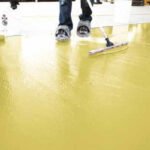
Polished concrete flooring starts with an existing concrete slab, which is transformed through a multi-step mechanical process. The transformation involves grinding the concrete surface with progressively finer diamond abrasives until the desired sheen level is achieved.
The process typically begins with coarse grinding to remove surface imperfections, old coatings, or minor damage. Chemical densifiers are then applied to the concrete surface. These densifiers penetrate the concrete and react chemically to create a harder, denser surface that resists wear and staining.
After densification, technicians continue polishing with finer grit abrasives. Each pass creates a smoother, more reflective surface. The final polish level can range from a low satin sheen to a high-gloss mirror finish, depending on preference and intended use.
Some installations include an optional sealer application for added protection, though many polished concrete floors perform excellently without additional sealers due to the densification process.
What are Tile Floors?
Tile flooring encompasses several distinct materials, each with different characteristics and price points.
Ceramic tiles are made from clay fired at high temperatures. They offer good durability for residential applications and come in countless colors, patterns, and sizes. Ceramic is often the most budget-friendly tile option.
Porcelain tiles go through a similar manufacturing process but use denser clay and higher firing temperatures. This creates a harder, more water-resistant tile that performs well in high-traffic areas and wet environments.
Natural stone tiles include marble, granite, travertine, and slate. These materials offer unique beauty since no two pieces look exactly alike, but they require more maintenance and typically cost more than manufactured tiles.
The typical tile installation process involves preparing the subfloor, applying mortar or thin-set adhesive, setting each tile individually, allowing cure time, applying grout between tiles, and sealing the grout lines. The process requires skilled labor and multiple days to complete properly.
Tiles work well in bathrooms, kitchens, entryways, and any area where water resistance matters. Commercial applications include restaurants, retail stores, and office lobbies.
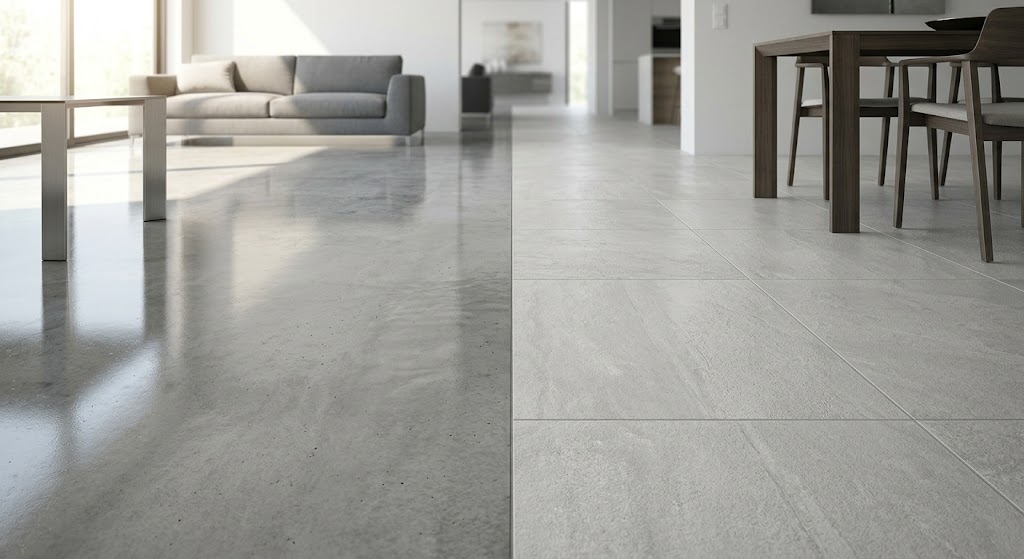
Polished Concrete Floors vs Tiles: Comparison Table
| Feature | Polished Concrete | Tile |
| Initial Cost | $3 to $12 per square foot | $10 to $30+ per square foot |
| Lifespan | 20 to 30+ years | 15 to 25 years |
| Maintenance | Low | Moderate to High |
| Repair Cost | Generally Lower | Can Be Higher |
| Water Resistance | Good with proper sealing | Excellent |
| Slip resistance | Varies by finish level | Varies by texture |
| Installation Time | 2 to 5 days typically | 3 to 7 days typically |
| Cleaning | Simple | Requires grout attention |
| Commercial use | Excellent | Good |
| Residential Use | Good | Excellent |
| Sustainability | High | Moderate |
| Design Options | Growing variety | Extensive variety |
| Long-term cost | Often Lower | Often Higher |
Initial Installation Cost
Understanding the true installation cost requires looking beyond the per-square-foot price quote.
Polished Concrete Installation Costs
Polished concrete flooring cost depends heavily on the existing slab condition. When the concrete is already in good shape, the process moves smoothly. The main expenses include grinding, densifying, and polishing labor along with the diamond tooling and chemical products used.
According to HomeAdvisor, polished concrete typically ranges from $3 to $12 per square foot, with most projects falling between $5 and $8 per square foot. Higher-end decorative finishes, such as exposed aggregate or dye applications, push toward the upper range.
One factor that significantly affects cost is concrete floor repair. Cracks, spalling, chips, or uneven areas require professional repair before polishing can begin. Skipping this step leads to visible flaws in the finished floor and may compromise durability.
Tile Installation Costs
Tile flooring cost varies dramatically based on the tile material selected. Basic ceramic tiles might cost $1 to $3 per square foot for the material alone, while premium porcelain runs $5 to $10 per square foot. Natural stone tiles can exceed $20 per square foot for high-end marble or exotic materials.
Beyond tile cost, installation requires mortar, grout, sealers, underlayment materials, and significant labor. Professional tile installation labor typically ranges from $5 to $15 per square foot, depending on tile size, pattern complexity, and regional labor rates.
A 500-square-foot tile project using mid-range porcelain might total $4,000 to $7,500 including all materials and labor.
Long-Term Maintenance Costs
The maintenance story for polished concrete floors differs significantly from that for tile floors over time.
Polished concrete floor maintenance:
Maintaining Polished concrete flooring is remarkably straightforward. Regular dust mopping removes abrasive particles that might dull the surface over time. Periodic damp mopping with a neutral pH cleaner handles most spills and soiling.
Every few years, depending on traffic levels, a polished concrete floor maintenance burnishing or re-polishing session can restore the floor’s original luster. High-traffic commercial spaces might need this attention annually, while residential floors may go five years or longer between touch-ups.
Tile Floor Maintenance:
Tile surfaces themselves clean easily enough. The challenge lies with grout lines. Grout is porous and absorbs stains, moisture, and bacteria over time. Regular grout cleaning and periodic resealing become necessary to maintain appearance and hygiene.
Natural stone tiles add another layer of maintenance. Marble, travertine, and limestone require specific pH-balanced cleaners and regular sealing to prevent etching and staining.
Over a 20-year period, tile floor maintenance costs, including grout cleaning, resealing, and periodic professional cleaning, can add $1,000 to $3,000 or more to the total ownership cost.
Durability Comparison
Durability matters most in spaces with heavy foot traffic, wheeled equipment, or a risk of dropped objects.
Polished Concrete Durability:
Polished concrete handles heavy traffic exceptionally well. Warehouses with forklift traffic, retail stores with shopping carts, and restaurant dining rooms all benefit from concrete’s inherent toughness. The densification process during polishing makes the surface even more resistant to abrasion and wear.
Heavy objects that would crack tiles often leave polished concrete flooring unaffected. The monolithic nature of a concrete slab means no grout lines to deteriorate and no individual pieces to come loose.
Tile Durability:
Tiles can crack when struck by dropped objects. Individual tiles may chip, necessitating replacement. While the tile surface itself resists scratching well, the grout lines represent ongoing weak points that deteriorate with traffic and moisture exposure.
Replacing a cracked tile sounds simple until the original tile has been discontinued. Finding a matching replacement is often impossible, resulting in visible patches or the need to replace larger sections to maintain a consistent appearance.
Which Flooring Lasts Longer?
Polished concrete flooring typically lasts 20 to 30 years or longer with proper maintenance. Some industrial polished concrete floors remain in excellent condition after 40 or more years of service. The concrete slab itself can last indefinitely, and periodic repolishing can restore the surface shine without complete replacement.
Tile floors generally last 15 to 25 years depending on tile quality, installation workmanship, traffic levels, and maintenance practices. Grout often fails before the tiles themselves, requiring regrouting every 8 to 15 years in many applications.
When comparing lifespan against cost, polished concrete often delivers better value despite potentially higher initial investment in some scenarios.
Which Is Easier to Repair?
Repair requirements and costs factor significantly into long-term flooring economics.
Concrete Floor Repair Options
Before polishing, professionals typically evaluate the existing slab and address any issues that could affect the final result. Concrete repair contractors handle surface cracks, chips, spalling, uneven areas, and joint damage as part of preparation for polishing.
Proper concrete floor repair creates the foundation for a smooth, durable polished surface. Skipping necessary repairs often leads to problems that become visible after polishing and may require costly corrections later.
Old Stone Restoration & Installation Corp evaluates every slab before beginning a concrete polishing service project. When needed, professional concrete repair contractors are called in first to help create a smoother, longer-lasting floor. With 35 years of industry experience, the team understands that proper preparation makes the difference between good and exceptional results.
Minor damage to existing polished concrete can often be repaired and repolished without significantly affecting the surrounding area. The repair blends into the existing floor more naturally than tile repairs typically can.
Tile Repair Challenges:
Repairing tile floors presents unique challenges. Finding replacement tiles that match existing ones becomes difficult when manufacturers discontinue styles or when tiles have aged and weathered differently than new stock.
Even when matching tiles are available, the new grout rarely matches the existing grout perfectly. Repairs often remain visible, which can be particularly problematic in prominent areas.
Removing and replacing individual tiles requires careful work to avoid damaging surrounding tiles. The process involves removing old grout, prying up damaged tile, preparing the substrate, setting the new tile, and regrouting. Each repair takes considerable time and expense.
Energy Efficiency and Indoor Comfort
Flooring choices can influence energy costs and indoor comfort levels in ways many property owners overlook.
Concrete Thermal Properties:
Polished concrete offers interesting thermal mass properties. Concrete absorbs and stores heat, which can help moderate indoor temperatures. In climates with cool nights and warm days, concrete floors can absorb excess heat during the day and release it slowly in the evening.
The reflective surface of polished concrete can increase ambient light levels in interior spaces. This improved light reflection may reduce the need for daytime artificial lighting, potentially lowering electricity costs in commercial settings.
Radiant floor heating systems work exceptionally well with polished concrete. The concrete efficiently transfers heat throughout the space, creating comfortable, evenly distributed warmth.
Tile Thermal Considerations:
Tile floors tend to feel cool underfoot, which many people find pleasant in warm climates but uncomfortable in colder regions. Tile does not retain heat as effectively as concrete, though it can work with radiant heating systems.
The thermal mass properties of tile are less pronounced than concrete due to the thinner material layer and the mortar bed beneath.
Which Flooring Works Better for Different Spaces?
Different environments call for different flooring solutions. This comparison helps clarify where each option tends to perform well.
| Space | Polished concrete | Tile |
| Garage | Excellent | Fair |
| Warehouse | Excellent | Poor |
| Retail store | Excellent | Good |
| Restaurant | Good | Good |
| Office | Excellent | Good |
| Basement | Excellent | Good |
| Luxury Home | Good | Excellent |
| Kitchen | Good | Excellent |
| Bathroom | Fair | Excellent |
| Patio | Good | Good |
| Showroom | Excellent | Good |
Polished concrete tends to excel in commercial and industrial environments where durability and low maintenance are most important. Tile often wins in residential wet areas where water resistance and design variety take priority.
What is the Environmental Impact?
Sustainability increasingly factors into flooring decisions. Polished concrete offers several environmental advantages worth considering.
Polished concrete typically uses the existing concrete slab. No additional flooring material needs manufacturing or transportation to the site. This approach generates minimal construction waste and uses fewer natural resources than installing new flooring material.
The longevity of polished concrete also reduces environmental impact over time. Fewer replacements mean less material in landfills and less energy spent on manufacturing and installation.
Tile manufacturing requires significant energy to fire clay at high temperatures. Transportation from manufacturing facilities adds to the carbon footprint. When tiles need replacement, the old tiles typically end up in landfills since recycling options remain limited.
According to the Environmental Protection Agency, construction and demolition debris accounts for a substantial portion of landfill waste. Choosing longer-lasting flooring options can help reduce this environmental burden.
What Expert Tips Help Before Making a Decision?
Inspecting the existing concrete slab provides crucial information. Professionals can first identify potential issues that might affect polishing results or require repair work. This assessment helps establish realistic cost expectations.
Calculating lifetime ownership costs rather than focusing solely on upfront pricing reveals the true financial picture. A floor that costs more initially but requires minimal maintenance may prove more affordable over 20 years than a cheaper option with ongoing maintenance expenses.
Honestly considering traffic levels and maintenance requirements helps match the flooring choice to actual conditions. High-traffic commercial spaces have different needs than residential living rooms.
Repairing cracks or other damage in concrete before polishing makes sense to achieve optimal results. Attempting to polish over problems rarely works well and often requires redoing the work later.
Requesting samples or viewing completed projects helps visualize how each flooring type actually looks in real environments. Photographs rarely capture the true appearance as accurately as seeing floors in person.
Conclusion
The better flooring option depends on individual circumstances, including budget, maintenance expectations, intended use, and aesthetic preferences. While polished concrete may involve a higher initial investment in certain situations, it can offer lower maintenance costs and excellent long-term value.
Tile flooring remains an excellent choice for certain applications, particularly residential wet areas where water resistance and design variety matter most. Understanding the ongoing maintenance commitment helps ensure satisfaction with tile floors over time.
At Old Stone Restoration & Installation Corp, every polished concrete project begins with an evaluation of the existing slab’s condition. When needed, a professional concrete repair system is completed before polishing to help create a smoother, longer-lasting floor.
Call (631) 821-5619 to schedule an expert assessment and restore your floor/tile beauty.
FAQs
Is polished concrete cheaper than tile?
Polished concrete often costs less than tile for initial installation, particularly when the existing slab is in good condition. The more significant savings typically come from reduced maintenance and repair costs over the floor’s lifespan.
Is polished concrete slippery?
Slip resistance varies with polish level and the use of anti-slip additives. Lower sheen levels generally offer better traction. High-gloss finishes may become slippery when wet unless treated with slip-resistant additives.
Can polished concrete crack?
Concrete can crack due to substrate movement, settling, or structural issues. However, cracks in the underlying slab often exist before polishing begins. Professional assessment identifies existing cracks, and proper repair helps minimize future cracking. Polishing itself does not cause cracking.
Which flooring lasts longer?
Polished concrete typically outlasts tile flooring. Properly maintained polished concrete can last 20 to 30 years or longer. Tile floors generally last 15 to 25 years, with grout often requiring attention sooner than the tiles themselves.
Is polished concrete good for kitchens?
Polished concrete can work well in kitchens, offering easy cleaning and durability. Some people find hard surfaces uncomfortable during extended standing, though anti-fatigue mats can address this concern. Slip-resistant treatments may be advisable for kitchen applications.
Can damaged concrete be repaired before polishing?
Damaged concrete can often be repaired before polishing proceeds. Professional concrete repair contractors address cracks, chips, spalling, and uneven areas to create a suitable surface for polishing. These repairs help ensure better polishing results and longer floor life.
Is polished concrete worth the investment?
Polished concrete often proves worthwhile for property owners prioritizing durability, low maintenance, and long-term value. The investment tends to pay off particularly well in commercial applications and spaces with existing concrete slabs in reasonable condition.