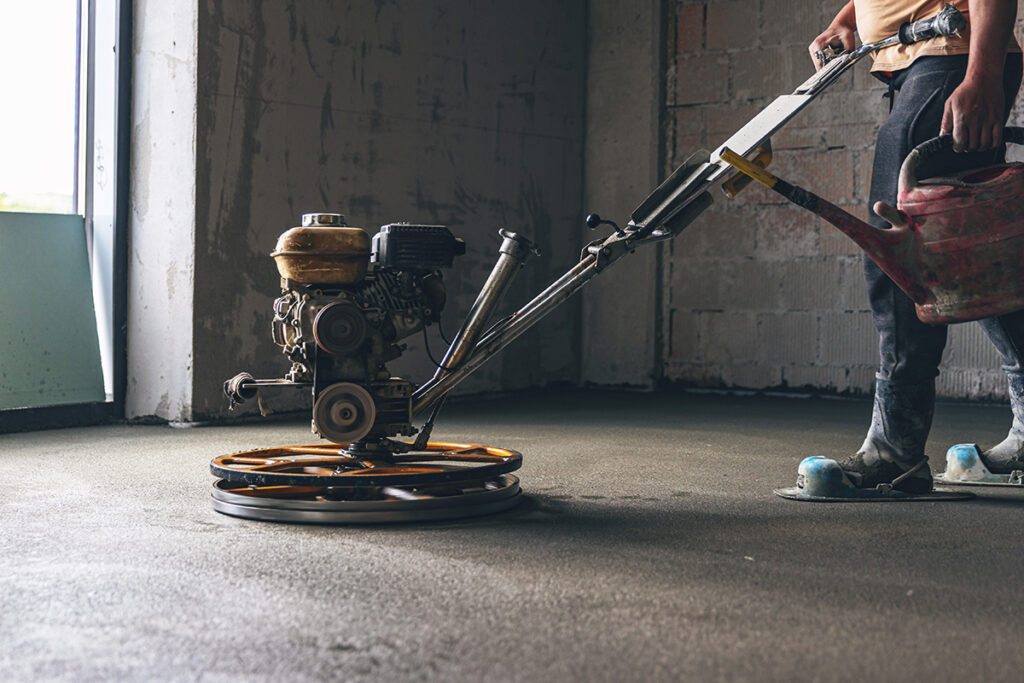
Epoxy flooring is known for its strength and long lasting finish, but a poor installation can lead to frustrating problems. What starts as a smooth, attractive surface may later develop bubbles, peeling spots, or areas where the coating begins pulling away from the concrete. Understanding why these issues happen can help prevent costly repairs.
Surface preparation makes or breaks every floor coating project. Concrete grinding removes weak layers, cleans away hidden contaminants, and creates a texture that coatings can actually grip. Without this critical step, even expensive professional-grade epoxy may fail to bond properly.
Recognizing the warning signs early can save property owners significant money on future repairs. With over 35 years of hands-on experience, Old Stone Restoration and Installation Corp. provides professional concrete floor repair and surface preparation throughout Long Island.
Quick Answer
If your concrete floor has cracks, peeling coatings, uneven surfaces, oil stains, moisture issues, or poor adhesion, it typically needs professional grinding before a new coating is applied. Grinding removes weak surface layers and contaminants while improving bonding, creating a stronger foundation for lasting results.
Why Grinding Matters Before Applying Any Floor Coating?
Think of concrete grinding like sanding wood before painting. Nobody would slap paint on a rough, dirty piece of lumber and expect great results, and concrete works the same way.
Grinding creates what professionals call mechanical bonding. The process scratches tiny grooves into the concrete surface. These grooves give coating materials places to grip and lock in. Without them, coatings just sit on top like a sticker that eventually peels off.
Surface profiling matters too. Different concrete floor coating preparations need different surface textures to stick properly. A thin sealer needs less texture than a thick epoxy coating. Professional grinding creates exactly the right profile for whatever coating goes on top.
Contaminants hide in concrete even when the surface looks clean. Oil, grease, old sealers, and curing compounds all prevent proper concrete coating adhesion. Grinding physically removes these problem layers instead of just covering them up.
According to the Concrete Network, the vast majority of coating failures trace back to inadequate surface preparation rather than defective coating materials. This statistic alone shows why grinding deserves serious attention before any coating project begins.
How to Tell if Your Floor Needs Grinding?
Floors in good condition sometimes only need light cleaning before coating application. However, certain conditions make grinding absolutely essential. Knowing what to look for helps you decide quickly and avoid wasted time, money, and frustration.
Sign 1: Visible Cracks and Surface Damage
Hairline cracks spreading across a garage or warehouse floor often indicate deeper problems. Spalling occurs when concrete flakes away in chunks, revealing weakened material underneath. Chips, pits, and general surface wear all suggest the top layer has lost its strength.
Coating applied over damaged concrete rarely lasts. The coating bonds to compromised material that continues to break down over time. Eventually, sections of coating lift off, taking crumbling concrete along with them.
Concrete floor repair needs to happen before grinding and certainly before any coating goes on. Old Stone Restoration uses industrial-quality products that restore structural integrity. However, movement joints and active cracks may remain visible or reappear over time as concrete continues to move.
Sign 2: Old Paint, Epoxy, or Coating Is Peeling
Bubbling, flaking, or peeling of previous coatings pose serious obstacles to new applications. That old material needs complete removal. Layering new coating over failing coating just stacks one problem on top of another.
Delamination occurs when coatings lose their bond to concrete. Sometimes soft, spongy spots develop. Other times, whole sections lift along the edges and curl away from the floor.
Diamond grinding strips away old coatings right down to fresh concrete. New coatings then have clean, bare surfaces to grip. Skipping this step typically means the new coating fails the same way the old one did.
Sign 3: Uneven or Rough Concrete Surface
High spots and low spots across a floor create more than cosmetic concerns. Coatings pool in depressions and stretch too thin over raised areas. This leads to uneven wear and early failure in specific zones.
Uneven concrete also creates trip hazards, particularly in commercial spaces where foot traffic stays heavy. Maintenance becomes harder because dirt collects in low areas while cleaning equipment misses recessed spots.
Grinding cuts away contaminated layers and exposes clean concrete underneath. After that, specialized oil-stop primers may provide additional help on floors with heavy petroleum saturation.
Sign 4: Oil, Grease, or Chemical Stains That Won’t Come Out
Oil and grease penetrate concrete rather than sitting on top. Garage floors and workshop areas often absorb years’ worth of petroleum products that no amount of scrubbing can remove. The contamination soaks into the porous concrete structure itself.
Chemical stains from solvents, cleaning products, and industrial materials cause similar bonding problems. Standard cleaning methods simply cannot reach contamination that has moved below the surface.
Grinding cuts away contaminated layers and exposes clean concrete underneath. For floors with heavy petroleum saturation, specialized oil-stop primers may provide additional help after grinding has removed the worst contamination.
Sign 5: Moisture Problems or White Powder Appearing
White crystalline deposits appearing on concrete indicate efflorescence. Moisture travels through the slab, picks up mineral salts, and leaves them behind as the water evaporates at the surface. While the white powder looks bad, the moisture causing it creates far bigger problems.
Recurring damp spots, persistently wet areas, and coating bubbles all suggest moisture vapor transmission. Water vapor pushing up through concrete works against coatings from below, forming bubbles that eventually tear away from the surface.
Professional moisture testing should happen before coating any floor with suspected moisture issues. Moisture vapor emission rate tests reveal whether concrete has dried enough for coating. Grinding alone cannot solve moisture problems, though it often works alongside moisture barriers as part of the complete solution.
Sign 6: Surface Is Extremely Smooth or Glossy
Many people find this surprising. Smooth concrete seems like it should accept coating more easily. The reality works exactly opposite.
Burnished or power troweled concrete develops an extremely dense, closed surface. The finishing process packs the top layer so tight that coatings cannot grip or penetrate the material. That smooth, sometimes shiny appearance creates real adhesion problems.
Industry professionals measure surface texture using a method called Concrete Surface Profile (CSP). The International Concrete Repair Institute created a scale running from CSP 1, which is nearly smooth, up to CSP 10, which is very rough. Most floor coatings perform best somewhere between CSP 2 and CSP 5, depending on coating type and thickness requirements. Grinding opens that dense surface and builds the profile coatings required for proper adhesion.
Sign 7: Dusting or Weak Concrete Surface Preparation
Floors that generate dust underfoot have compromised surface layers. This dusting occurs when concrete cures improperly or has degraded over the years. Walking across these floors leaves footprints in fine powder, and sweeping never quite eliminates the problem.
Coating applied to dusty concrete bonds to the material that continues to fall apart. Initial results may look promising, but the coating adheres to a surface that continues to deteriorate beneath it.
Grinding strips away weak, powdery layers until sound concrete appears. Coatings then bond to stable material rather than crumbling surface layers that cannot support them.
Quick Reference: Does Your Floor Need Grinding?
| Floor Condition | Grinding Needed? | Reason |
| Hairline cracks | Yes | Better repair bonding |
| Peeling epoxy | Yes | Must remove failed coating |
| Oil stains | Usually | Remove contamination |
| Smooth concrete | Yes | Improve adhesion |
| Dusting surface | Yes | Remove weak layer |
| Minor scratches | Sometimes | Depends on coating type |
| New concrete | Often | Requires surface profiling |
What Happens When Concrete Grinding Gets Skipped?
Coating failure doesn’t always happen immediately. Sometimes floors look perfect for weeks or even months before problems start appearing. But when preparation gets skipped, failure becomes a matter of when, not if.
Peeling starts at edges and around cracks. Bubbles form as moisture pushes against the coating from below. Entire sections may delaminate, lifting away from the concrete in sheets.
The financial impact goes beyond just the coating cost. Removing failed coatings requires grinding anyway, plus the additional labor of stripping what shouldn’t have been applied in the first place. Then there’s the cost of recoating properly.
For commercial and industrial facilities, floor failures can mean operational disruptions, safety hazards, and unhappy customers or employees.
The Professional Concrete Grinding Process
Understanding what happens during professional grinding helps explain why preparation matters so much.
- Inspection comes first. Professionals examine the entire floor, noting cracks, damage, contamination, and existing coatings.
- Moisture testing happens on any floor where moisture could be an issue. This step prevents coating failures down the road.
- Concrete Crack repair addresses structural issues before grinding. Filling cracks with appropriate epoxy crack fillers ensures a stable surface.
- Surface cleaning removes loose debris, dirt, and surface contaminants.
- Diamond grinding is where the real transformation happens. Professional-grade equipment with diamond tooling removes surface layers to create the desired profile.
- Dust removal completely cleans up grinding residue. Even small amounts of dust left behind can interfere with coating adhesion.
- Surface inspection confirms the floor is ready for coating.
- Coating application can finally begin on the properly prepared surface.
Grinding Compared to Acid Etching: A Quick Comparison
Some people consider acid etching as a cheaper alternative to grinding. While acid etching has its place, the two methods aren’t really comparable for serious coating projects.
| Aspect | Grinding | Acid Etching |
| Adhesion results | Superior | Limited |
| Removes coatings | Yes | No |
| Levels surface | Yes | No |
| Professional preference | Standard | DIY alternative |
| Reliability | Consistent | Variable |
| Environmental concerns | Minimal | Chemical disposal needed |
Acid etching can be applied to clean, new concrete in good condition. But for floors with existing coatings, contamination, or surface damage, grinding remains the professional standard.
Should Repairs Happen Before Grinding?
In most cases, concrete repair should definitely happen before grinding begins. Filling cracks after grinding can contaminate the freshly prepared surface. Joint repairs and surface stabilization work better when done first.
The correct order is simple: repair, grind, then coat. Completing repairs first allows the materials to properly bond with the existing concrete. Grinding afterward creates an even surface profile across both the repaired areas and the original concrete, helping the coating apply more consistently.
Old Stone Restoration and Installation Corp. focuses on proper concrete preparation before applying coatings. By addressing surface issues before grinding, the team helps create a stronger foundation for coating systems designed to last.
When Should You Call a Professional?
Some concrete floor problems can be handled with basic DIY solutions, while others require the experience and equipment of a professional.
Large structural cracks that continue to grow indicate potential foundation issues beyond the scope of surface repair. Significantly uneven slabs may require leveling compounds applied by experienced technicians. Moisture problems need proper diagnosis and specialized vapor barrier systems.
Existing epoxy or coating failures often indicate underlying issues that need professional assessment. Any floor with significant deterioration should undergo a professional evaluation before investing in new coatings.
With 35 years of experience, Old Stone Restoration has encountered virtually every concrete-floor challenge that Long Island property owners face.
Why Long Island Property Owners Choose Old Stone Restoration?
Experience counts in concrete repair. Over the past half century, Old Stone Restoration and Installation Corp. has developed expertise that only comes from handling thousands of projects.
Professional equipment makes a difference too. Commercial-grade diamond grinders, industrial vacuum systems, and specialized repair products produce results that consumer-grade tools simply can’t match.
Quality craftsmanship shows in the finished product. Floors prepared and coated by experienced professionals look better and last longer than DIY attempts using the same materials.
The company serves both residential and commercial clients across Long Island, providing the same attention to detail whether working on a home garage or an industrial warehouse.
Maintaining Tips for Floors After Grinding and Coating
Proper maintenance extends the life of any floor coating system. Regular cleaning prevents abrasive dirt from wearing down the surface. Standing water should be addressed promptly, as even sealed floors can sustain damage from prolonged exposure.
Repairing new cracks early prevents them from spreading and causing coating damage. Heavy equipment and vehicles can damage coatings if dragged rather than rolled across the surface.
Periodic professional inspections can catch developing issues before they become major problems, potentially extending floor life significantly.
Conclusion
Successful floor coatings start with proper preparation. The seven signs discussed here, including cracks, peeling coatings, uneven surfaces, contamination, moisture issues, smooth concrete, and dusting, all indicate that concrete floor grinding should happen before coating application.
Recognizing these signs early saves significant money and frustration. Proper preparation costs more upfront but prevents expensive failures and reapplication costs later. For property owners across Long Island dealing with damaged or problematic concrete floors, professional assessment makes sense before starting any coating project.
At Old Stone Restoration and Installation Corp., we bring over 35 years of experience to every concrete repair service, helping ensure coating systems perform as intended for years to come. Call (631) 821-5619 to schedule an assessment today.
FAQs
Does every concrete floor need to be ground before coating?
New concrete in good condition sometimes only needs light profiling. However, most existing floors benefit from grinding, especially those with previous coatings, contamination, or surface damage. A professional assessment can determine the specific preparation each floor needs.
Can epoxy be applied over damaged concrete?
Coating over damaged concrete typically leads to premature failure. Cracks, spalls, and weak areas should be repaired with appropriate products before coating application. Skipping repairs means the coating bonds to material that continues deteriorating.
How long does concrete grinding take?
Time varies based on floor size, condition, and required profile depth. A typical residential garage might take a few hours. Large commercial spaces can require several days. Proper preparation shouldn’t be rushed.
Is grinding messy?
Professional grinding equipment includes dust collection systems that capture most airborne particles. Some dust is unavoidable, but modern equipment keeps it manageable. Thorough cleanup happens before coating application.
How do professionals repair concrete before coating?
Crack repair typically involves routing out cracks and filling them with epoxy crack fillers designed for concrete. Joint repairs use flexible sealants that accommodate movement. Surface defects may require patching compounds. Old Stone Restoration’s repair concrete before coating addresses these issues with industrial-grade products.
Can grinding remove old paint?
Yes, diamond grinding effectively removes paint, epoxy, and most other coatings. Multiple passes may be needed for thick or stubborn coatings. The process exposes fresh concrete ready for new coating application.
How long will a properly prepared coating last?
Lifespan depends on coating type, traffic levels, and maintenance. Properly applied epoxy coatings on well-prepared floors can last 10 to 20 years or more in residential settings. Commercial and industrial applications may see shorter lifespans due to heavier use but still benefit significantly from proper preparation.
Is concrete grinding worth the cost?
Considering that improper preparation causes most coating failures, grinding represents a smart investment rather than an unnecessary expense. The cost of grinding is typically far less than the cost of removing failed coatings and starting over.