Old concrete floors are often covered by carpet, tile, epoxy, or years of everyday wear. Many homeowners think older concrete needs to be replaced, but that is not always the case. In many homes and commercial buildings, existing concrete can still be polished and restored into a clean, durable, and modern-looking floor.
So, can you polish old concrete floors?
Yes, in many cases you can. The condition of the slab matters more than its age. Cracks, moisture problems, old coatings, glue residue, and surface damage all play a role in whether the floor is suitable for polishing.
At Old Stone Restoration & Installation Corp, we have over 35 years of experience restoring and polishing concrete floors in residential, commercial, and industrial spaces. Our team carefully inspects each slab to determine whether polished concrete is the right option or if repairs or resurfacing may be needed first.
Many older concrete floors can still achieve beautiful results with the right concrete polishing process and proper surface preparation.
How Do You Know If Old Concrete Can Be Polished?
Before any concrete polishing starts, the slab needs a proper inspection. Some old concrete floors clean up and polish surprisingly well, while others may need repairs or extra prep work first.
A concrete polishing contractor will usually inspect the slab to assess the extent of damage, wear, or prior flooring. Here are some of the biggest things they look for.
Surface Strength
The concrete needs to be strong enough to handle grinding and polishing. Older concrete is not always weak. In many cases, old slabs are actually very solid. But if the surface is breaking apart, crumbling, or extremely soft, repairs may be needed before polishing can begin.
Cracks & Structural Damage
Small cracks are common in older concrete floors and are usually not a major problem. Larger cracks or uneven sections can sometimes point to deeper structural issues. A contractor will check whether the damage is only on the surface or affects the slab underneath.
Moisture Problems
Moisture is one of the most common problems found in old concrete floors, especially in basements and garages. If too much moisture comes up through the concrete, it can cause problems later on. That is why experienced concrete polishing contractors usually check the slab first before any polishing work begins.
“The International Concrete Repair Institute notes that moisture-related issues are one of the biggest factors that can affect concrete surface performance and long-term flooring results.”
Paint, Glue, Epoxy, & Tile Adhesive
Many older floors were covered with tile, carpet, vinyl, or epoxy at some point. Once those materials are removed, leftover glue, paint, or adhesive often remains on the concrete. Grinding usually removes most of it, but some old tile patterns or marks may still be visible after polishing.
Levelness & Aggregate Exposure
Older concrete floors are usually not up to the mark. During grinding, some areas may expose more stone and texture than others. This is normal with polished concrete and often adds to the floor’s natural character.
Why Polished Concrete Fits Modern Homes?
Recently, everyone expects polished concrete to have a royal and rich look that works well in many types of homes. It makes spaces feel brighter, more open, and easier to maintain. Many homeowners like how it blends easily with modern interiors, open layouts, natural light, and even more rustic or industrial designs.
Most importantly, it works well in kitchens, basements, living rooms, garages, and home offices because the finish feels smooth and seamless from room to room.
At Old Stone Restoration & Installation Corp, we also offer different finish options to match the style of the space, including:
- Matte, satin, or high gloss finishes
- Light or heavy aggregate exposure
- Decorative scoring patterns
- Color staining options
- Smooth, seamless transitions between rooms
These details give each polished concrete floor its own natural look and feel.
Common Problems We See in Old Concrete Floors
Older concrete floors usually come with some wear and surface damage. Most of these issues can be improved during the polishing process by a concrete polisher, but it is important to know what to expect before work begins.
Surface Stains
Oil stains, rust marks, water spots, and chemical stains are common in garages, basements, and older commercial spaces. Some stains fade during grinding, while deeper stains may remain slightly visible after polishing.
Tile Glue Residue
Old tile adhesive and carpet glue are some of the most common issues found in existing concrete floors. These materials need to be fully ground off before polishing can begin.
Hairline Cracks
Small cracks are normal in older slabs. Many can be repaired and blended into the floor during the polishing process.
Spalling & Pitting
Some older floors have chipped areas, surface flaking, or small pits caused by age, moisture, or heavy use. These spots may need patching before polishing.
Uneven Color Variations
Older concrete rarely has one consistent color throughout the slab. Some sections may appear lighter, darker, or more exposed after grinding. This natural variation is common with polished concrete floors.
How Do We Polish Older Concrete Floors?
Older concrete floors come with years of wear, stains, cracks, and surface buildup. But that does not always mean the slab needs to be replaced. With the right prep work and polishing process, many old floors can be restored into clean, durable, and modern-looking polished concrete surfaces.
At Old Stone Restoration & Installation Corp, every floor is treated differently based on its condition. Some slabs need repairs first, while others simply need proper grinding and polishing to bring the surface back to life.
Here’s how we do it:
- On-Site Concrete Evaluation: We come out, take a close look, and assess what we’re actually working with. Age, existing damage, previous coatings, and slab hardness all affect how we approach the job.
- Surface Preparation: Before any grinding starts, the surface needs to be properly prepped. This means removing old adhesives, coatings, or contaminants that would interfere with the finish.
- Crack & Joint Repair: We address existing cracks and control joints to prevent them from telegraphing through the final surface or causing problems down the line.
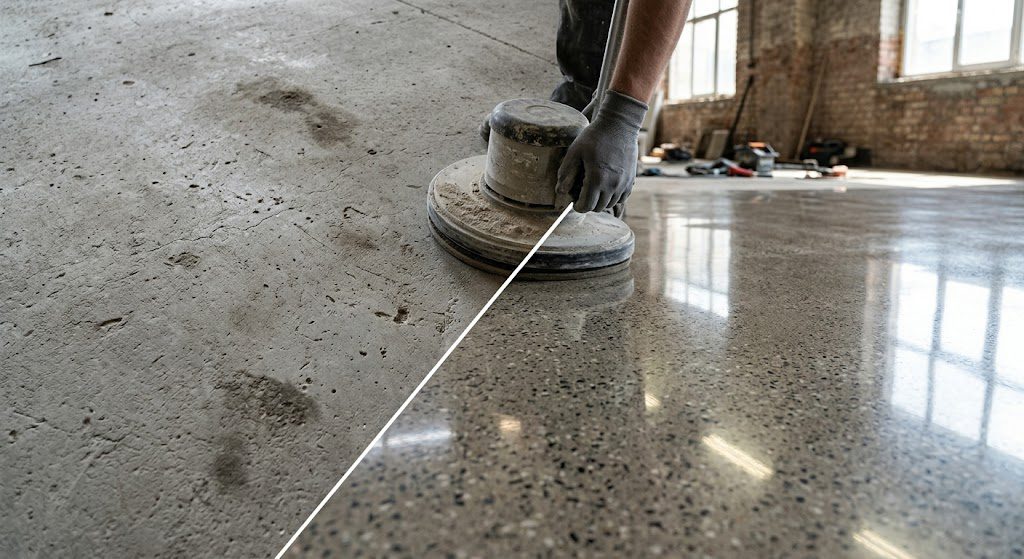
- Diamond Grinding: This is where the transformation begins. We use industrial diamond tooling to open the surface and remove imperfections, starting with coarser grits and working our way down.
- Densifier Application: A chemical densifier is worked into the slab to harden the concrete from within, improving both durability and the quality of the final polish.
- Fine Grinding & Honing: Progressively finer diamond abrasives refine the surface, building clarity and smoothness with each pass.
- Final Polishing & Protection: The last stage brings out the sheen and locks in the finish with a protective treatment suited to your environment and traffic level.
Every step matters in concrete polishing. Rushing the prep work or skipping repairs usually shows in the final finish. That is why we take the time to properly restore the slab first, whether it is a small home project or a large commercial floor.
When Polishing Is Not the Right Fix for Old Concrete?
Some slabs have damage that runs too deep, and polishing them would be a waste of time and money. A good contractor will tell you this upfront instead of taking the job and hoping for the best.
Before any work begins, the floor needs to be inspected thoroughly. That inspection is what tells us whether polishing is even worth attempting.
Here are some situations where it usually is not:
Situation 1:
If the concrete is cracking because the ground beneath it is shifting, polishing the surface will not solve the problem. The structural problem has to be dealt with first. Otherwise, whatever is done on top will not hold.
Situation 2:
Old garage floors and warehouse slabs can have years’ worth of oil sitting deep inside the concrete. Grinding can remove some of it, but if it has gone down far enough, there is no realistic way to fully clean it out.
Situation 3:
This is common in basements and older ground-level floors. When moisture keeps pushing up through the slab, it causes problems for any finish applied on top. Polishing over a moisture issue does not make the issue go away.
Situation 4:
Some floors have a thin layer of concrete poured over an older slab. That layer may not be thick enough to grind without grinding right through it.
Situation 5:
If the concrete is flaking, separating, or crumbling in sections, there is not enough solid material left to work with. Polishing it would not give you a finish that lasts.
If you are unsure about the condition of your floor, an on-site visit is the best place to start.
Polished Concrete vs Concrete Overlay for Old Floors
Both polished concrete and concrete overlays can improve the look of older floors, but they work differently. The right option depends on the condition of the slab and the overall look you want for the space.
| Factor | Polished Concrete | Concrete Overlay |
| Uses existing slab | Yes | Yes |
| Natural concrete look | More visible | Less visible |
| Shows imperfections | Sometimes | Less |
| Surface consistency | More variation | More uniform |
| Repairs needed | Usually more | Usually less |
| Best for | Solid older slabs | Heavily damaged floors |
At Old Stone Restoration & Installation Corp, our team helps homeowners choose the right solution based on the floor’s condition, design goals, and budget.
Residential vs Commercial Concrete Polishing
Polished concrete works well in both homes and commercial spaces, but the needs of each project are usually different.
Residential Concrete Polishing
Many homeowners choose polished concrete because it is durable, easy to clean, and works with many modern interior styles. The common residential areas include basements, kitchens, garages, lofts, living areas, and home gyms. Polished concrete is especially popular in open floor plans because it creates a clean and seamless look throughout the home.
Commercial Concrete Polishing
Commercial spaces often need flooring that can handle constant foot traffic and daily wear without requiring heavy maintenance. The common commercial applications include retail stores, warehouses, offices, showrooms, restaurants, and industrial spaces. For many businesses, polished concrete offers a professional appearance and is practical for long-term use.
“According to the Portland Cement Association, properly maintained concrete surfaces can last for decades, which is one reason many older slabs are still suitable for restoration and polishing instead of replacement.”
Maintenance Tips to Keep Your Floor Looking New
Polished concrete is one of the easier flooring surfaces to maintain, but simple routine care still helps protect the finish and keep the floor looking clean over time.
- Sweep or dust regularly to remove dirt and debris
- Mop with a pH-neutral cleaner when needed
- Use furniture pads to help prevent scratches
- Avoid harsh chemicals or acidic cleaners
- Keep dirt and gravel from being tracked indoors
A little regular maintenance goes a long way in keeping polished concrete floors looking smooth and polished for years.
Why Do Homeowners Choose Old Stone Restoration?
Older concrete floors require proper preparation and attention before polishing begins. Small details during the process can make a big difference in how the floor looks in the end.
At Old Stone Restoration & Installation Corp, we have been working with concrete floors for more than 35 years. From older homes to commercial buildings, our team has restored all kinds of worn and aging concrete surfaces.
35+ Years of Experience
We have decades of experience working with polished concrete floors in residential, commercial, and industrial spaces.
Experience With Older Concrete Floors
Older slabs often come with cracks, stains, glue residue, and uneven areas. Our team knows how to properly prepare these surfaces before polishing begins.
Residential & Commercial Projects
We work on everything from home basements and garages to retail stores, offices, and warehouses.
Professional Concrete Polishing Equipment
We use commercial grinding and polishing equipment designed for concrete restoration and polished concrete finishes.
Honest Recommendations
Some floors polish well. Others may need repairs or resurfacing first. We provide honest feedback based on the concrete’s actual condition and the type of finish you want.
Conclusion
Old concrete floors do not always need to be replaced. In many cases, the existing slab can be restored and transformed through the right concrete polishing process.
From garages and basements to retail spaces and warehouses, polished concrete offers a durable, low-maintenance surface that works well in both residential and commercial settings. The key is understanding the condition of the slab before polishing begins.
At Old Stone Restoration & Installation Corp, our team has more than 35 years of experience restoring older concrete floors and providing professional concrete polishing service solutions for residential and commercial properties.
FAQs
Can you polish old concrete floors?
Small and moderate cracks can often be repaired before polishing. If the slab has major structural damage or movement, additional repairs may be needed first.
How much does it cost to polish old concrete?
The cost to polish old concrete floors can vary from project to project because each slab is different. A newer, cleaner floor usually requires less prep work, while older concrete may need repairs, extra grinding, or adhesive removal before polishing can begin.
Can stained concrete still be polished?
Yes. Many stains become lighter during grinding and polishing, although some deeper stains may remain slightly visible.
How long does polished concrete last?
With proper care, polished concrete floors can last for many years in both homes and commercial spaces.
Does polished concrete become slippery?
Polished concrete may look glossy, but it is not usually as slippery as many people expect when kept clean and dry.