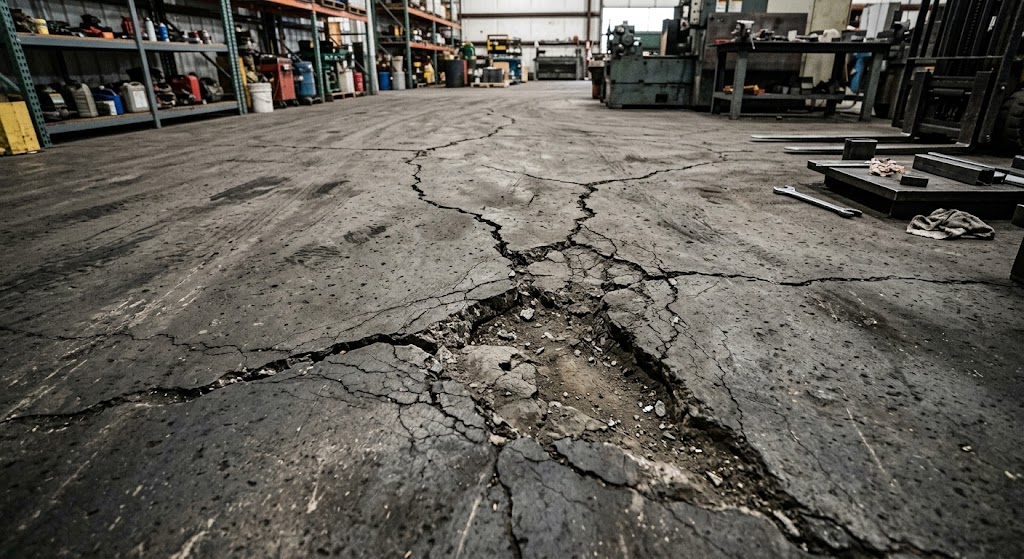
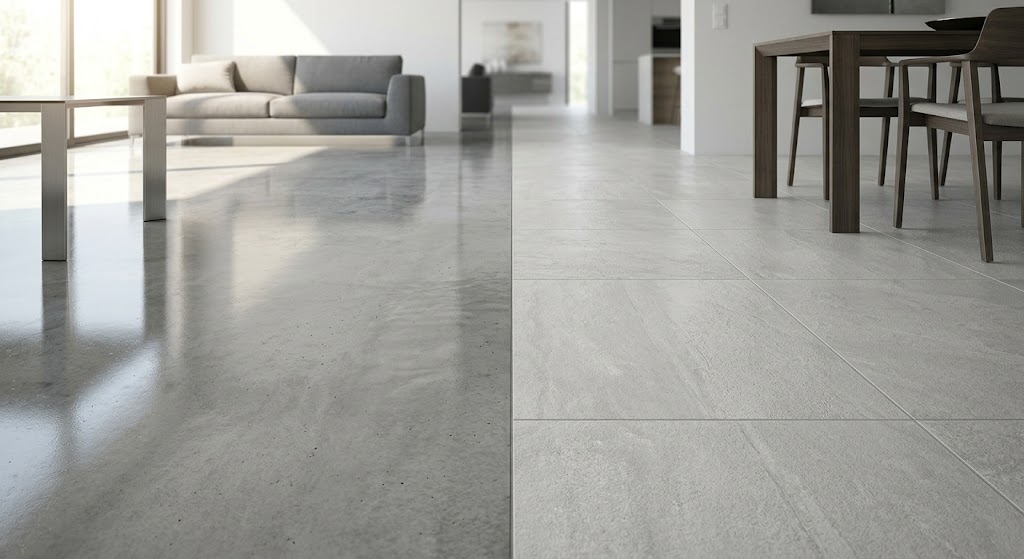
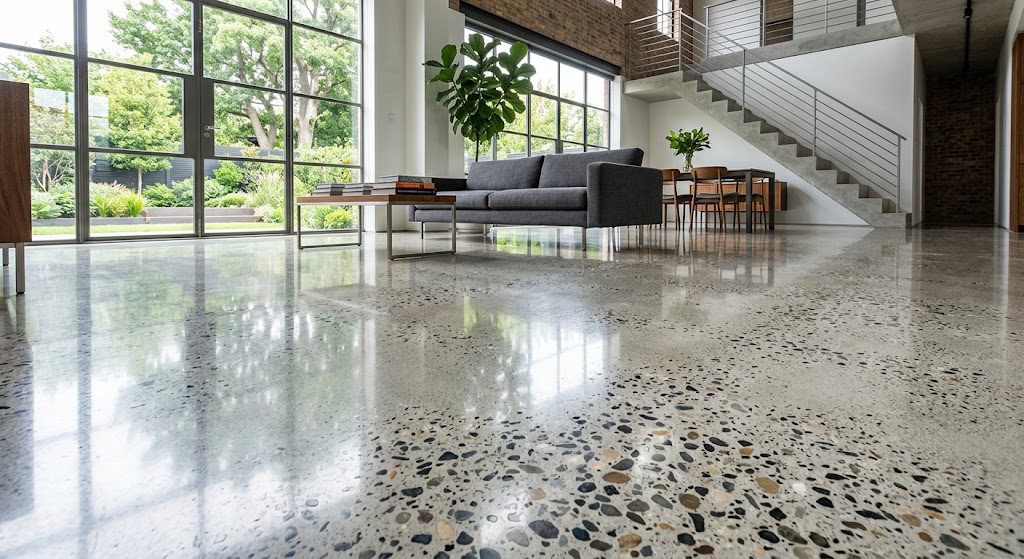
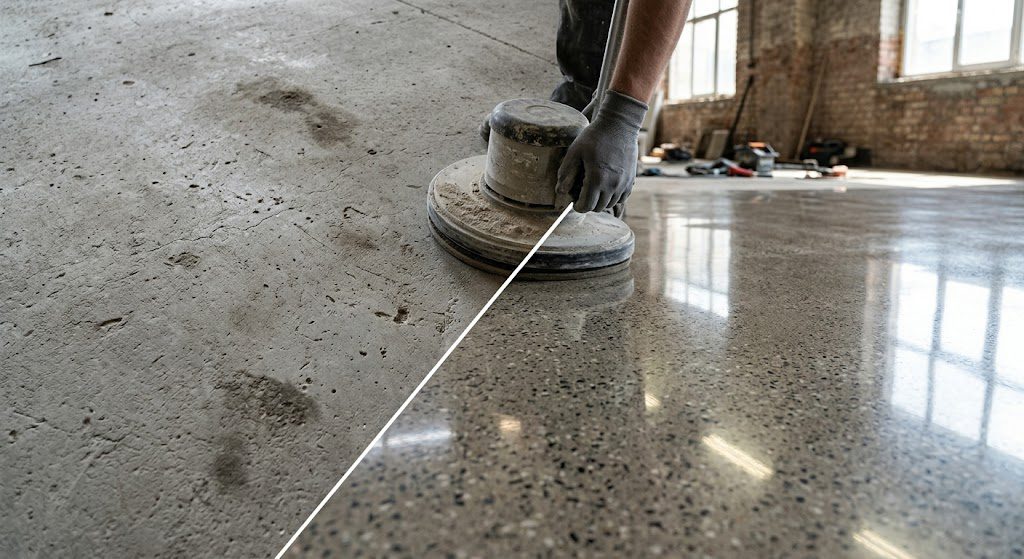
Water does not always damage a concrete foundation in an obvious way. You may first notice a small crack, a damp spot, white powder on the wall, or water collecting outside after heavy rain. These signs can be easy to ignore, especially when the problem seems small.
But repeated moisture can create bigger problems over time. Water can move through cracks and pores in concrete, increase pressure around foundation walls, and contribute to surface damage such as spalling. Poor drainage can also keep soil around the foundation wet and increase pressure against the walls.
The good news is that finding these signs early gives you a better chance to deal with the cause before the damage becomes more serious. In this guide, we explain what to look for, what each sign may mean, and when it is time to have the concrete checked.
What Are the Signs of Water Damage to a Concrete Foundation?
The most common signs include water entering through foundation walls or floors, white powdery deposits, damp or dark areas, cracks that allow water through, crumbling concrete, musty smells, mold, and water pooling around the foundation. Bowing walls and changes in floors or doors can be more serious signs that moisture and soil movement may be affecting the structure.
Not every crack or stain means that your foundation is failing. Concrete can crack as it dries and settles, and stains can have more than one cause. What matters is the pattern and change over time. A crack that keeps getting wider, becomes wet after rain, or appears along with other signs of water should receive more attention than an old, stable hairline crack.
If you notice several signs at the same time, it is worth finding out where the water is coming from and whether the concrete itself has been damaged.
1. Water Is Seeping Through the Foundation Walls or Floor
Visible water is one of the clearest signs that moisture is getting into the lower part of a building. You may see water coming through a crack, where the wall meets the floor, around a window, or through another weak point in the concrete. Sometimes the water appears only during or after heavy rain, so the wall may look dry on a sunny day.
Water entering through a foundation can have several causes. Poor drainage outside the building, water collecting near the foundation, groundwater, damaged areas of concrete, and plumbing problems can all play a role. This is why simply sealing the spot where water appears may not always solve the whole problem. The source and path of the water should also be considered.
If you notice recurring water, take photos and note when it happens. Comparing the area after dry weather and after rain can help show whether the problem is getting worse.
2. White Powder Is Appearing on the Concrete
Have you noticed a white, chalky or powder-like substance on your foundation wall? It may be efflorescence.
Efflorescence forms when water moves through concrete or masonry and carries dissolved minerals toward the surface. When the water reaches the surface and dries, those minerals can remain behind as a white deposit. So, the white powder itself is usually not the main problem. It is a clue that water has moved through the material.
Cleaning the white material may make the wall look better for a while, but the deposit can return if moisture is still moving through the concrete. Look at what is happening around the area. Is the wall damp? Is there a crack nearby? Does the white residue return after rain?
Efflorescence does not automatically mean that the foundation has serious structural damage. However, it is a good reason to investigate the source of the moisture rather than treating the white powder as only a cosmetic problem.
3. Foundation Cracks Are Getting Bigger or Letting Water In
Concrete cracks are common, and not every crack means there is a serious foundation problem. Small cracks can form as concrete dries, shrinks, or settles. The important thing is to watch for changes.
A crack deserves more attention when it grows, becomes wider, starts appearing with other cracks, or allows water into the building. Horizontal cracks in foundation walls can also be more concerning because pressure from wet soil can push against the wall. Water and poor drainage can contribute to soil pressure around a foundation.
The location and direction of a crack also matter. A small vertical crack that has remained unchanged for years is different from a crack that is growing and leaking after storms. Do not assume that every crack can be judged from its appearance alone.
If a crack is changing, leaking, or appearing along with a bowing wall or uneven floor, it is better to have the condition assessed instead of simply covering the crack and forgetting about it.
4. Concrete Is Crumbling, Flaking, or Spalling
Another warning sign is concrete that starts to chip, flake, peel, or crumble. This type of surface damage is often called spalling. It can happen for different reasons, including moisture exposure, freeze-thaw cycles, poor concrete conditions, and corrosion of steel reinforcement where reinforcement is present.
Water can become a bigger problem when it gets into cracks or porous areas of concrete. In cold weather, trapped water can freeze and expand. Repeated freezing and thawing can put stress on the concrete. Where reinforcing steel is present, water and other conditions can also contribute to corrosion, which may cause the surrounding concrete to crack and break away.
Do not ignore areas that are becoming softer, weaker, or larger over time. A small damaged spot does not necessarily mean the entire foundation needs to be replaced. The depth and cause of the damage need to be understood first.
This is also where proper concrete repair becomes important. Repairing damaged concrete without considering the reason it became damaged can lead to the same problem returning.
5. Dark Stains and Damp Spots Keep Coming Back
Dark or damp-looking areas on a concrete foundation wall can be another sign of moisture. Sometimes a stain is old and no longer connected to an active water problem. In other cases, the area becomes darker whenever it rains or whenever the surrounding soil becomes very wet.
Pay attention to when the stain changes. If a wall becomes darker after a storm and then slowly dries, that pattern can tell you that moisture is entering or moving through the area. Water stains can also appear around cracks, joints, windows, or other openings.
It is useful to take a clear photo of the area when you first notice it. Take another photo after heavy rain and compare the two. Look for changes in size, color, or wetness.
Water stains should not automatically be treated as proof of structural damage. They are a reason to investigate the moisture source. Current foundation guidance also recommends looking at the overall pattern rather than judging a foundation from one symptom alone.
6. Your Basement or Crawl Space Has a Musty Smell
Sometimes your nose notices a water problem before your eyes do. A basement or crawl space that consistently smells damp, stale, or musty may have an ongoing moisture problem.
Persistent moisture can raise humidity and create conditions where mold and mildew can grow. It can also affect nearby materials such as wood, insulation, drywall, and stored belongings. Angi lists damp air, musty smells, visible mold, and water as common signs associated with foundation moisture problems.
A musty smell does not tell you exactly where the water is coming from. It could be related to foundation seepage, poor drainage, condensation, plumbing leaks, or another source of moisture. That is why it is important to look around rather than simply using an air freshener or cleaning the visible area.
If the smell keeps returning after cleaning and ventilation, check for damp walls, stains, cracks, standing water, and other signs. The goal is to find and address the moisture source.
7. Water Is Pooling Around the Foundation After Rain
Walk around your property after a heavy rain. Do you see water sitting next to the foundation? This is a simple check that can reveal a drainage problem.
Rainwater should not repeatedly collect against the foundation. Gutters and downspouts play an important role in moving roof water away from the building. Poor grading can also send water toward the foundation instead of away from it. When soil stays wet, the added water can increase pressure around below-grade foundation walls.
Look closely at areas below downspouts, near foundation corners, and anywhere the ground looks flat or sunken. Also check whether water remains in the same place long after the rain has stopped.
Fixing drainage does not repair concrete that has already been damaged, but it can help reduce continued water exposure. If you already see cracks, spalling, damp spots, or other damage, both the water source and the condition of the concrete should be considered.
8. Paint Is Peeling or a Floor Coating Is Bubbling
Moisture can cause problems beneath paints, coatings, and other finishes. You may notice peeling, bubbling, blistering, or areas where a coating no longer sticks properly.
This is especially important when a concrete surface is going to receive a new finish. Concrete needs to be properly prepared, and moisture should be considered before installing a new flooring system. Covering a damp or damaged surface without dealing with the underlying problem can create another coating failure.
This is also why moisture matters when choosing or maintaining polished concrete flooring. Polishing, sealing, or coating concrete does not remove an active water problem underneath or behind the surface.
Old Stone Restoration & Installation Corp. works with concrete repair, moisture-related products, concrete preparation, flooring systems, and concrete finishes. Its concrete repair system page also describes moisture vapor barrier products and repair products used for cracks and other concrete defects.
The right approach depends on the condition of the concrete and what caused the damage in the first place.
9. Your Concrete Floor Is Cracking, Uneven, or Showing New Damage
A change in a concrete floor should not be ignored, especially when it appears at the same time as water problems. You might notice a new crack, an uneven section, damaged edges, or a floor that no longer looks the way it did before.
However, an uneven floor does not automatically mean water caused it. Soil movement, settlement, construction issues, and other problems can also affect floors. That is why it is important to look at the full picture.
For example, a new floor crack combined with water seepage and pooling outside tells a different story from a small crack that has stayed unchanged for years. The same is true if doors or windows begin sticking or if several areas of the building show new movement.
When concrete has visible damage, the repair should match the problem. Old Stone’s concrete repair system includes solutions for surface cracks, disintegration, joint deterioration, gouges, pop-outs, and spalls.
10. Foundation Walls Are Bowing or Bulging
A foundation wall that appears to bow, bulge, or lean inward deserves more attention than an ordinary surface stain. When soil outside a below-grade wall becomes saturated, the pressure against that wall can increase. In some situations, this pressure can contribute to wall movement and horizontal cracking.
Look at the wall from different angles. A noticeable curve, inward movement, or horizontal crack can be more important than a small surface mark. Also watch for changes over time. A wall that is moving or a crack that keeps growing should not simply be covered with a patch.
This is an important point: concrete repair and structural foundation repair are not always the same thing. A contractor may be able to repair damaged concrete surfaces, cracks, joints, or spalled areas, but a seriously bowing or moving foundation wall may require assessment by an appropriate structural professional.
If you see significant wall movement, do not rely on a cosmetic repair alone. Find out what is causing the movement before deciding how the concrete should be repaired.
What Causes Water to Damage a Concrete Foundation?
Water can reach a foundation from several directions. Rainwater that collects near the building is one common source. Poor grading can send surface water toward the foundation, while gutters or downspouts can add a large amount of water to one area if they are not directing it away properly.
Groundwater can also move through soil and create moisture around below-grade walls. When soil stays saturated, water pressure against foundation walls can increase. Existing cracks and joints can then provide easier paths for water to enter.
There can also be problems that have nothing to do with rain. Plumbing leaks, damaged pipes, condensation, or other sources of indoor moisture can create wet conditions around concrete.
This is why the best first question is not simply, “How do I fill this crack?” It is “Where is the water coming from, and why is it reaching this area?” Once the source is understood, the right repair can be easier to choose.
Does Water Actually Damage Concrete?
Water does not automatically destroy concrete. Concrete can be exposed to moisture for many years and still perform well when it is properly designed, installed, and maintained. The problem is repeated or harmful moisture exposure combined with conditions that can weaken the material.
For example, water entering cracks can contribute to continued deterioration. In cold climates, water that freezes inside cracks or porous areas can expand and place pressure on the concrete. Where steel reinforcement is present, moisture can also contribute to corrosion under the right conditions, and expanding corrosion products can cause cracking and spalling.
Water can also create problems indirectly by keeping soil around a foundation saturated. That can increase pressure against below-grade walls or contribute to soil movement.
So, seeing water near concrete does not mean the concrete is automatically failing. What matters is how much water is present, where it is coming from, how long the condition has existed, and whether the concrete or structure is showing signs of change.
Water Damage or Normal Concrete Wear: How Can You Tell?
It can be difficult for a homeowner to look at one crack or stain and know exactly what caused it. A better approach is to look for patterns.
A small, stable hairline crack may be related to normal shrinkage or settling. A crack that is growing, leaking, or appearing alongside other damage deserves more attention. White powder on a wall may be efflorescence, which shows that water has moved through the material, but it does not by itself prove that the foundation has structural damage.
| What You Notice | What It May Mean |
| Small stable hairline crack | Shrinkage or normal settling may be involved |
| Crack that leaks after rain | Water is finding a path through the concrete |
| White powder | Moisture has moved through the concrete or masonry |
| Dark damp stain | Possible ongoing moisture |
| Crumbling or flaking concrete | Surface deterioration or spalling |
| Water pooling outside | Drainage may be sending water toward the foundation |
| Horizontal crack with wall movement | May need prompt professional assessment |
| Musty smell | Ongoing moisture may be present |
The key is not to diagnose the entire foundation from one symptom. Look at several signs together and watch how they change.
When Is Concrete Repair Needed?
Concrete repair may be needed when cracks, spalls, damaged joints, surface defects, or other areas of deterioration are getting worse or affecting how the concrete is used. The repair should be based on the type and depth of damage rather than simply filling every visible mark.
Old Stone Restoration & Installation Corp. explains that concrete floor defects can include surface cracks, disintegration, shrinkage cracks, joint deterioration, gouges, and pop-outs. Its repair system includes products for cracks and spalls on concrete and masonry, including options for horizontal and vertical applications.
One important step is making sure the concrete is properly prepared. If a damaged surface is going to receive another flooring system, old coatings, weak material, dirt, oil, and other problems may need to be addressed first. Moisture also needs to be considered before applying a new finish.
The goal of a good repair is not simply to make the damaged spot look better. It is to restore the affected concrete as much as practical and prepare the surface for its intended use.
Can You Install Flooring Over Water-Damaged Concrete?
It is usually a mistake to simply cover damaged or wet concrete with a new flooring material and hope the problem disappears. Moisture can affect the bond between concrete and a coating or finish, while cracks and weak areas can create problems underneath the new surface.
Before a new concrete flooring service, the existing slab should be checked for cracks, surface damage, old coatings, contamination, and moisture. Depending on the project, concrete may need mechanical preparation, repairs, or a moisture-control product before the final flooring system is installed.
Old Stone’s concrete repair system includes moisture vapor barrier products as well as crack and spall repair products. The company also provides polished concrete, concrete sealers, waterproofing, and other concrete flooring solutions.
This is especially important when the floor needs to look good and handle regular traffic. Fixing the concrete underneath first can give the finished floor a better starting point.
How Can You Prevent Water From Damaging Your Concrete Foundation?
Preventing water problems starts outside the building. Keep gutters clear and make sure downspouts are not sending large amounts of water directly beside the foundation. Check the ground around the building after rain and look for places where water sits instead of draining away.
It is also helpful to inspect visible foundation walls from time to time. Look for new cracks, damp areas, white deposits, crumbling concrete, or stains that were not there before. If you see a crack, take a photo and keep an eye on it rather than forgetting about it.
Do not wait for a basement to flood before looking for moisture problems. Small signs can give you useful information about what is happening around the property.
If water keeps returning to the same area, find the source. A repair that only hides the visible damage may not last if water continues to reach the same spot. Good drainage, regular inspection, and timely concrete repair can all be part of keeping concrete in better condition.
When Should You Call a Professional About Foundation Water Damage?
You should consider having the problem checked when water keeps entering the same area, cracks are changing, concrete is crumbling, or moisture returns after every major storm. These signs do not automatically mean that your foundation is failing, but they are worth investigating.
More serious signs include a foundation wall that is visibly bowing or leaning, rapidly changing cracks, major horizontal cracks, significant floor movement, or several structural changes happening at once. Current guidance from This Old House also recommends professional evaluation when foundation cracks change or when walls begin to bow.
A professional can help determine whether the issue is mainly a surface concrete problem, a moisture problem, a drainage issue, or something that needs a structural assessment.
The earlier you understand the problem, the easier it can be to decide what needs to be repaired and what does not.
How Old Stone Restoration & Installation Corp. Can Help With Damaged Concrete
When water has already contributed to cracks, spalling, surface damage, or other concrete problems, the next step is to have the condition looked at instead of simply covering it up. Old Stone Restoration & Installation Corp has been working with high-performance flooring and restoration systems on Long Island since 1990 and provides concrete repair solutions for damaged concrete surfaces.
Its Concrete Repair Service includes repair options for concrete cracks, spalls, joints, surface defects, and other floor problems. The company also works with concrete preparation, moisture control, waterproofing, sealers, polished concrete, and other flooring systems.
The important part is choosing the repair based on the actual condition of the concrete. If you are seeing water stains, cracks, crumbling areas, or other changes, fixing the visible damage is only one part of the job. Understanding why the damage happened can help you make a better decision about the next step.
FAQs
Can water damage a concrete foundation?
Yes. Ongoing moisture can cause cracks, spalling, stains, and other concrete problems. Saturated soil can also increase pressure against foundation walls.
What does white powder on a concrete foundation mean?
It is often efflorescence. It happens when water moves through concrete and leaves minerals on the surface as it dries.
Are all foundation cracks caused by water?
No. Cracks can also come from concrete shrinkage, settling, soil movement, or other causes.
How do I know if a foundation crack is serious?
Growing cracks, leaking cracks, large horizontal cracks, or cracks with wall movement should be checked by a professional.
Can cracked concrete be repaired?
Yes, many concrete cracks can be repaired. The right method depends on the crack’s size, depth, location, and cause.
How can I stop water from reaching my foundation?
Keep gutters clear, direct downspouts away from the foundation, and correct areas where rainwater collects near the building.
Can I put epoxy flooring over damp concrete?
It is not recommended to simply cover damp concrete. The moisture source and condition of the concrete should be checked first.
Can water cause concrete to crumble?
Yes. Moisture can contribute to concrete deterioration, especially when combined with freezing and thawing or other damaging conditions.
What should I do if water enters my basement after heavy rain?
Find where the water is entering, check for outside drainage problems, and have recurring leaks or damaged concrete properly evaluated.
When should concrete water damage be repaired?
Repair is worth considering when cracks are growing, concrete is spalling or crumbling, or water is repeatedly damaging the same area.
Seeing cracks spread across a concrete floor or driveway often triggers immediate worry. Many property owners assume the worst and start calculating the cost of tearing everything out and starting fresh. Concrete is one of the most durable building materials around, yet it does develop cracks over time.
Jumping straight to replacement without proper inspection often leads to spending thousands of dollars that could have been avoided. A thorough assessment by trained professionals can determine whether concrete floor repair, resurfacing, or patching will effectively solve the problem.
Old Stone Restoration and Installation Corp. has spent over 35 years helping property owners across Long Island navigate these exact decisions. With decades of hands-on experience in concrete repair, the team has seen virtually every type of damage imaginable and helped countless clients avoid unnecessary replacement costs.
Quick answer:Many cracked concrete surfaces can be repaired if the damage is minor or localized. However, replacement becomes necessary when cracks are structural, widespread, or caused by foundation movement. The right solution depends on the size, depth, cause, and overall condition of the concrete. |
Can Cracked Concrete Be Repaired?
In most situations, yes. Cracked concrete repair is entirely possible when the damage meets certain criteria.
The answer depends heavily on what caused the crack to form. Shrinkage cracks that appear during the curing process rarely threaten structural integrity. Surface-level damage from normal wear and aging typically responds well to professional repair techniques.
Depth matters significantly too. Shallow cracks that affect only the top layer of concrete are excellent candidates for concrete resurfacing or epoxy filling. Deeper cracks that extend through the entire slab require more involved repair methods but can still often be addressed without full replacement.
Movement plays a critical role in the evaluation. A crack that appeared once and has remained stable for months or years is far easier to repair than one that continues widening. Active cracks suggest ongoing foundation issues that may need to be addressed before any concrete restoration work begins.
However, if cracks appear throughout multiple sections and the slab shows widespread deterioration, replacement may prove more practical.
Why Does Concrete Crack in the First Place?
Understanding why cracks develop helps determine the best repair approach.
Shrinkage Cracks
Concrete naturally shrinks as it cures and dries. This shrinkage creates internal stress that often releases through small cracks. These typically appear within the first few days or weeks after pouring and are generally superficial.
Heavy Loads
Concrete has impressive strength, but excessive weight can push it beyond design limits. Vehicles heavier than anticipated, industrial equipment, or concentrated loads in areas not designed for such stress can cause cracking over time.
Poor Installation
When concrete is mixed incorrectly, placed improperly, or finished without adequate skill, problems often emerge later. Too much water in the mix, insufficient thickness, or improper joint spacing all contribute to premature cracking.
Improper Curing
Concrete needs time and proper conditions to reach full strength. Curing too quickly, especially in hot or windy weather, can cause the surface to dry faster than the interior. This uneven drying leads to surface cracks.
Water Damage
Water is concrete’s longtime enemy. When moisture seeps beneath a slab, it can erode the supporting soil and create voids. The unsupported concrete then settles or cracks under its own weight or applied loads.
Freeze-Thaw Cycles
In regions with cold winters, water that penetrates concrete can freeze and expand. This expansion creates internal pressure that forces cracks to form.
Tree Roots
Growing tree roots exert surprising force. When roots expand beneath or against concrete, they can lift sections, create uneven surfaces, and cause cracking along stress lines.
Foundation Settlement
All structures settle somewhat after construction. Uneven or excessive settlement puts stress on concrete slabs that can result in cracking. This type of damage often appears as diagonal or stair step patterns.
What are the Types of Concrete Cracks and What They Mean?
Different crack types indicate different underlying issues. This table helps identify what each type typically means:
| Crack Type | Severity | Can Be Repaired? | Replacement Needed? |
| Hairline | Low | Yes, usually straightforward | Rarely necessary |
| Surface | Low to moderate | Yes, with resurfacing or patching | Only if widespread |
| Settlement | Moderate | Often yes, after addressing soil issues | Sometimes, if severe |
| Structural | High | Possibly, depends on extent | Often recommended |
| Expansion | Moderate | Yes, with proper joint repair | Seldom required |
| Diagonal | Moderate to High | Depends on cause and stability | May be needed if active |
| Wide Cracks (over 1/4 inch) | High | Sometimes, with specialized methods | Often advisable |
| Spalling | Moderate to High | Yes, with proper restoration | If reinforcement is compromised |
This breakdown provides general guidance, but every situation benefits from professional assessment.
How to Tell if Your Concrete Needs Repair Instead of Replacement?
Several indicators suggest that concrete crack repair or concrete restoration will adequately address the problem.
Hairline cracks that measure less than 1/8 inch wide typically fall into the repairable category. These small imperfections rarely affect structural performance and respond well to professional filling techniques.
Surface damage limited to the top layer, including minor pitting, light scaling, or superficial wear, can usually be corrected through concrete resurfacing. This process applies a new wearing surface over the existing slab without removing it.
Small chips and isolated pop-outs caused by aggregate issues or impact damage are prime candidates for patching. Skilled technicians can blend repairs to match surrounding concrete surprisingly well.
Minor scaling, where only the top layer flakes away, often results from improper finishing or freeze-thaw damage. Concrete restoration techniques can restore appearance and prevent further deterioration.
Localized deterioration confined to specific areas while the rest of the slab remains sound suggests targeted repair rather than wholesale replacement. Addressing problem spots early often prevents them from spreading.
A stable foundation beneath the concrete is perhaps the most important factor. When the supporting soil remains solid and properly compacted, surface repairs have excellent long-term prospects. Problems arise when ongoing soil movement continues stressing repaired areas.
Key Signs It May Be Time to Replace Your Concrete Instead
Concrete repair is often enough for minor damage, but some problems are too severe to fix with patching alone. In these cases, replacing the concrete is usually the better long-term solution.
- Wide structural cracks: Cracks wider than 1/4 inch that run through the entire slab often point to a deeper structural issue rather than simple surface damage.
- Several large cracks: If the surface is covered with multiple intersecting cracks, the concrete may have lost its strength, making replacement more practical than repeated repairs.
- Uneven or lifted slabs: Concrete sections that sit at different heights can create tripping hazards and affect drainage. Severe unevenness is often better addressed with replacement.
- Sunken concrete: If part of the slab has settled into the ground, there may be an issue with the soil underneath. Replacing the slab after correcting the underlying problem is usually the best approach.
- Heavy surface damage: When the top layer is flaking away and the stone aggregate beneath is clearly visible, the concrete has often deteriorated to the point that a simple repair is no longer possible.
- Exposed rusty reinforcement: If the steel reinforcement is visible and has started to rust, the slab may continue to weaken over time, making replacement the safer option.
- Water collecting beneath the slab: Standing water beneath or around the concrete can erode the supporting soil and cause ongoing damage, even after repairs.
- Ongoing foundation movement: If shifting ground or foundation movement continues to cause new cracks, repairing the surface alone will not solve the problem.
- Concrete breaking apart: When sections of the slab crumble or separate, replacement is often more cost-effective than repairing extensive damage.
Repair vs Replacement Decision Guide
| Condition | Likely Repair | Likely Replacement |
| Crack width under 1/4 inch | ✅ | |
| Crack width over 1/2 inch | | ✅ |
| Less than 30% of surface affected | ✅ | |
| More than 50% of surface affected | | ✅ |
| Foundation stable | ✅ | |
| Ongoing foundation movement | | ✅ |
| Surface damage only | ✅ | |
| Full depth damage | | ✅ |
| Isolated problem areas | ✅ | |
| Widespread deterioration | | ✅ |
| Reinforcement intact | ✅ | |
| Reinforcement corroded | | ✅ |
What Concrete Repair Methods Do Professionals Use?
Professional concrete repair service providers use various techniques matched to specific damage types.
Crack Injection: This method involves injecting epoxy or polyurethane materials directly into cracks under pressure. The material bonds crack faces together and prevents water infiltration. Crack injection works well for stable cracks in structurally sound concrete.
Epoxy Repair: Epoxy crack fillers are 100% solids formulations designed specifically for repairing cracks and defects in concrete. These products work on horizontal and vertical surfaces while offering superior durability. Different formulations address different conditions, from standard cracks to those in chemical exposure areas.
Polyurethane Repair: Polyurethane materials offer flexibility that rigid epoxy cannot match. This makes them ideal for cracks that are subject to movement or temperature fluctuations. Quick-setting formulations allow faster return to service.
Concrete Grinding: Grinding removes surface imperfections, coatings, and high spots while preparing concrete for overlays or new finishes. This process creates a proper surface profile for repair materials to bond effectively.
In many projects, repairing visible cracks alone is not enough. If the surface has uneven areas, coatings may fail prematurely. Recognizing the warning signs early can help determine whether grinding is necessary before any repair work. Learn more in our guide on 7 Signs Your Concrete Floor Needs Grinding Before Coating.
Concrete Resurfacing: Resurfacing applies a thin cementitious or polymer-modified overlay over existing concrete. This approach restores appearance, provides a new wearing surface, and can include decorative options. Concrete resurfacing works best on structurally sound slabs with surface damage.
Concrete Patching: Patching materials fill localized damage, including holes, spalls, and gouges. Modern patching compounds bond strongly to existing concrete and can be feathered to blend with surrounding surfaces.
Joint Repair: Joints allow controlled cracking and movement in concrete slabs. When joints deteriorate, they allow water infiltration and debris accumulation, which damage the surrounding concrete. Professional joint sealants restore protection while accommodating movement.
Concrete Floor Leveling: Self-leveling compounds correct uneven surfaces and low spots. Concrete materials flow into place, creating smooth, level surfaces ready for coatings or use.
At Old Stone Restoration and Installation Corp., the professional Concrete Repair Service uses proven repair systems designed to restore damaged concrete repair while helping extend its lifespan. Factory-trained technicians match the right products and methods to each unique situation.
When Is Concrete Floor Repair the Best Solution?
Industrial concrete floor repair makes particular sense in several common scenarios.
Warehouse floors experience constant heavy traffic from forklifts, pallet jacks, and other material-handling equipment. Small cracks and surface damage in these facilities can often be repaired during off-hours with minimal disruption to operations.
Retail floors must maintain a clean, professional appearance. Concrete floor crack repair addresses unsightly damage without the extended closure required by replacement.
Garage floors, whether residential or commercial, benefit from repair methods that address damage and prepare surfaces for protective coatings. This combination fixes current problems while preventing future ones.
Industrial floors in manufacturing facilities face aggressive conditions including heavy loads, chemical exposure, and abrasive materials. Specialized repair addresses damage while withstanding harsh environments.
Commercial buildings of all types contain concrete that ages and develops wear patterns. Professional assessment often reveals that commercial concrete repair can address visible problems at a fraction of replacement cost.
Residential floors in basements, garages, and patios develop cracks that concern homeowners. Many of these situations respond well to repair approaches that restore both appearance and function.
Can You Repair Concrete Yourself?
Small-scale concrete repairs fall within the capability of handy homeowners willing to learn proper techniques.
DIY repair offers advantages, including lower material cost and the convenience of working on your own schedule. Small cracks and minor surface damage may not justify the expense of professional service.
However, DIY concrete repair carries limitations worth considering. Without proper surface preparation, repair materials fail to bond adequately. Incorrect product selection leads to repairs that crack, peel, or fail prematurely. Misdiagnosing the problem can mean treating symptoms while the underlying causes continue to cause damage.
Professional contractors bring specialized equipment, commercial-grade materials, and experience in accurately diagnosing problems. They recognize when apparent surface damage indicates deeper issues requiring different approaches.
Calling professionals makes sense when damage appears structural, covers large areas, or keeps recurring despite previous repair attempts. Industrial and commercial concrete floor repair almost always warrants professional involvement given the operational consequences of failed repairs.
Factors That Can Affect the Cost of Concrete Repair
The cost of concrete repair can vary from one project to another. A few key factors determine how much work is involved and the overall price.
Size of the damaged area: Small cracks or minor surface damage are usually less expensive to repair than large sections with extensive deterioration.
Type of repair needed: Filling a hairline crack is much simpler than repairing deep cracks, resurfacing a slab, or replacing damaged sections of concrete.
Location of the damage: Repairs are generally easier and less costly when the damaged area is accessible. Tight spaces or hard-to-reach locations may require additional time and equipment.
Amount of labor involved: Some repairs can be completed quickly, while others require more preparation, specialized techniques, and additional labor.
Surface preparation: Before repairs begin, the concrete may need to be cleaned, ground, or otherwise prepared to ensure the new material bonds properly. The more preparation required, the higher the cost.
Desired finish: If you want the repaired area to closely match the existing concrete in color, texture, or decorative finish, it may increase the overall project cost.
Residential or commercial property: Commercial projects often have different requirements, such as working outside business hours or using faster curing materials to reduce downtime, which can affect pricing.
What Happens If You Ignore Concrete Cracks?
Delaying attention to concrete damage typically leads to worsening conditions and higher eventual costs.
- Water intrusion through cracks causes soil erosion beneath slabs. This erosion creates avoids that lead to additional settling and cracking. In cold climates, water freezing in cracks significantly accelerates damage.
- Larger cracks develop from smaller ones as stress concentrates at crack tips. What begins as a hairline crack can become a serious structural crack given enough time and unfavorable conditions.
- Safety hazards emerge as cracks widen and uneven surfaces develop. Tripping risks increase particularly in pedestrian areas. Property owners may face liability for injuries occurring on damaged surfaces.
- Uneven floors create operational problems in commercial and industrial settings. Equipment may not roll smoothly, products may become damaged, and work efficiency suffers.
- Costlier repairs become necessary as damage progresses. Early intervention on minor cracks costs far less than addressing the widespread deterioration that delayed maintenance allows.
- Structural deterioration can eventually compromise entire slabs. Problems that simple concrete slab repair would have addressed may eventually require complete replacement.
How Long Does Concrete Repair Last?
A well-completed concrete repair can last for many years, but the lifespan depends on the condition of the concrete, the repair method used, and how well the surface is maintained.
- Quality of the repair: Long-lasting results start with identifying the cause of the damage and using the right repair method. Proper surface preparation and application also play an important role.
- Materials used: Professional-grade repair products are designed for specific types of damage and generally perform better than standard patching materials.
- Amount of traffic: Concrete in driveways, parking lots, or other high-traffic areas may wear faster than concrete in areas with lighter use.
- Ongoing maintenance: Keeping the surface clean, sealing joints when needed, and repairing small cracks early can help extend the life of the repair.
- Weather conditions: Concrete exposed to frequent freezing and thawing or harsh weather may experience more wear over time. Using the right repair materials can improve durability in these conditions.
- Professional workmanship: Repairs completed by experienced concrete contractors are more likely to last because they address the underlying cause rather than just fixing the visible damage.
How to Prevent Future Concrete Cracks?
Proactive maintenance helps concrete last longer and reduces the need for repairs over time.
- Keep water from pooling by directing gutters and downspouts away from concrete surfaces.
- Remove dirt, oil, chemicals, and debris before they can stain or damage the concrete.
- Check joints every year and reseal them when needed to keep out water and debris.
- Do not place more weight on the concrete than it was designed to support.
- Look for new cracks, uneven areas, or surface wear so small issues can be repaired early.
- A quality sealer helps protect against moisture, stains, chemicals, and everyday wear, extending the life of the concrete.
Why Choose Old Stone Restoration and Installation Corp.?
Concrete repair is not just about filling cracks. It starts with understanding why the damage happened in the first place. With more than 35 years of experience, Old Stone Restoration and Installation Corp. has repaired concrete in homes, commercial buildings, warehouses, parking areas, and industrial facilities throughout Long Island.
The team takes the time to assess the condition of the concrete before recommending a repair. Using the right materials and repair methods helps deliver lasting results rather than temporary fixes that need to be redone.
Whether the project involves a residential driveway, basement floor, patio, or a large commercial surface, every repair is completed with careful preparation and attention to detail. Clients value the company’s straightforward recommendations, dependable workmanship, and experience in handling projects of all sizes.
Conclusion
Most concrete cracks fall into the repairable category when properly assessed and addressed with appropriate techniques. Jumping to concrete replacement without professional evaluation often leads to unnecessary expense.
A thorough inspection remains the essential first step. Understanding what caused the crack, how severe the damage is, and whether the underlying foundation is stable guides proper decision making.
Replacement becomes necessary in some situations, but far fewer than many property owners assume. Quality repair work using professional grade materials can restore concrete to excellent condition at a fraction of replacement cost.
Professional evaluation by experienced contractors prevents both unnecessary replacement expenses and inadequate repairs that fail prematurely. Getting an accurate assessment saves money regardless of which direction the project ultimately takes.
For professional concrete repair evaluation and service across Long Island, contact Old Stone Restoration and Installation Corp. at (631) 821-5619.
FAQs
Can cracked concrete really be repaired?
Yes, the majority of concrete cracks can be repaired successfully. The key factors include crack width, depth, cause, and whether movement continues. Hairline cracks, surface damage, and many structural cracks respond well to professional repair methods using modern materials.
What size crack requires replacement?
Cracks wider than about 1/2 inch that extend through the full slab depth often suggest replacement may be appropriate. However, crack size alone does not determine the decision. The underlying cause, foundation stability, and overall slab condition all factor into proper recommendations.
Is concrete repair cheaper than replacement?
In most cases, yes. Concrete repair typically costs 30% to 50% less than full replacement. Repair also avoids demolition, disposal, and extended downtime costs. When damage is localized and the surrounding slab remains sound, repair offers significant savings.
How long does concrete repair last?
Professional concrete repair using quality materials can last 15 to 25 years or longer under appropriate conditions. Factors affecting longevity include traffic intensity, weather exposure, maintenance practices, and the quality of original repair work.
Can garage floor cracks be repaired?
Absolutely. Garage floors commonly develop cracks from shrinkage, settlement, and vehicle traffic. Most garage floor damage responds well to professional repair techniques. Many homeowners combine crack repair with protective coatings for improved appearance and durability.
Is concrete resurfacing better than replacement?
Resurfacing provides excellent results when the existing slab remains structurally sound but has surface damage or appearance issues. This approach costs less than replacement and creates minimal disruption. However, resurfacing cannot address structural problems or severe deterioration.
Can structural cracks be repaired?
Some structural cracks can be repaired, particularly those that have stabilized and are not associated with ongoing foundation movement. Professional assessment determines whether repair is appropriate or if the structural damage warrants replacement.
Flooring is one of the biggest investments in any renovation project. Whether you’re updating a home, retail space, warehouse, or commercial property, the choice between polished concrete flooring and tile affects more than just the initial budget. It also influences maintenance costs, durability, and how well the floor holds up over time.
Many property owners compare polished concrete vs. tile because both offer unique benefits. The challenge is that the most affordable option upfront isn’t always the one that saves the most money in the long run. Looking beyond installation costs can help you make a smarter investment.
With over 35 years of experience, Old Stone Restoration & Installation Corp. has worked on polishing and restoring concrete floors across Long Island, including homes, commercial spaces, retail stores, and industrial facilities. Each project is handled with careful surface preparation and the right polishing methods to ensure a strong, long lasting finish that performs well over time.
What is Polished Concrete Flooring?
Polished concrete flooring starts with an existing concrete slab, which is transformed through a multi-step mechanical process. The transformation involves grinding the concrete surface with progressively finer diamond abrasives until the desired sheen level is achieved.
The process typically begins with coarse grinding to remove surface imperfections, old coatings, or minor damage. Chemical densifiers are then applied to the concrete surface. These densifiers penetrate the concrete and react chemically to create a harder, denser surface that resists wear and staining.
After densification, technicians continue polishing with finer grit abrasives. Each pass creates a smoother, more reflective surface. The final polish level can range from a low satin sheen to a high-gloss mirror finish, depending on preference and intended use.
Some installations include an optional sealer application for added protection, though many polished concrete floors perform excellently without additional sealers due to the densification process.
What are Tile Floors?
Tile flooring encompasses several distinct materials, each with different characteristics and price points.
Ceramic tiles are made from clay fired at high temperatures. They offer good durability for residential applications and come in countless colors, patterns, and sizes. Ceramic is often the most budget-friendly tile option.
Porcelain tiles go through a similar manufacturing process but use denser clay and higher firing temperatures. This creates a harder, more water-resistant tile that performs well in high-traffic areas and wet environments.
Natural stone tiles include marble, granite, travertine, and slate. These materials offer unique beauty since no two pieces look exactly alike, but they require more maintenance and typically cost more than manufactured tiles.
The typical tile installation process involves preparing the subfloor, applying mortar or thin-set adhesive, setting each tile individually, allowing cure time, applying grout between tiles, and sealing the grout lines. The process requires skilled labor and multiple days to complete properly.
Tiles work well in bathrooms, kitchens, entryways, and any area where water resistance matters. Commercial applications include restaurants, retail stores, and office lobbies.
Polished Concrete Floors vs Tiles: Comparison Table
| Feature | Polished Concrete | Tile |
| Initial Cost | $3 to $12 per square foot | $10 to $30+ per square foot |
| Lifespan | 20 to 30+ years | 15 to 25 years |
| Maintenance | Low | Moderate to High |
| Repair Cost | Generally Lower | Can Be Higher |
| Water Resistance | Good with proper sealing | Excellent |
| Slip resistance | Varies by finish level | Varies by texture |
| Installation Time | 2 to 5 days typically | 3 to 7 days typically |
| Cleaning | Simple | Requires grout attention |
| Commercial use | Excellent | Good |
| Residential Use | Good | Excellent |
| Sustainability | High | Moderate |
| Design Options | Growing variety | Extensive variety |
| Long-term cost | Often Lower | Often Higher |
Initial Installation Cost
Understanding the true installation cost requires looking beyond the per-square-foot price quote.
Polished Concrete Installation Costs
Polished concrete flooring cost depends heavily on the existing slab condition. When the concrete is already in good shape, the process moves smoothly. The main expenses include grinding, densifying, and polishing labor along with the diamond tooling and chemical products used.
According to HomeAdvisor, polished concrete typically ranges from $3 to $12 per square foot, with most projects falling between $5 and $8 per square foot. Higher-end decorative finishes, such as exposed aggregate or dye applications, push toward the upper range.
One factor that significantly affects cost is concrete floor repair. Cracks, spalling, chips, or uneven areas require professional repair before polishing can begin. Skipping this step leads to visible flaws in the finished floor and may compromise durability.
Tile Installation Costs
Tile flooring cost varies dramatically based on the tile material selected. Basic ceramic tiles might cost $1 to $3 per square foot for the material alone, while premium porcelain runs $5 to $10 per square foot. Natural stone tiles can exceed $20 per square foot for high-end marble or exotic materials.
Beyond tile cost, installation requires mortar, grout, sealers, underlayment materials, and significant labor. Professional tile installation labor typically ranges from $5 to $15 per square foot, depending on tile size, pattern complexity, and regional labor rates.
A 500-square-foot tile project using mid-range porcelain might total $4,000 to $7,500 including all materials and labor.
Long-Term Maintenance Costs
The maintenance story for polished concrete floors differs significantly from that for tile floors over time.
Polished concrete floor maintenance:
Maintaining Polished concrete flooring is remarkably straightforward. Regular dust mopping removes abrasive particles that might dull the surface over time. Periodic damp mopping with a neutral pH cleaner handles most spills and soiling.
Every few years, depending on traffic levels, a polished concrete floor maintenance burnishing or re-polishing session can restore the floor’s original luster. High-traffic commercial spaces might need this attention annually, while residential floors may go five years or longer between touch-ups.
Tile Floor Maintenance:
Tile surfaces themselves clean easily enough. The challenge lies with grout lines. Grout is porous and absorbs stains, moisture, and bacteria over time. Regular grout cleaning and periodic resealing become necessary to maintain appearance and hygiene.
Natural stone tiles add another layer of maintenance. Marble, travertine, and limestone require specific pH-balanced cleaners and regular sealing to prevent etching and staining.
Over a 20-year period, tile floor maintenance costs, including grout cleaning, resealing, and periodic professional cleaning, can add $1,000 to $3,000 or more to the total ownership cost.
Durability Comparison
Durability matters most in spaces with heavy foot traffic, wheeled equipment, or a risk of dropped objects.
Polished Concrete Durability:
Polished concrete handles heavy traffic exceptionally well. Warehouses with forklift traffic, retail stores with shopping carts, and restaurant dining rooms all benefit from concrete’s inherent toughness. The densification process during polishing makes the surface even more resistant to abrasion and wear.
Heavy objects that would crack tiles often leave polished concrete flooring unaffected. The monolithic nature of a concrete slab means no grout lines to deteriorate and no individual pieces to come loose.
Tile Durability:
Tiles can crack when struck by dropped objects. Individual tiles may chip, necessitating replacement. While the tile surface itself resists scratching well, the grout lines represent ongoing weak points that deteriorate with traffic and moisture exposure.
Replacing a cracked tile sounds simple until the original tile has been discontinued. Finding a matching replacement is often impossible, resulting in visible patches or the need to replace larger sections to maintain a consistent appearance.
Which Flooring Lasts Longer?
Polished concrete flooring typically lasts 20 to 30 years or longer with proper maintenance. Some industrial polished concrete floors remain in excellent condition after 40 or more years of service. The concrete slab itself can last indefinitely, and periodic repolishing can restore the surface shine without complete replacement.
Tile floors generally last 15 to 25 years depending on tile quality, installation workmanship, traffic levels, and maintenance practices. Grout often fails before the tiles themselves, requiring regrouting every 8 to 15 years in many applications.
When comparing lifespan against cost, polished concrete often delivers better value despite potentially higher initial investment in some scenarios.
Which Is Easier to Repair?
Repair requirements and costs factor significantly into long-term flooring economics.
Concrete Floor Repair Options
Before polishing, professionals typically evaluate the existing slab and address any issues that could affect the final result. Concrete repair contractors handle surface cracks, chips, spalling, uneven areas, and joint damage as part of preparation for polishing.
Proper concrete floor repair creates the foundation for a smooth, durable polished surface. Skipping necessary repairs often leads to problems that become visible after polishing and may require costly corrections later.
Old Stone Restoration & Installation Corp evaluates every slab before beginning a concrete polishing service project. When needed, professional concrete repair contractors are called in first to help create a smoother, longer-lasting floor. With 35 years of industry experience, the team understands that proper preparation makes the difference between good and exceptional results.
Minor damage to existing polished concrete can often be repaired and repolished without significantly affecting the surrounding area. The repair blends into the existing floor more naturally than tile repairs typically can.
Tile Repair Challenges:
Repairing tile floors presents unique challenges. Finding replacement tiles that match existing ones becomes difficult when manufacturers discontinue styles or when tiles have aged and weathered differently than new stock.
Even when matching tiles are available, the new grout rarely matches the existing grout perfectly. Repairs often remain visible, which can be particularly problematic in prominent areas.
Removing and replacing individual tiles requires careful work to avoid damaging surrounding tiles. The process involves removing old grout, prying up damaged tile, preparing the substrate, setting the new tile, and regrouting. Each repair takes considerable time and expense.
Energy Efficiency and Indoor Comfort
Flooring choices can influence energy costs and indoor comfort levels in ways many property owners overlook.
Concrete Thermal Properties:
Polished concrete offers interesting thermal mass properties. Concrete absorbs and stores heat, which can help moderate indoor temperatures. In climates with cool nights and warm days, concrete floors can absorb excess heat during the day and release it slowly in the evening.
The reflective surface of polished concrete can increase ambient light levels in interior spaces. This improved light reflection may reduce the need for daytime artificial lighting, potentially lowering electricity costs in commercial settings.
Radiant floor heating systems work exceptionally well with polished concrete. The concrete efficiently transfers heat throughout the space, creating comfortable, evenly distributed warmth.
Tile Thermal Considerations:
Tile floors tend to feel cool underfoot, which many people find pleasant in warm climates but uncomfortable in colder regions. Tile does not retain heat as effectively as concrete, though it can work with radiant heating systems.
The thermal mass properties of tile are less pronounced than concrete due to the thinner material layer and the mortar bed beneath.
Which Flooring Works Better for Different Spaces?
Different environments call for different flooring solutions. This comparison helps clarify where each option tends to perform well.
| Space | Polished concrete | Tile |
| Garage | Excellent | Fair |
| Warehouse | Excellent | Poor |
| Retail store | Excellent | Good |
| Restaurant | Good | Good |
| Office | Excellent | Good |
| Basement | Excellent | Good |
| Luxury Home | Good | Excellent |
| Kitchen | Good | Excellent |
| Bathroom | Fair | Excellent |
| Patio | Good | Good |
| Showroom | Excellent | Good |
Polished concrete tends to excel in commercial and industrial environments where durability and low maintenance are most important. Tile often wins in residential wet areas where water resistance and design variety take priority.
What is the Environmental Impact?
Sustainability increasingly factors into flooring decisions. Polished concrete offers several environmental advantages worth considering.
Polished concrete typically uses the existing concrete slab. No additional flooring material needs manufacturing or transportation to the site. This approach generates minimal construction waste and uses fewer natural resources than installing new flooring material.
The longevity of polished concrete also reduces environmental impact over time. Fewer replacements mean less material in landfills and less energy spent on manufacturing and installation.
Tile manufacturing requires significant energy to fire clay at high temperatures. Transportation from manufacturing facilities adds to the carbon footprint. When tiles need replacement, the old tiles typically end up in landfills since recycling options remain limited.
According to the Environmental Protection Agency, construction and demolition debris accounts for a substantial portion of landfill waste. Choosing longer-lasting flooring options can help reduce this environmental burden.
What Expert Tips Help Before Making a Decision?
Inspecting the existing concrete slab provides crucial information. Professionals can first identify potential issues that might affect polishing results or require repair work. This assessment helps establish realistic cost expectations.
Calculating lifetime ownership costs rather than focusing solely on upfront pricing reveals the true financial picture. A floor that costs more initially but requires minimal maintenance may prove more affordable over 20 years than a cheaper option with ongoing maintenance expenses.
Honestly considering traffic levels and maintenance requirements helps match the flooring choice to actual conditions. High-traffic commercial spaces have different needs than residential living rooms.
Repairing cracks or other damage in concrete before polishing makes sense to achieve optimal results. Attempting to polish over problems rarely works well and often requires redoing the work later.
Requesting samples or viewing completed projects helps visualize how each flooring type actually looks in real environments. Photographs rarely capture the true appearance as accurately as seeing floors in person.
Conclusion
The better flooring option depends on individual circumstances, including budget, maintenance expectations, intended use, and aesthetic preferences. While polished concrete may involve a higher initial investment in certain situations, it can offer lower maintenance costs and excellent long-term value.
Tile flooring remains an excellent choice for certain applications, particularly residential wet areas where water resistance and design variety matter most. Understanding the ongoing maintenance commitment helps ensure satisfaction with tile floors over time.
At Old Stone Restoration & Installation Corp, every polished concrete project begins with an evaluation of the existing slab’s condition. When needed, a professional concrete repair system is completed before polishing to help create a smoother, longer-lasting floor.
Call (631) 821-5619 to schedule an expert assessment and restore your floor/tile beauty.
FAQs
Is polished concrete cheaper than tile?
Polished concrete often costs less than tile for initial installation, particularly when the existing slab is in good condition. The more significant savings typically come from reduced maintenance and repair costs over the floor’s lifespan.
Is polished concrete slippery?
Slip resistance varies with polish level and the use of anti-slip additives. Lower sheen levels generally offer better traction. High-gloss finishes may become slippery when wet unless treated with slip-resistant additives.
Can polished concrete crack?
Concrete can crack due to substrate movement, settling, or structural issues. However, cracks in the underlying slab often exist before polishing begins. Professional assessment identifies existing cracks, and proper repair helps minimize future cracking. Polishing itself does not cause cracking.
Which flooring lasts longer?
Polished concrete typically outlasts tile flooring. Properly maintained polished concrete can last 20 to 30 years or longer. Tile floors generally last 15 to 25 years, with grout often requiring attention sooner than the tiles themselves.
Is polished concrete good for kitchens?
Polished concrete can work well in kitchens, offering easy cleaning and durability. Some people find hard surfaces uncomfortable during extended standing, though anti-fatigue mats can address this concern. Slip-resistant treatments may be advisable for kitchen applications.
Can damaged concrete be repaired before polishing?
Damaged concrete can often be repaired before polishing proceeds. Professional concrete repair contractors address cracks, chips, spalling, and uneven areas to create a suitable surface for polishing. These repairs help ensure better polishing results and longer floor life.
Is polished concrete worth the investment?
Polished concrete often proves worthwhile for property owners prioritizing durability, low maintenance, and long-term value. The investment tends to pay off particularly well in commercial applications and spaces with existing concrete slabs in reasonable condition.
At first glance, polished concrete can look slippery because of its smooth, reflective finish. But appearance does not always tell the full story. For building owners, facility managers, and property developers, understanding how polished concrete performs under real-world conditions is essential before making a flooring decision that affects safety, maintenance costs, and long-term value.
Is Polished Concrete Slippery?
No, properly installed polished concrete is generally not slippery when clean and dry. In many cases, it offers slip resistance comparable to or better than other hard flooring materials such as marble, polished tile, or sealed hardwood. However, water, dust, oil, soap residue, and poor maintenance can temporarily reduce traction on any hard surface, including polished concrete.
Why Does Polished Concrete Look Slippery?
The most common assumption about polished concrete comes from a visual cue: shine equals slick. A high-gloss surface reflects overhead lighting and surrounding objects, which creates the illusion of a wet or glass-like surface. That reflection is purely optical.
The actual surface of polished concrete contains microscopic texture left behind by diamond abrasive grinding. Even a high-gloss polished floor retains thousands of tiny peaks and valleys at the microscopic level. These textures provide grip for footwear, even though the floor appears mirror-smooth to the eye.
In other words, gloss measures how the surface reflects light. Slip resistance measures how the surface interacts with friction. The two are not the same, and experienced concrete polishing contractors design floors with both performance values in mind.
Is Polished Concrete Slippery When Dry?
Properly polished concrete is not slippery under normal dry conditions. When tested against the ANSI B101.1 standard for walkway surfaces, most polished concrete floors fall within the high-traction category.
Performance in Normal Foot Traffic
Polished concrete performs reliably across many environments where dry foot traffic dominates the daily activity:
- Offices where employees and visitors walk in standard footwear
- Retail stores with consistent foot traffic and clean entry zones
- Warehouses with forklift wheels and rubber-soled work boots
- Showrooms where appearance and durability both matter
- Educational facilities with high traffic during peak hours
When the floor is clean, dry, and maintained according to a professional schedule, polished concrete typically meets or exceeds OSHA’s recommended static coefficient of friction of 0.50.
Is Polished Concrete Slippery When Wet?
This is where context matters. Polished concrete becomes more slippery when wet, but so does every other hard flooring material, including marble, ceramic tile, vinyl, and sealed hardwood.
What Happens When Water Hits the Surface?
Water reduces the friction between the shoe sole and the floor surface on virtually any flooring product. On polished concrete, several common conditions can lower traction temporarily:
- Rainwater tracked in from entrances during storms
- Cleaning water left behind during or after mopping
- Beverage spills in restaurants, cafeterias, and break rooms
- Snow and salt traffic in colder months along the Northeast
The important nuance for building owners is that polished concrete is not unusually slippery when wet. It performs comparably to other smooth, hard surfaces. The difference is in how the floor was finished and how consistently it is maintained.
7 Factors That Affect Polished Concrete Slip Resistance
This is the deeper insight most flooring articles overlook. Slip resistance on polished concrete is influenced by a combination of installation choices and ownership habits.
Gloss Level
A satin or hone finish typically offers slightly more traction than a high-polish mirror finish, though the difference is smaller than most assume.
Concrete Density
Densified concrete polished by experienced contractors creates a tighter, more consistent surface that holds slip-resistant treatments better.
Diamond Grinding Process
The progression of diamond grits, from aggressive metal bond grinding to fine resin polishing, determines the final microtexture that affects friction.
Surface Contamination
Dust, grease, oil, food residue, and soap film all reduce slip resistance until removed.
Cleaning Chemicals
Wrong cleaning chemicals leave behind residue that builds up over time and turns a safe floor into a slick one.
Traffic Patterns
High-traffic lanes wear differently from low-traffic corners, which can create uneven friction zones.
Maintenance Schedule
Floors maintained by professional concrete polishing services consistently outperform neglected floors in slip safety.
Understanding Slip Ratings and Floor Safety Standards
Building owners benefit from understanding the basic measurements used to rate floor safety.
- Coefficient of Friction (COF): A numerical value that measures how much resistance a surface provides against slipping. Higher numbers mean more grip.
- ANSI A326.3: The current American National Standards Institute test method for measuring dynamic coefficient of friction (DCOF) on hard surface flooring.
- OSHA Guidance: The Occupational Safety and Health Administration recommends a minimum static coefficient of friction of 0.50 for walking surfaces in commercial environments.
- Commercial Building Safety: Many polished concrete floors test at or above 0.50 DCOF when maintained properly.
A reputable concrete polisher can provide test results or specifications matched to the building’s intended use.
Where Polished Concrete Works Best?
Commercial Buildings
Lobbies, corporate offices, and government buildings benefit from polished concrete’s durability, low maintenance, and clean appearance.
Warehouses
Polished concrete handles forklift traffic, heavy loads, and pallet movement while remaining slip-rated for industrial use.
Retail Stores
Grocery chains, big-box retailers, and boutique shops use polished concrete for its visual appeal and long lifespan.
Medical Facilities
Hospitals and clinics rely on polished concrete because it resists bacteria buildup and supports strict cleaning protocols.
Residential Lofts
Modern homes and converted industrial spaces use polished concrete for its design flexibility and easy upkeep.
How Building Owners Can Improve Slip Resistance
According to NIOSH, there has been an increase in the slips, trips and falls statistics. However, there are some practical ownership steps that would help to reduce slip risk. Some of them are:
- Daily dust removal with microfiber pads to prevent grit buildup
- Prompt spill cleanup before liquids spread or dry into residue
- Anti-slip conditioners applied by a professional concrete polishing service
- Proper entry mats that capture water, snow, and debris before it reaches the polished surface
- Scheduled professional maintenance every 12 to 24 months depending on traffic volume
- Wet floor signage during cleaning cycles or after spills
These steps cost very little compared to the liability and replacement costs that come with a poorly maintained floor.
Why Does Professional Concrete Polishing Service Make a Difference?
At Old Stone Restoration & Installation Corp, we have spent 35+ years helping commercial, industrial, and residential property owners across Long Island and the tri-state area achieve safer, longer-lasting polished concrete floors. Proper grinding, densifying, and finishing techniques directly impact both appearance and slip resistance.
Experienced concrete polishing contractors use heavy-duty grinders weighing 700 to 1,100 pounds, progress through the correct diamond grit sequence, apply chemical densifiers correctly, and finish with sealers or conditioners suited to the building’s traffic and use. Cutting corners on any of these steps creates floors that look acceptable but underperform on safety, durability, and long-term cost.
Common Mistakes Property Owners Make
- Hiring inexperienced concrete polishing contractors who lack the right equipment or training
- Choosing shine over function without considering how the space is actually used
- Ignoring maintenance until the floor loses traction or develops staining
- Using wrong cleaners such as acidic or oil-based chemicals that strip the seal or leave residue
- Skipping moisture testing before installation, which leads to coating failure and surface inconsistency
Avoiding these mistakes starts with hiring a qualified concrete polisher who evaluates the slab before quoting the work.
Is Polished Concrete Right for Your Building?
| Space Type | Good Choice? | Notes |
| Retail | Yes | High durability, easy cleaning |
| Warehouse | Yes | Low maintenance, heavy load capable |
| Office | Yes | Professional appearance, long lifespan |
| Restaurant | Yes, with planning | Spill control and entry mats needed |
| Medical Facility | Yes | Sanitary, seamless surface |
| Pool Areas | Depends | Extra slip treatment required |
| Bathrooms | Depends | Surface texture and finish matter |
| Residential Loft | Yes | Modern look, durable finish |
Schedule a Free Polished Concrete Consultation Today
Polished concrete is one of the safest, most durable, and most cost-effective flooring solutions available when installed and maintained correctly. With 35+ years of experience serving Long Island and the tri-state area, Old Stone Restoration & Installation Corp delivers polished concrete floors built for safety, longevity, and lasting visual appeal.
Call (631) 821-5619 or email info@oldstonerestoration.com for a free on-site evaluation. Visit us to learn more about finish options, gloss levels, and the proven process behind every floor we install.
FAQs
Is polished concrete slippery for elderly people?
Properly finished polished concrete provides adequate traction for elderly residents when kept clean and dry. Adding anti-slip conditioners and entry mats further reduces risk in senior living environments.
Is polished concrete more slippery than tile?
No. Polished concrete is typically equal to or less slippery than polished ceramic and porcelain tile, particularly when both surfaces are dry. Grout lines on tile can create trip hazards that polished concrete does not have.
Can polished concrete be slip resistant?
Yes. With the correct finish level, professional installation, and anti-slip treatments, polished concrete meets ANSI and OSHA slip resistance standards for commercial and industrial use.
Does polished concrete get slippery after cleaning?
It can, if cleaning chemicals leave residue or if the floor is not dried after mopping. Using pH-neutral cleaners and proper drying methods prevents this issue.
How do you make polished concrete less slippery?
Apply a professional anti-slip conditioner, maintain a regular cleaning schedule with the correct chemicals, install quality entry mats, and schedule periodic professional maintenance with a qualified concrete polishing service.
Old concrete floors are often covered by carpet, tile, epoxy, or years of everyday wear. Many homeowners think older concrete needs to be replaced, but that is not always the case. In many homes and commercial buildings, existing concrete can still be polished and restored into a clean, durable, and modern-looking floor.
So, can you polish old concrete floors?
Yes, in many cases you can. The condition of the slab matters more than its age. Cracks, moisture problems, old coatings, glue residue, and surface damage all play a role in whether the floor is suitable for polishing.
At Old Stone Restoration & Installation Corp, we have over 35 years of experience restoring and polishing concrete floors in residential, commercial, and industrial spaces. Our team carefully inspects each slab to determine whether polished concrete is the right option or if repairs or resurfacing may be needed first.
Many older concrete floors can still achieve beautiful results with the right concrete polishing process and proper surface preparation.
How Do You Know If Old Concrete Can Be Polished?
Before any concrete polishing starts, the slab needs a proper inspection. Some old concrete floors clean up and polish surprisingly well, while others may need repairs or extra prep work first.
A concrete polishing contractor will usually inspect the slab to assess the extent of damage, wear, or prior flooring. Here are some of the biggest things they look for.
Surface Strength
The concrete needs to be strong enough to handle grinding and polishing. Older concrete is not always weak. In many cases, old slabs are actually very solid. But if the surface is breaking apart, crumbling, or extremely soft, repairs may be needed before polishing can begin.
Cracks & Structural Damage
Small cracks are common in older concrete floors and are usually not a major problem. Larger cracks or uneven sections can sometimes point to deeper structural issues. A contractor will check whether the damage is only on the surface or affects the slab underneath.
Moisture Problems
Moisture is one of the most common problems found in old concrete floors, especially in basements and garages. If too much moisture comes up through the concrete, it can cause problems later on. That is why experienced concrete polishing contractors usually check the slab first before any polishing work begins.
“The International Concrete Repair Institute notes that moisture-related issues are one of the biggest factors that can affect concrete surface performance and long-term flooring results.”
Paint, Glue, Epoxy, & Tile Adhesive
Many older floors were covered with tile, carpet, vinyl, or epoxy at some point. Once those materials are removed, leftover glue, paint, or adhesive often remains on the concrete. Grinding usually removes most of it, but some old tile patterns or marks may still be visible after polishing.
Levelness & Aggregate Exposure
Older concrete floors are usually not up to the mark. During grinding, some areas may expose more stone and texture than others. This is normal with polished concrete and often adds to the floor’s natural character.
Why Polished Concrete Fits Modern Homes?
Recently, everyone expects polished concrete to have a royal and rich look that works well in many types of homes. It makes spaces feel brighter, more open, and easier to maintain. Many homeowners like how it blends easily with modern interiors, open layouts, natural light, and even more rustic or industrial designs.
Most importantly, it works well in kitchens, basements, living rooms, garages, and home offices because the finish feels smooth and seamless from room to room.
At Old Stone Restoration & Installation Corp, we also offer different finish options to match the style of the space, including:
- Matte, satin, or high gloss finishes
- Light or heavy aggregate exposure
- Decorative scoring patterns
- Color staining options
- Smooth, seamless transitions between rooms
These details give each polished concrete floor its own natural look and feel.
Common Problems We See in Old Concrete Floors
Older concrete floors usually come with some wear and surface damage. Most of these issues can be improved during the polishing process by a concrete polisher, but it is important to know what to expect before work begins.
Surface Stains
Oil stains, rust marks, water spots, and chemical stains are common in garages, basements, and older commercial spaces. Some stains fade during grinding, while deeper stains may remain slightly visible after polishing.
Tile Glue Residue
Old tile adhesive and carpet glue are some of the most common issues found in existing concrete floors. These materials need to be fully ground off before polishing can begin.
Hairline Cracks
Small cracks are normal in older slabs. Many can be repaired and blended into the floor during the polishing process.
Spalling & Pitting
Some older floors have chipped areas, surface flaking, or small pits caused by age, moisture, or heavy use. These spots may need patching before polishing.
Uneven Color Variations
Older concrete rarely has one consistent color throughout the slab. Some sections may appear lighter, darker, or more exposed after grinding. This natural variation is common with polished concrete floors.
How Do We Polish Older Concrete Floors?
Older concrete floors come with years of wear, stains, cracks, and surface buildup. But that does not always mean the slab needs to be replaced. With the right prep work and polishing process, many old floors can be restored into clean, durable, and modern-looking polished concrete surfaces.
At Old Stone Restoration & Installation Corp, every floor is treated differently based on its condition. Some slabs need repairs first, while others simply need proper grinding and polishing to bring the surface back to life.
Here’s how we do it:
- On-Site Concrete Evaluation: We come out, take a close look, and assess what we’re actually working with. Age, existing damage, previous coatings, and slab hardness all affect how we approach the job.
- Surface Preparation: Before any grinding starts, the surface needs to be properly prepped. This means removing old adhesives, coatings, or contaminants that would interfere with the finish.
- Crack & Joint Repair: We address existing cracks and control joints to prevent them from telegraphing through the final surface or causing problems down the line.
- Diamond Grinding: This is where the transformation begins. We use industrial diamond tooling to open the surface and remove imperfections, starting with coarser grits and working our way down.
- Densifier Application: A chemical densifier is worked into the slab to harden the concrete from within, improving both durability and the quality of the final polish.
- Fine Grinding & Honing: Progressively finer diamond abrasives refine the surface, building clarity and smoothness with each pass.
- Final Polishing & Protection: The last stage brings out the sheen and locks in the finish with a protective treatment suited to your environment and traffic level.
Every step matters in concrete polishing. Rushing the prep work or skipping repairs usually shows in the final finish. That is why we take the time to properly restore the slab first, whether it is a small home project or a large commercial floor.
When Polishing Is Not the Right Fix for Old Concrete?
Some slabs have damage that runs too deep, and polishing them would be a waste of time and money. A good contractor will tell you this upfront instead of taking the job and hoping for the best.
Before any work begins, the floor needs to be inspected thoroughly. That inspection is what tells us whether polishing is even worth attempting.
Here are some situations where it usually is not:
Situation 1:
If the concrete is cracking because the ground beneath it is shifting, polishing the surface will not solve the problem. The structural problem has to be dealt with first. Otherwise, whatever is done on top will not hold.
Situation 2:
Old garage floors and warehouse slabs can have years’ worth of oil sitting deep inside the concrete. Grinding can remove some of it, but if it has gone down far enough, there is no realistic way to fully clean it out.
Situation 3:
This is common in basements and older ground-level floors. When moisture keeps pushing up through the slab, it causes problems for any finish applied on top. Polishing over a moisture issue does not make the issue go away.
Situation 4:
Some floors have a thin layer of concrete poured over an older slab. That layer may not be thick enough to grind without grinding right through it.
Situation 5:
If the concrete is flaking, separating, or crumbling in sections, there is not enough solid material left to work with. Polishing it would not give you a finish that lasts.
If you are unsure about the condition of your floor, an on-site visit is the best place to start.
Polished Concrete vs Concrete Overlay for Old Floors
Both polished concrete and concrete overlays can improve the look of older floors, but they work differently. The right option depends on the condition of the slab and the overall look you want for the space.
| Factor | Polished Concrete | Concrete Overlay |
| Uses existing slab | Yes | Yes |
| Natural concrete look | More visible | Less visible |
| Shows imperfections | Sometimes | Less |
| Surface consistency | More variation | More uniform |
| Repairs needed | Usually more | Usually less |
| Best for | Solid older slabs | Heavily damaged floors |
At Old Stone Restoration & Installation Corp, our team helps homeowners choose the right solution based on the floor’s condition, design goals, and budget.
Residential vs Commercial Concrete Polishing
Polished concrete works well in both homes and commercial spaces, but the needs of each project are usually different.
Residential Concrete Polishing
Many homeowners choose polished concrete because it is durable, easy to clean, and works with many modern interior styles. The common residential areas include basements, kitchens, garages, lofts, living areas, and home gyms. Polished concrete is especially popular in open floor plans because it creates a clean and seamless look throughout the home.
Commercial Concrete Polishing
Commercial spaces often need flooring that can handle constant foot traffic and daily wear without requiring heavy maintenance. The common commercial applications include retail stores, warehouses, offices, showrooms, restaurants, and industrial spaces. For many businesses, polished concrete offers a professional appearance and is practical for long-term use.
“According to the Portland Cement Association, properly maintained concrete surfaces can last for decades, which is one reason many older slabs are still suitable for restoration and polishing instead of replacement.”
Maintenance Tips to Keep Your Floor Looking New
Polished concrete is one of the easier flooring surfaces to maintain, but simple routine care still helps protect the finish and keep the floor looking clean over time.
- Sweep or dust regularly to remove dirt and debris
- Mop with a pH-neutral cleaner when needed
- Use furniture pads to help prevent scratches
- Avoid harsh chemicals or acidic cleaners
- Keep dirt and gravel from being tracked indoors
A little regular maintenance goes a long way in keeping polished concrete floors looking smooth and polished for years.
Why Do Homeowners Choose Old Stone Restoration?
Older concrete floors require proper preparation and attention before polishing begins. Small details during the process can make a big difference in how the floor looks in the end.
At Old Stone Restoration & Installation Corp, we have been working with concrete floors for more than 35 years. From older homes to commercial buildings, our team has restored all kinds of worn and aging concrete surfaces.
35+ Years of Experience
We have decades of experience working with polished concrete floors in residential, commercial, and industrial spaces.
Experience With Older Concrete Floors
Older slabs often come with cracks, stains, glue residue, and uneven areas. Our team knows how to properly prepare these surfaces before polishing begins.
Residential & Commercial Projects
We work on everything from home basements and garages to retail stores, offices, and warehouses.
Professional Concrete Polishing Equipment
We use commercial grinding and polishing equipment designed for concrete restoration and polished concrete finishes.
Honest Recommendations
Some floors polish well. Others may need repairs or resurfacing first. We provide honest feedback based on the concrete’s actual condition and the type of finish you want.
Conclusion
Old concrete floors do not always need to be replaced. In many cases, the existing slab can be restored and transformed through the right concrete polishing process.
From garages and basements to retail spaces and warehouses, polished concrete offers a durable, low-maintenance surface that works well in both residential and commercial settings. The key is understanding the condition of the slab before polishing begins.
At Old Stone Restoration & Installation Corp, our team has more than 35 years of experience restoring older concrete floors and providing professional concrete polishing service solutions for residential and commercial properties.
FAQs
Can you polish old concrete floors?
Small and moderate cracks can often be repaired before polishing. If the slab has major structural damage or movement, additional repairs may be needed first.
How much does it cost to polish old concrete?
The cost to polish old concrete floors can vary from project to project because each slab is different. A newer, cleaner floor usually requires less prep work, while older concrete may need repairs, extra grinding, or adhesive removal before polishing can begin.
Can stained concrete still be polished?
Yes. Many stains become lighter during grinding and polishing, although some deeper stains may remain slightly visible.
How long does polished concrete last?
With proper care, polished concrete floors can last for many years in both homes and commercial spaces.
Does polished concrete become slippery?
Polished concrete may look glossy, but it is not usually as slippery as many people expect when kept clean and dry.
When selecting floor surfaces for high-traffic industrial or commercial facilities, facility managers must weigh performance, cost and long-term maintenance. Two common options: classic finish systems (vinyl, epoxy coatings, sealed concrete) vs. modern polished concrete finishes. Here’s a breakdown tailored for decision-makers, especially when working with expert concrete polishing contractors.
Understanding Polished Concrete Finishes
Polished concrete is not simply a sealed or coated floor—it’s a mechanically ground, honed and polished slab that yields a durable, glossy finish. According to industry information, the process uses diamond abrasives up to 3,000-grit to achieve a high‐polish look.
Working with qualified polished concrete installers ensures the substrate is properly prepared, densified and polished to the required level of sheen.
Key benefits:
Hard, wear-resistant surface that performs under heavy traffic.
Low maintenance: no coatings to peel, minimal waxing, easy cleaning.
Reflective quality that can enhance lighting efficiency.
Environmentally friendlier than some alternatives (fewer finishes, lower VOCs).
Traditional Finishes – What They Bring (and What They Don’t)
Traditional flooring and finish systems include sealed bare concrete, epoxy coatings, vinyl composite tile (VCT), carpet, and so forth. Each has its strengths, but also limitations:
Sealed concrete: Relatively low cost, but still subject to wear, dulling and potential dusting.
Epoxy/coating systems: Provide color, pattern and surface protection—but coatings can chip, require reapplication and may delaminate under heavy load.
VCT, carpet, tile: Offer design flexibility, but often higher maintenance (replacement, seam failures, wear in traffic zones), and may not meet durability demands of facility floors.
So when managers compare these traditional finishes to polished concrete, several practical considerations surface.
Durability & Lifecycle Cost Insights
Polished concrete generally wins on durability due to its structure: the floor is the slab itself, so wear is shallow rather than a separate layer. Traditional coatings or coverings are “add-ons” on top of the concrete slab and thus subject to delamination, movement, and replacement.
Research states polished concrete may degrade over time with heavy use, but it doesn’t peel like epoxy or polyurethane.
Meanwhile, coatings may need reapplication, especially in high-traffic zones, increasing lifecycle cost. Polished concrete installers emphasise that proper slab preparation and polishing reduce long-term cost.
For facility managers, the message is: consider total cost of ownership—not just installation cost. A polished concrete finish may cost more up front but reduce downtime, maintenance and replacement over many years.
Maintenance, Appearance & Performance Considerations
Maintenance: Polished concrete requires minimal maintenance—dust mop, neutral-pH cleaner, occasional re-polishing after many years. In contrast, coated finishes may need frequent resealing, repainting of lines, or patching of chips.
Appearance: Polished concrete delivers a modern, sleek aesthetic and high gloss if desired. According to Old Stone Restoration, polish up to #3,000 grit can achieve near-mirror reflection. Traditional finishes can offer design options, but their appearance may degrade faster.
Performance: In facility settings, factors like slip resistance, abrasion resistance and chemical resistance are important. Polished concrete offers good abrasion resistance; coatings can offer chemical resistance but may sacrifice toughness. Facility managers must align finish with use case.
When Polished Concrete Is the Right Choice (and When It’s Not)
Ideal for polished concrete:
Large warehouse floors, manufacturing plants, showrooms or commercial spaces with heavy traffic.
Facilities seeking low-maintenance, long-life flooring with high durability.
Areas where lighting cost reduction via reflectivity is beneficial.
Projects working with experienced concrete polishing contractors capable of proper substrate prep.
Consider alternative finishes when:
Substrate is poorly conditioned (e.g., low‐strength concrete, high moisture) and cannot be upgraded—polishing may be impractical.
You need a very thick coating to level substrate or hide structural issues—then a coating system might make sense.
The budget is extremely constrained and short-term finish is acceptable.
The aesthetic requires a thick pattern or unique tile that polished concrete cannot replicate.
Facility managers should ask potential polish installers and contractors: what’s the substrate condition? What preparation steps will be done? What grit level and densifier? What gloss level? These questions ensure you are working with qualified polished concrete installers.
Making the Decision – 5 Key Questions for Facility Managers
What is the current condition of the concrete slab (cracks, flatness, strength, moisture level)?
What is the expected traffic type and load (forklifts, pallets, personnel, heavy machinery)?
What maintenance budget and downtime constraints do you have over the next 10–20 years?
What aesthetic and lighting goals exist (gloss level, reflectivity, design continuity)?
Which contractors specialize in “polished concrete finishes” and can provide proven references in industrial/commercial settings?
When you engage a contractor, ensure they specify concrete grinding, densifier application, polishing steps and final sheen. For a reliable outcome, you want those keywords covered: concrete polishing contractors, polished concrete finishes, polished concrete installers.
Summary & Call to Action
For facility managers seeking a durable, low-maintenance, high-performance floor solution, polished concrete often outperforms traditional finishes—especially in high-traffic or industrial environments. But the key is choosing the right contractor, and making sure the substrate and finish system are aligned with your facility’s requirements.
Ready to explore polished concrete at your facility? Contact our expert team today: call (631) 821-5619 or email info@oldstonerestoration.com. We’ll provide a free site evaluation, walk you through polished concrete finishes and connect you with trusted concrete polishing contractors and certified polished concrete installers. Let’s get your facility floor optimized for longevity, performance and value.
Modern homes blend style, comfort, and function. Homeowners want finishes that look elegant yet stay easy to maintain every day. Polished Concrete Floors deliver this balance better than almost any other flooring option. With their reflective finish, long lifespan, and nearly effortless care, polished concrete has become a top choice in contemporary residential design.
Old Stone Restoration & Installation Corp works with homeowners across the region to transform dull or aging concrete surfaces into beautiful, high-performance polished floors. Their craftsmanship, attention to detail, and advanced grinding techniques help create floors that brighten spaces and withstand years of use.
What Makes Polished Concrete Floors Stand Out?
Polished concrete is created through a multi-step mechanical process. Contractors grind the surface, densify it, and polish it to the desired sheen. This reveals a smooth, durable, and visually striking floor without adding additional layers or coatings.
Homeowners choose polished concrete because it offers:
- Sleek, modern aesthetics
- Easy, low-maintenance care
- Exceptional durability
- Improved light reflection
- Allergy-friendly surfaces
- Long-term cost savings
Unlike wood, tile, or vinyl, polished concrete uses your existing slab. This makes it an eco-friendly upgrade that supports a sustainable home design.
Why Homeowners Love the Modern Look
Polished concrete gives homes a clean, open, and sophisticated feel. It pairs well with minimalist interiors, industrial design styles, open-concept living, and natural lighting. From kitchen floors to living rooms and basements, this finish helps create a cohesive, high-end look throughout the home.
Old Stone Restoration offers customization options such as:
- Matte, satin, or high-gloss finishes
- Visible or minimal aggregate
- Custom scoring patterns
- Color staining options
- Seamless transitions
These variations help create a unique look that matches the personality of each home.
Low-Maintenance Living for Busy Homeowners
One of the biggest advantages of polished concrete is the low maintenance required. Regular sweeping and occasional mopping keep it looking fresh. There is no waxing, sealing every few months, or deep cleaning required.
This simplicity makes polished concrete ideal for families, pet owners, and homeowners who want a stylish floor without added upkeep.
Durability That Lasts for Decades
Concrete already has a strong foundation. When polished, it becomes even more resistant to wear, moisture, and stains. This makes polished concrete a perfect match for high-traffic areas like:
- Kitchens
- Entryways
- Living rooms
- Garages
- Basements
Its ability to resist scratching and impacts also makes it a smart choice for families with pets or kids.
Because of this durability, many homeowners search for bold, high-value terms such as “Polished Concrete Contractors”, “Concrete Grinding Contractors”, and “Concrete Repair Contractors” when looking for long-lasting flooring solutions.
Comparing Polished Concrete to Other Flooring Options
Polished Concrete vs Hardwood
Hardwood scratches, dents, and absorbs moisture. Polished concrete stays smooth and strong and requires less upkeep.
Polished Concrete vs Tile
Tile grout lines collect dirt and discolor. Polished concrete offers a seamless, joint-free surface.
Polished Concrete vs Laminate or Vinyl
Laminate and vinyl require replacement over time. Polished concrete can last the lifetime of the home.
Polished Concrete vs Epoxy
Epoxy floors offer bold colors but may need re-coating every few years. Polished concrete offers a natural stone-like appearance with a longer lifespan.
Old Stone Restoration specializes in both polished concrete and overlay applications, helping homeowners choose the right surface for their design and budget.
The Role of Concrete Overlays and Specialty Services
Not every concrete slab is ready for polishing. Some floors need leveling, repairs, or decorative enhancement. Old Stone Restoration provides advanced services such as:
Self-Leveling Concrete Overlays
These overlays smooth uneven floors and prepare surfaces for polishing or decorative finishes. They help create a flawless canvas for a new polished look.
Polished Concrete Overlays
When the existing concrete is too damaged, polished overlays offer a fresh surface that still delivers the high-gloss, seamless aesthetic homeowners want.
Decorative Concrete Floor Contractors
For homeowners who want a designer look, decorative overlays add color, pattern, or texture to polished concrete floors.
Stamped concrete provides the look of stone, wood, or tile with the durability of concrete. It works well for patios, entryways, and interior accent spaces.
Concrete Repair Services
Before polishing, contractors repair cracks, chips, and surface issues. Skilled Concrete Repair Contractors restore structural integrity and ensure a long-lasting polished finish.
By combining polishing with overlays, leveling, or repair, Old Stone Restoration ensures that every floor receives the attention it needs for optimal results.
Where Polished Concrete Works Best in Homes
Polished concrete adapts well to almost any room, including:
- Kitchens
- Living rooms
- Bedrooms
- Basements
- Home gyms
- Offices
- Laundry rooms
- Garages
Its reflective surface brightens spaces, making rooms appear larger and more open—an ideal feature for modern home layouts.
How Old Stone Restoration Delivers High-Quality Polished Concrete
Old Stone Restoration uses industry-leading equipment, dust-controlled grinding systems, and premium densifiers to achieve long-lasting polished finishes. Their experience with bold keywords like “Polished Concrete Floors” and “Polished Concrete Contractors” makes them a trusted choice for homeowners seeking quality work.
They evaluate your existing concrete, recommend the correct polishing level, and offer customizable finishes. Their team also provides overlay solutions when the slab needs full resurfacing.
The result is a smooth, durable, and visually impressive floor that enhances the entire home.
Maintenance Tips to Keep Your Floor Looking New
- Sweep dust regularly
- Mop using a pH-neutral cleaner
- Protect floors from sharp furniture legs
- Avoid harsh chemicals
- Keep outdoor debris at the door
These steps help maintain shine and protect the floor for years.
Conclusion
Polished concrete floors offer a sleek, modern, and low-maintenance option for homeowners who want style without the burden of constant upkeep. Their durability, design flexibility, and eco-friendly benefits make them one of the best choices for contemporary homes.
With the help of experts like Old Stone Restoration, polished concrete becomes more than flooring—it becomes a design centerpiece that enhances the beauty and function of modern living spaces.